How to Grow Adenium (Desert Rose) from Seed
Adenium obesum · germinates in 5–7 days at 32°C · flowers in 18–24 months


268 species across 4 sub-collections — from Andean mountainside cacti to southern African living stones. All seeds harvested fresh from documented parent plants.
Cacti and succulents are plants that store water in modified stems or leaves — an adaptation to periodic drought found on every continent except Antarctica. The Cactaceae family alone spans over 1,750 described species, nearly all native to the Americas. Lithops, Haworthia, Gasteria and Faucaria evolved independently on the African continent, while Adenium obesum grows across sub-Saharan Africa and the Arabian Peninsula.
Our cactus collection includes Turbinicarpus, Gymnocalycium, and Rebutia — genera with 50–200 described species each, the majority available only through specialist seed sources. Over 187 cactus species in stock, germination tested at 22–26°C.
The Oreshka collection focuses on species-true seed from documented, location-coded parent plants. Lithops varieties carry standard C-numbers (Cole field collection codes) matching the scientific literature — not anonymous "mix" packets. Cactus species include rare Andean Aylostera, Mediolobivia, and Copiapoa alongside common-but-correctly-identified Mammillaria and Gymnocalycium. Adenium obesum is represented by a curated mixed-hybrid pack with 83% germination rate at 32°C across tested batches.
This hub covers four sub-collections. Cactus Seeds suits collectors who want species-exact Andean and Mexican cacti. Lithops Seeds suits growers who want named living stones with collector codes. Adenium Seeds is the entry point for Desert Rose cultivation. Succulent Seeds covers non-cactus genera including Haworthia, Gasteria, Titanopsis, Faucaria, and Pleiospilos.
Seeds are harvested each season from verified parent plants and tested for germination before dispatch. Cacti germinate at 22–26°C; Adenium requires 28–32°C. All packs ship in sealed moisture-proof envelopes within 2–3 business days. About our collection →
Each sub-collection has its own dedicated page with growing tips, variety comparisons, and expert notes.
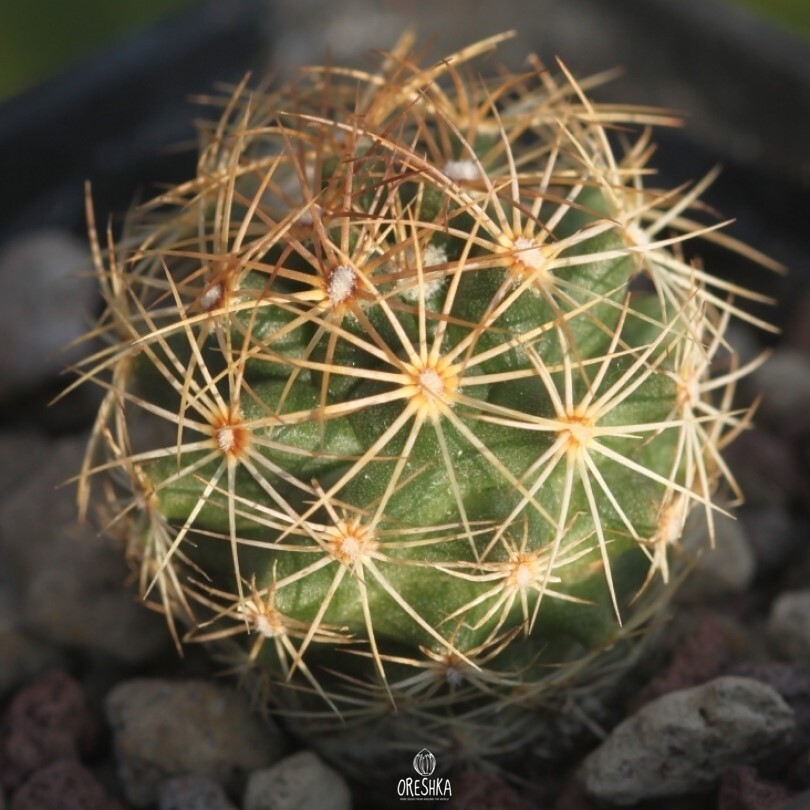
Gymnocalycium, Rebutia, Mammillaria, Turbinicarpus — Zone 5 to Zone 10
187 varieties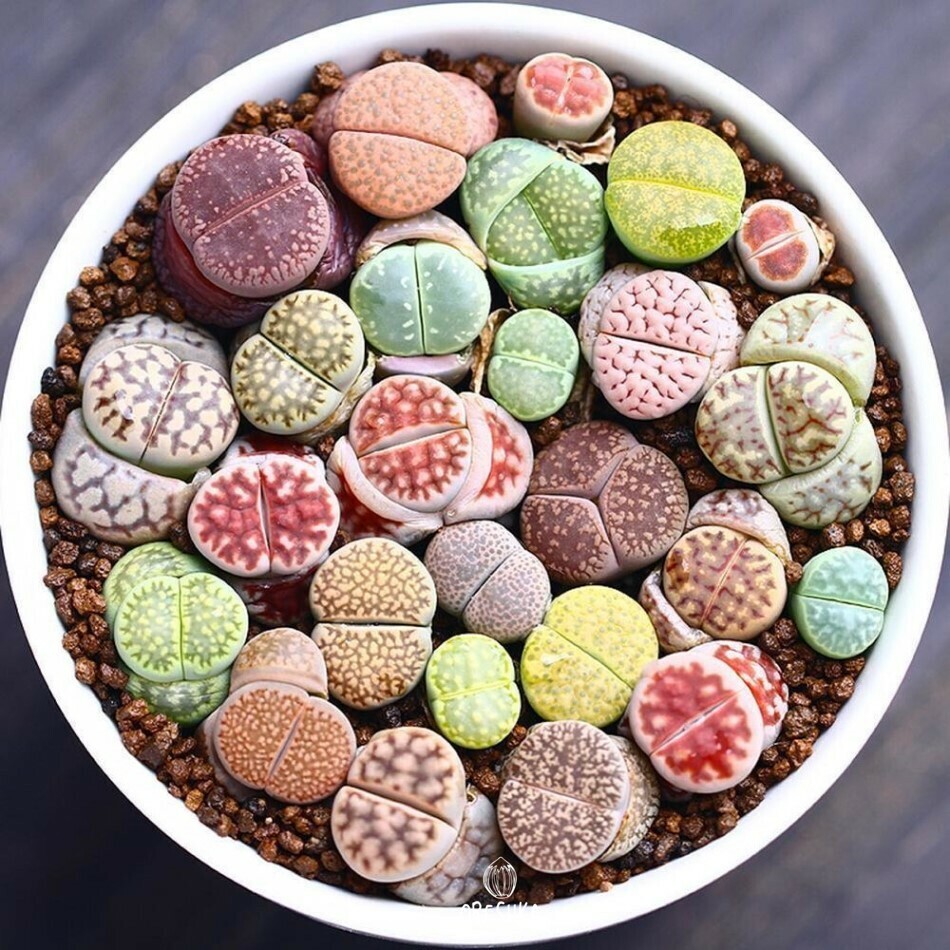
Living stones with C-number collector codes — 56 named species from Namib and Karoo
56 varieties
Adenium obesum mix — germinates in 5–7 days at 32°C, flowers in 18–24 months
1 curated variety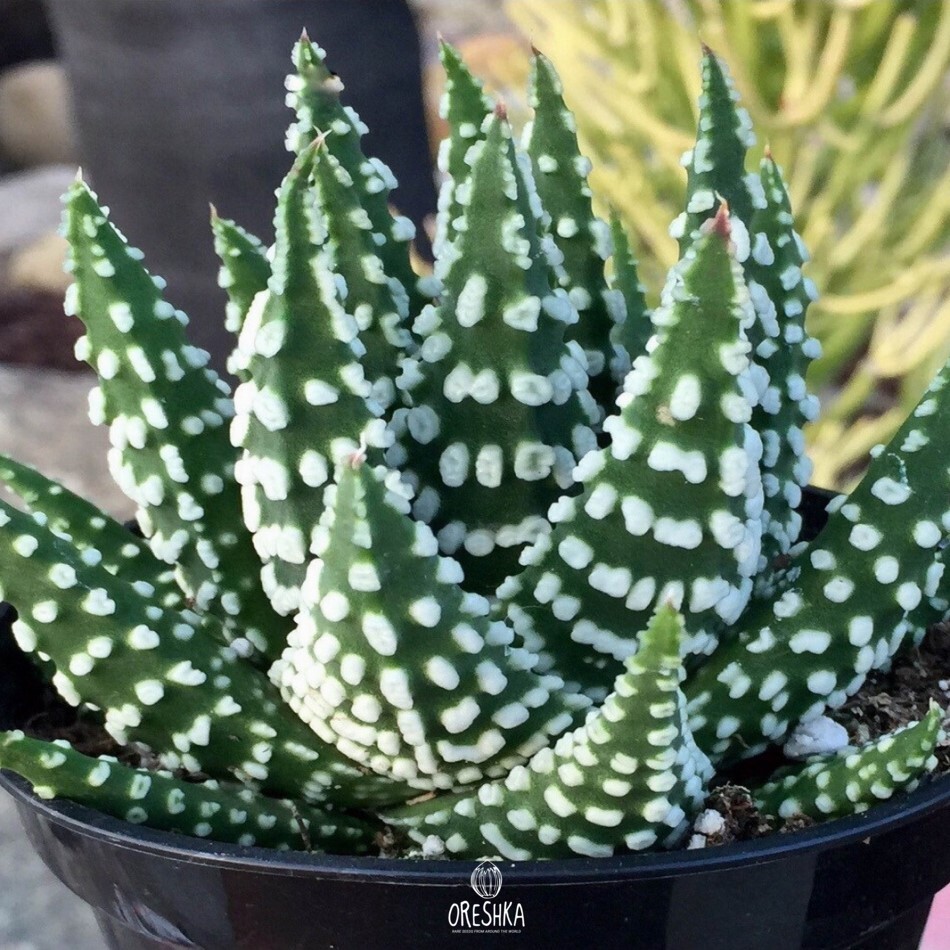
Haworthia, Gasteria, Titanopsis, Faucaria, Pleiospilos — non-cactus window succulents
24 varietiesStep-by-step germination and care for each sub-collection.
Oreshka carries 4 sub-collections under Cacti & Succulents: Cactus Seeds (187 species including Mammillaria, Gymnocalycium, Rebutia, Turbinicarpus), Lithops Seeds (56 species — living stones from southern Africa), Adenium Seeds (Desert Rose, 1 curated variety, Adenium obesum), and Succulent Seeds (24 species including Haworthia, Gasteria, Faucaria, Titanopsis). Each sub-collection has its own page with growing guides.
Gymnocalycium and Rebutia are the most reliable cacti for beginners — both germinate in 5–14 days at 22–26°C and tolerate partial shade. For succulents, Haworthia Mix is the most forgiving, requiring no intense heat. Lithops need more precision: germination at 20–26°C, strict dry winter rest from October to March.
Yes — all four sub-collections are grown indoors or under glass in Zone 5 and UK conditions. Cacti and Lithops need a bright south-facing windowsill or grow lights (minimum 12 hours). Adenium obesum requires temperatures above 15°C year-round and does well as a houseplant in cold climates. Echinocereus viridiflorus and several Rebutia species tolerate down to −10°C if kept dry.
Lithops (living stones) are mimicry plants — each plant consists of just 2 fused leaves that resemble pebbles, evolved to avoid grazing in the Namib and Karoo deserts. Unlike most succulents, Lithops require a strict dry rest from October to March: watering during this period causes them to split and rot. Standard succulents like Haworthia and Gasteria tolerate occasional winter watering and lower light levels.
All four sub-collections are naturally suited to container growing. Use a pot only 2–3 cm wider than the plant's diameter — oversized pots retain moisture and cause root rot. Lithops do best in terracotta pots (7–10 cm deep) filled with 80% mineral grit. Adenium obesum develops a swollen caudex and can live in the same pot for 5–10 years. Repot cacti only when roots emerge from drainage holes.
Rebutia and Gymnocalycium are among the fastest-flowering cacti — first blooms typically appear in 2–3 years from seed. Turbinicarpus and Coryphantha take 3–5 years. Adenium obesum can flower within 18–24 months from seed under optimal warmth (28–32°C day temperatures). Lithops produce their first daisy-like flowers at 3–4 years from seed, appearing in autumn through a split between the two leaves.
Oreshka Seeds offers 268 species across 4 sub-collections, including 56 Lithops varieties with precise collector codes (C-numbers) not available in garden centres. All seeds are harvested fresh each season from documented parent plants. Germination is tested before dispatch. Seeds ship worldwide in sealed moisture-proof packets, dispatched within 2–3 business days.
Cactus · Lithops · Adenium · Succulents · Worldwide shipping
oreshka-seeds.com · Sealed packets · 2–3 day dispatch · Fresh harvest