

How to Grow Amur Maple from Seed
Acer ginnala — Riverine Maple · Ginnala Maple
The hardiest ornamental maple on Earth — surviving −40°C in the Amur river valleys of Siberia. Autumn colour rivalling Japanese Maple, on a plant that grows where Japanese Maple freezes. Fragrant spring flowers, ornamental red samaras, and spectacular scarlet leaves in September.
The plant
What is Amur Maple — the Hardiest Small Maple in the World?
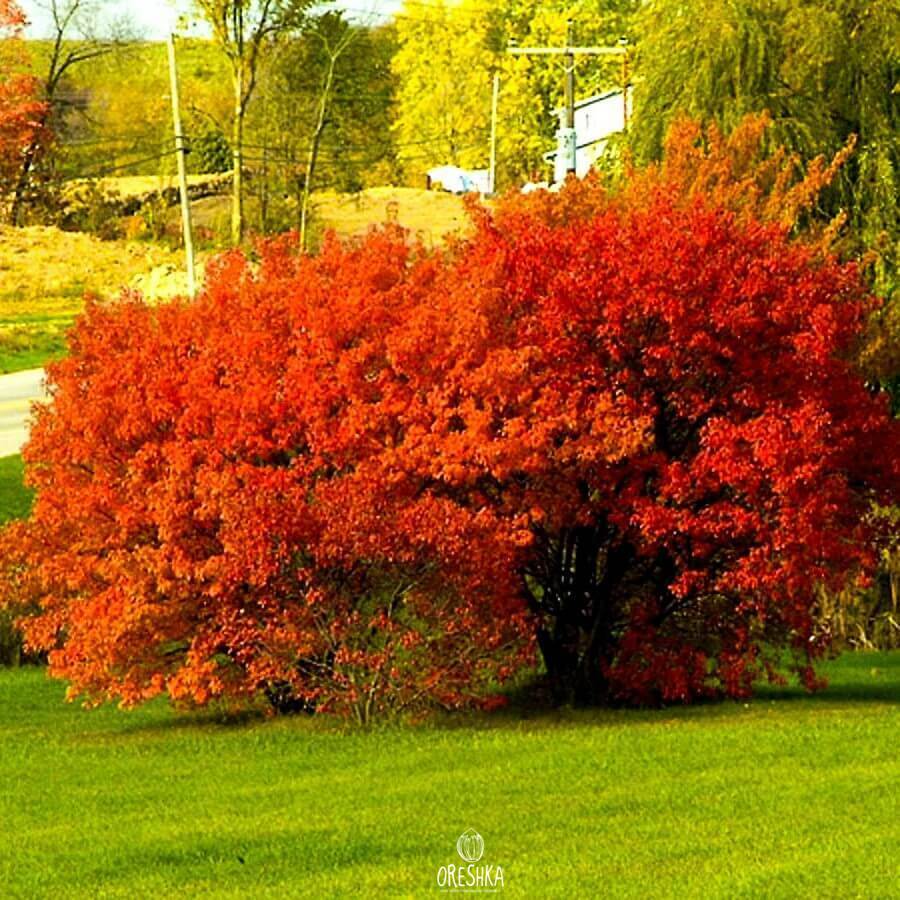
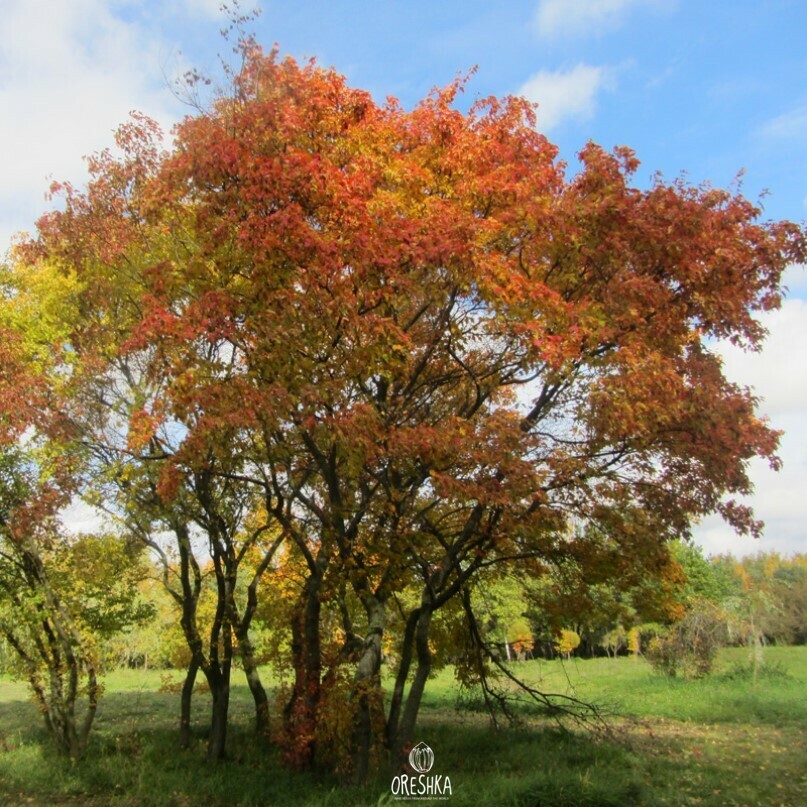
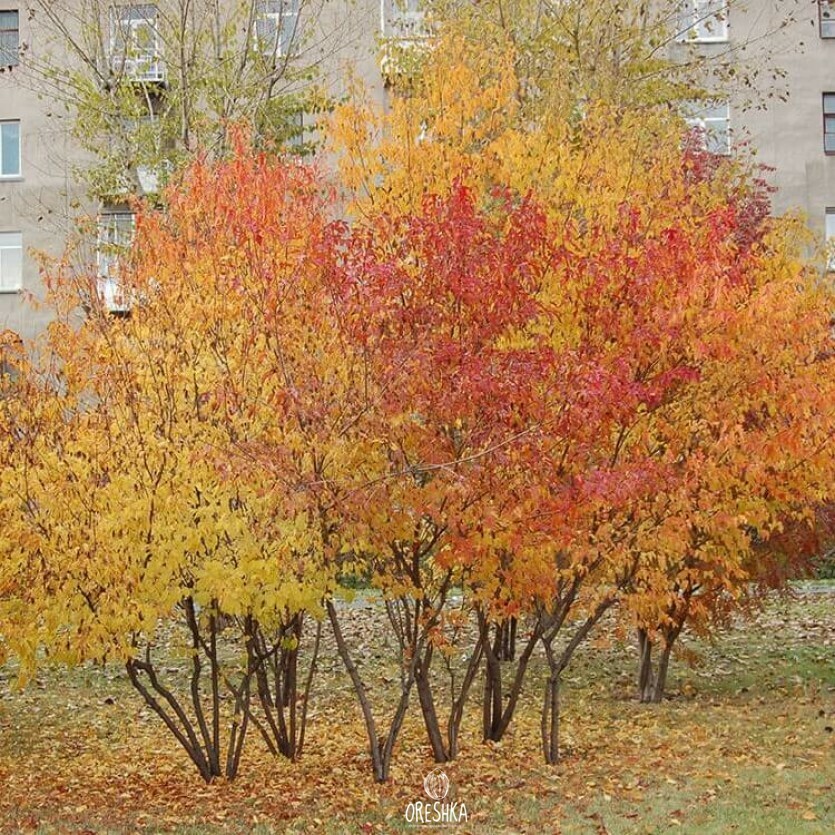
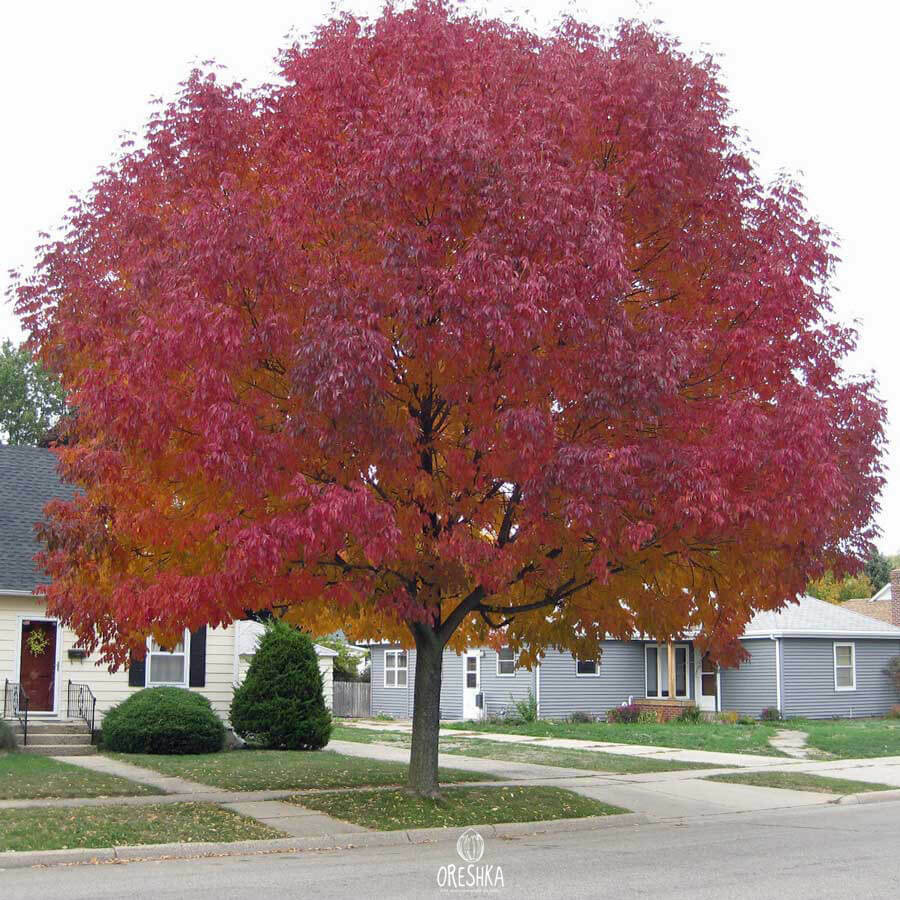
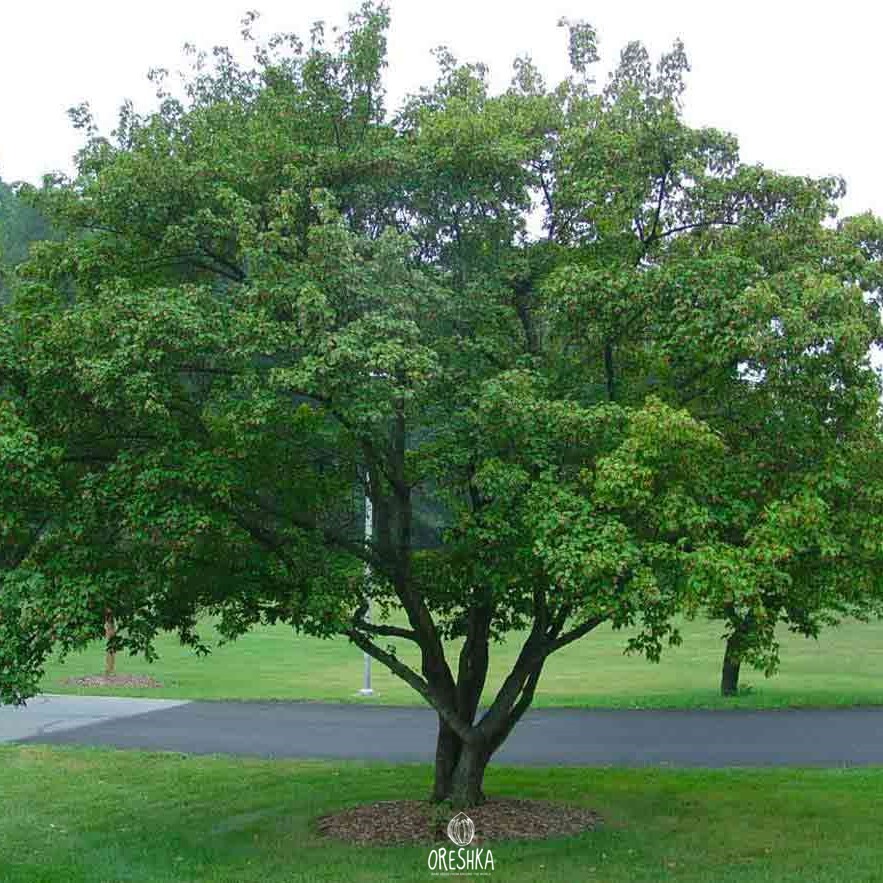
Acer ginnala is a small deciduous maple native to river valleys in northeastern China, the Korean Peninsula, and the Russian Far East along the Amur River — one of the most climatically extreme temperate regions on Earth, where winter temperatures regularly reach −35°C to −45°C. It grows 3–10 m tall as a multi-stemmed shrub or small tree, with a short trunk, thin straight branches, and deeply three-lobed leaves that turn extraordinary shades of orange, scarlet, and crimson in September and October.
Its key distinction from all other ornamental maples is cold hardiness: USDA Zone 2, tolerating −40°C. This is the hardiest maple in cultivation by a wide margin — far beyond Japanese Maple (Zone 5–6), Norway Maple (Zone 3–4), or even Sugar Maple (Zone 3). It is the maple of choice for the Canadian prairies, Siberian cities, and northern European climates where no other ornamental maple survives reliably.
4–8 weeks cold stratification or direct autumn sowing — both reliable. Seed-grown trees show variation in autumn colour intensity; the best are outstanding. About our collection →
Quick facts
Acer ginnala at a Glance
Growing guide
How to Grow Amur Maple from Seed — Step by Step
- 01Cold Stratification — 4 to 8 WeeksMix seeds with moist sand in a sealed bag and refrigerate at 2–4°C for 4–8 weeks. Or sow directly outdoors in September–October — the simplest method, allowing natural stratification through winter and reliable spring germination. The samara wing can be left attached or removed — both germinate equally well. Check refrigerator bags after 4 weeks for any showing root tips; sow those immediately.
- 02Sow 1.5 cm Deep — Cool ConditionsSow 1.5 cm deep in free-draining, slightly acidic compost (pH 5.5–6.5) at 10–18°C. Use deep individual pots rather than trays — Acer ginnala develops a long tap root quickly and dislikes root disturbance. Keep in bright indirect light. Cool germination temperature (10–18°C) gives better results than warm. Cover with glass or clear film to maintain moisture.
- 03Germination — 2 to 4 WeeksSeeds germinate in 14–28 days at 10–18°C after stratification. The first leaves (cotyledons) are strap-shaped — distinctive but nothing like the adult foliage. The first true palmate leaves appear within 2–3 weeks of germination. Growth is vigorous from the start. Prick out into individual deep pots when the first true leaf fully unfurls. Handle by a seed leaf, never the stem.
- 04First Growing Season — Rapid GrowthAcer ginnala is among the fastest-growing small maples from seed — 30–60 cm in the first growing season is typical in good conditions. Full sun outdoors from late spring. Water regularly through the first summer. Feed once monthly with a balanced fertiliser in year one only. The characteristic three-lobed leaves with their shiny upper surface are present from the second set of true leaves. Some autumn colour appears even on first-year seedlings.
- 05Plant Out — First or Second YearPlant in permanent position in autumn of year one or spring of year two. Acer ginnala tolerates almost any soil — dry, alkaline, clay, compacted — and urban pollution, exposed sites, and wind. Space 3–4 m for a specimen tree; 1–1.5 m apart for a formal hedge. Full sun produces the most intense autumn colour — shade reduces the colour display significantly. Hardy to −40°C without any protection.
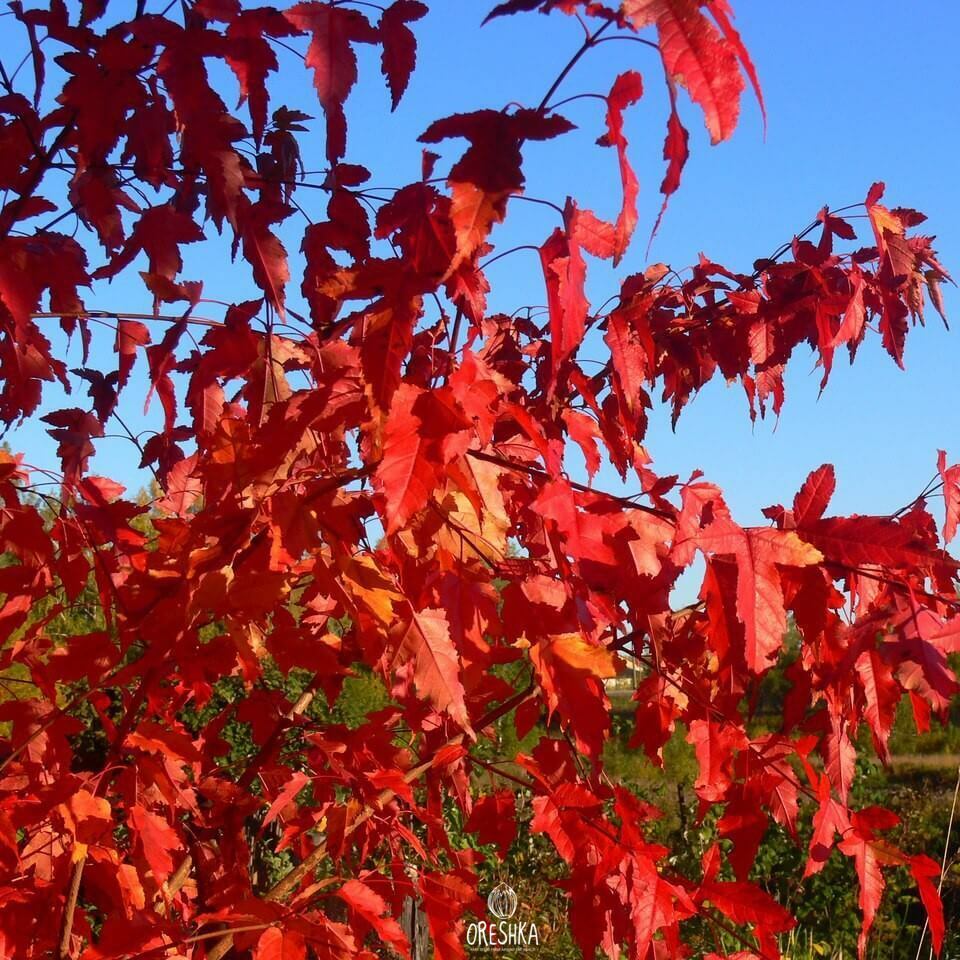
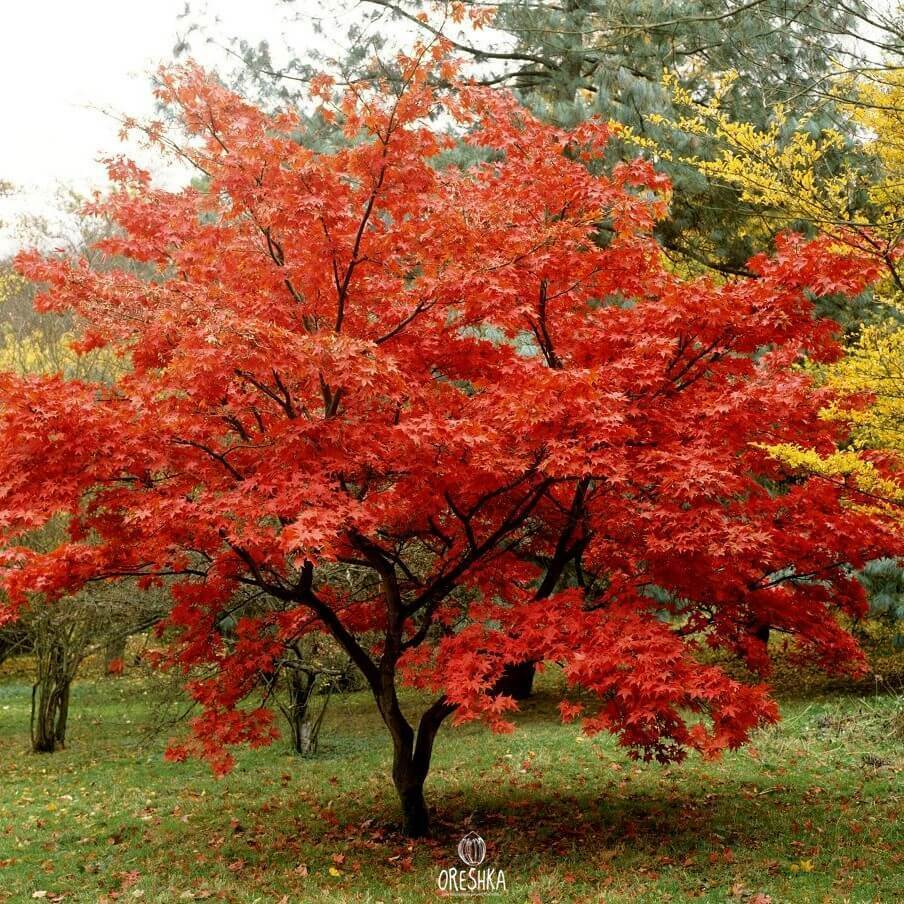
- 06Autumn Colour and Multi-Season DisplayFirst strong autumn colour appears in year 3–4. In September–October the leaves move through orange, bright scarlet, and deep crimson before falling. The intensity varies between seed-grown individuals — the best specimens rival any named Japanese Maple cultivar for autumn spectacle. In July–August, the red-tinged paired samaras are ornamental against the summer green foliage. In April–May, honey-fragrant flower clusters attract early pollinators. This is genuinely a four-season ornamental tree.
The autumn colour intensity of seed-grown Acer ginnala varies between individuals — some are outstanding crimson-scarlet, others a more subdued orange-red. Grow 5–6 plants from a packet and observe them over 3–4 autumns. The plants that colour earliest, most intensely, and hold colour longest are the superior selections. Once identified, the selected plant can be propagated vegetatively by semi-hardwood cuttings in August, or by air layering in spring, to produce identical copies. One exceptional seed-grown Acer ginnala, correctly selected and propagated, is the equivalent of a named cultivar — achieved at a fraction of the cost.
Compare
Amur Maple vs. Japanese Maple vs. Field Maple
| Feature | Acer ginnala Amur Maple · L35 | Acer palmatum Japanese Maple | Acer campestre Field Maple |
|---|---|---|---|
| USDA Zone | Zone 2 · −40°C | Zone 5–6 · −26°C | Zone 4 · −34°C |
| Height | 3–10 m · shrub/small tree | 2–8 m · elegant form | 10–15 m · larger tree |
| Autumn colour | Orange → deep crimson · intense | Yellow → crimson (cultivar dependent) | Yellow · reliable |
| Spring flowers | Fragrant honey scent · April–May | Small red · not fragrant | Small green · not fragrant |
| Hedge use | Excellent — clips well | Not suitable for clipping | Good — classic European hedge |
| Drought tolerance | High — established plants | Moderate — needs moisture | High |
Avoid these
Common Mistakes When Growing Amur Maple from Seed
Planting in shade expecting full autumn colour
Acer ginnala produces its most intense autumn colour in full sun. In partial shade, colour is less vivid and appears later. In full shade, the autumn display is significantly reduced — leaves turn yellow-green rather than scarlet. For the full crimson display, plant in a position with at least 6 hours of direct sun per day.
Disturbing the tap root at transplanting
Acer ginnala develops a long, brittle tap root quickly. Transplanting from trays once the tap root has coiled is difficult and stresses the plant. Sow in deep individual pots (12+ cm) from the start, or prick out very early (at the cotyledon stage) into deep pots. Alternatively, sow direct into the garden for autumn outdoor sowings.
Expecting all seedlings to colour equally
Seed-grown Acer ginnala shows variation in autumn colour intensity — this is normal. Grow multiple plants and observe over 3–4 seasons to identify the best colouring individuals. This selection process is exactly how superior named cultivars were originally identified. The variation is a feature, not a defect.
Underestimating final size
Acer ginnala reaches 3–10 m — it is a small tree, not a shrub in the long-term sense. In a small garden, allow 3–4 m space or plan to manage size by pruning. It responds well to pruning and can be maintained as a multi-stemmed shrub at 2–3 m with annual pruning in late winter.
FAQ
Frequently Asked Questions
How cold-hardy is Amur Maple?
What is Amur Maple autumn colour like?
Can Amur Maple be used as a hedge?
What is the difference between Amur Maple and Japanese Maple?
Does Amur Maple have fragrant flowers?
How large does Amur Maple grow?
The Hardiest Ornamental Maple — Zone 2, Siberian Proven
10 fresh seeds · −40°C · Fragrant spring flowers · Red summer samaras · Scarlet autumn colour · Ships worldwide
Buy Seeds — €6.25 → Sale −40% · SKU L35 · 10 PCS · Acer ginnala · Oreshka Seeds