

How to Grow Gooseberry from Seed
Ribes uva-crispa — European Gooseberry
One of the few fruiting shrubs that produces a meaningful crop in partial shade. The earliest honey plant among berry bushes — flowering in May when pollinators are scarce. A productive fixture in European gardens for over 500 years.
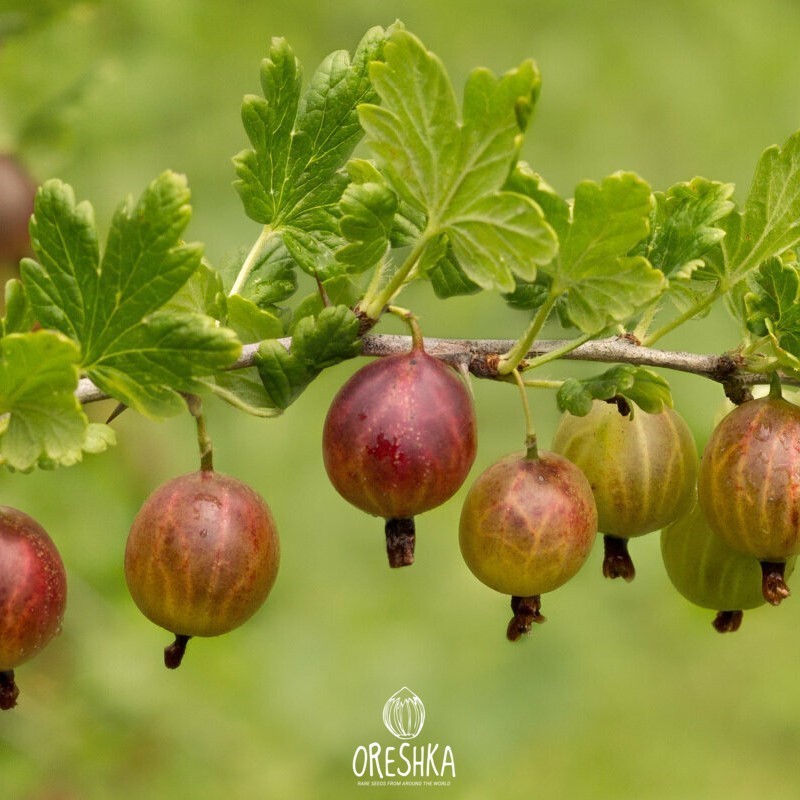
The plant
What is Gooseberry — Europe's Most Versatile Fruiting Shrub?
Ribes uva-crispa is a small, densely branched, thorny shrub up to 1–1.2 m tall, native across Europe and western Asia. It has been cultivated in European gardens since at least the 13th century — over 500 years of recorded cultivation produced more than 2,000 named varieties by the Victorian era, when gooseberry growing was a competitive sport in northern England (the largest recorded fruit weighed 62 g). Today, gooseberry remains one of the most practical fruiting shrubs for temperate gardens.
Its key advantage over other fruiting shrubs is shade tolerance. While most berry crops demand full sun, Ribes uva-crispa produces a worthwhile crop in partial shade — making it the first choice for gardens with significant tree cover, north-facing aspects, or urban plots with limited sunlight. It is also among the earliest flowering berry plants, providing a critical nectar source for pollinators in May when few other flowers are available.
12–16 weeks cold stratification is longer than most guides suggest — but Ribes uva-crispa has a stubborn dormancy. Germination at cool temperatures (12–18°C) after this period is reliable. About our collection →
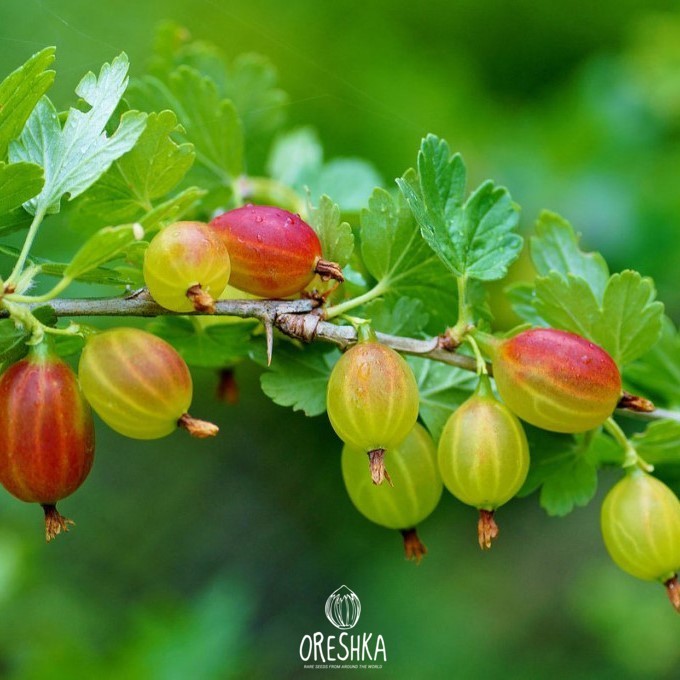
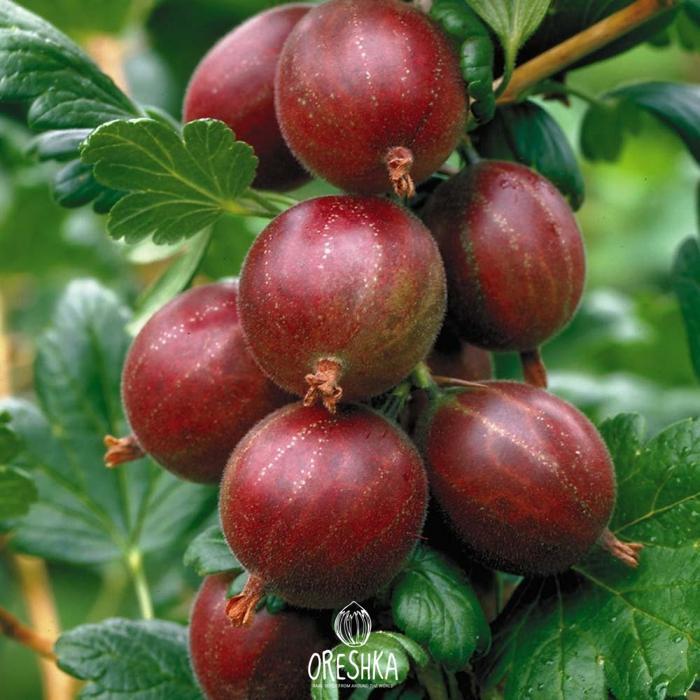
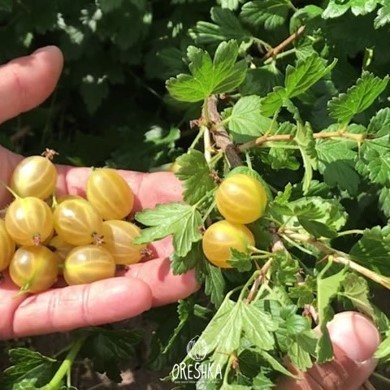
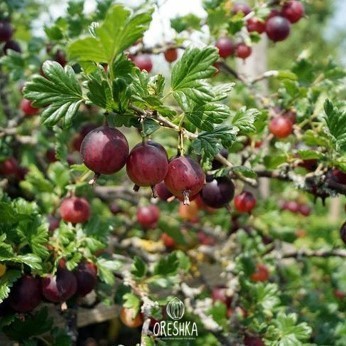
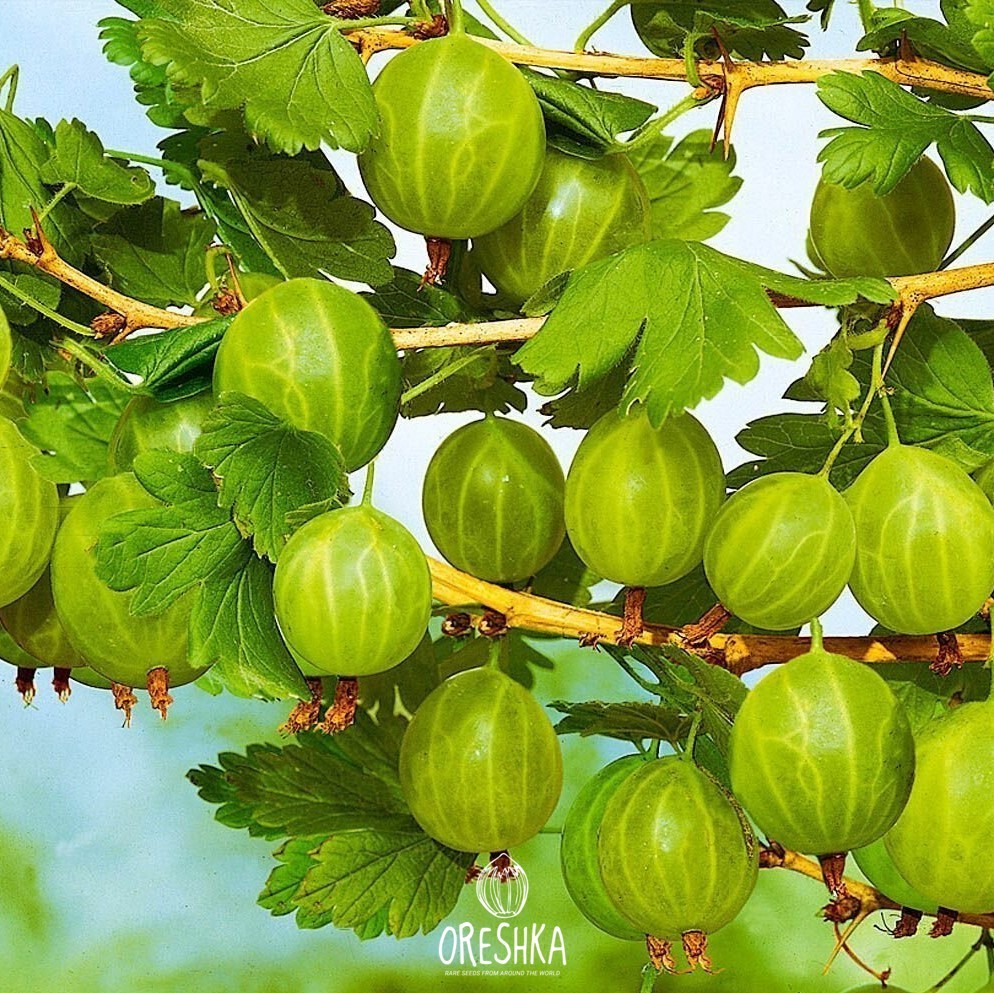
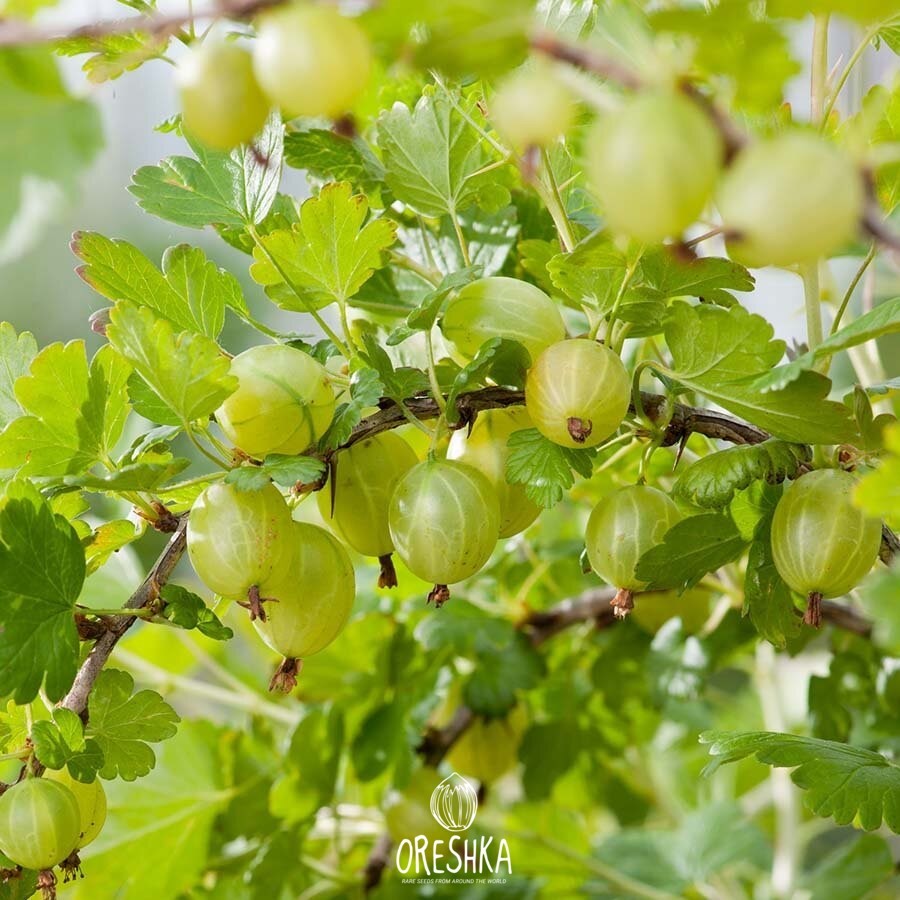
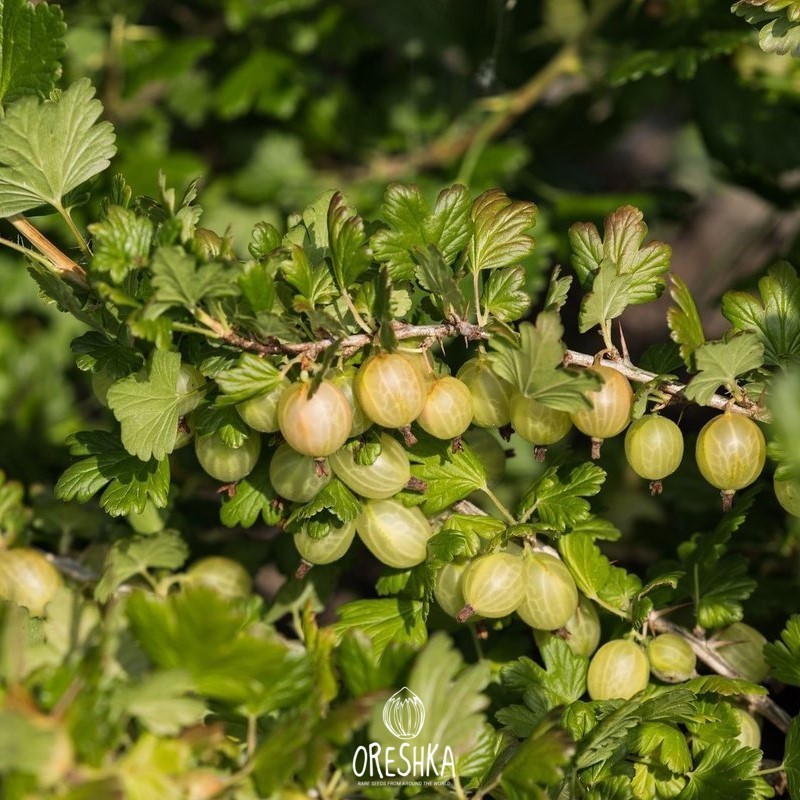
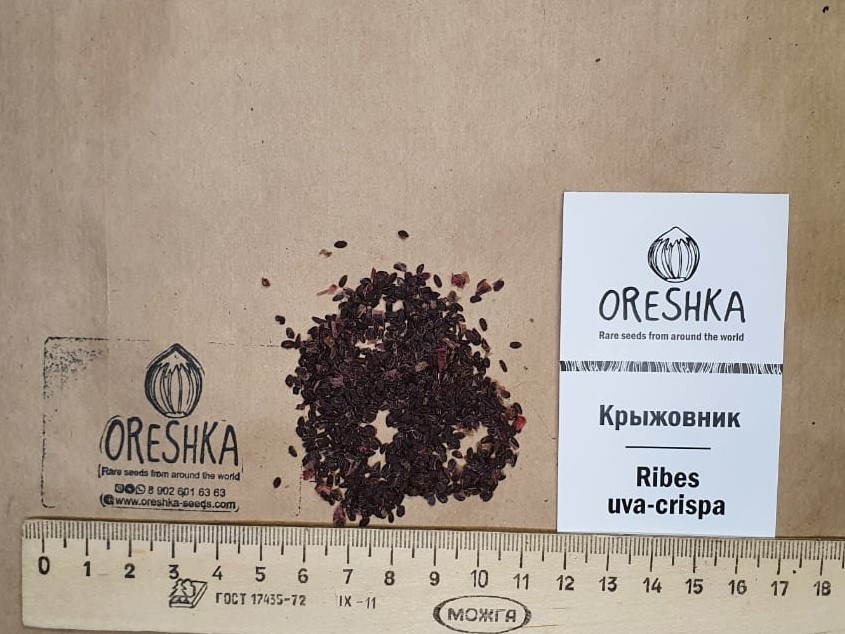
Quick facts
Ribes uva-crispa at a Glance
Growing guide
How to Grow Gooseberry from Seed — Step by Step
- 01Cold Stratification — 12 to 16 WeeksGooseberry seeds have a deeper dormancy than most fruiting shrubs — requiring 12–16 weeks at 2–4°C. Mix seeds with moist sand or vermiculite in a sealed bag and refrigerate from October–November for sowing in February–March. Check every 3–4 weeks. Seeds beginning to crack or show root tips should be sown immediately. This long cold period is the critical difference between good germination and failure.
- 02Sow 1 cm Deep — Cool ConditionsSow stratified seeds 1 cm deep in free-draining compost at neutral to slightly acidic pH (6.5–7.0). Keep at 12–18°C — cool conditions are essential. At temperatures above 22°C, germination rate drops significantly. Cover with glass or clear film to maintain humidity. Place in bright indirect light. Germination is staggered — leave undisturbed for the full 6–8 weeks before assuming failure.
- 03Germination — 4 to 8 WeeksSeeds germinate in 28–56 days at 12–18°C after stratification. Seedlings emerge with small round seed leaves followed by the characteristic lobed true leaves of Ribes. Prick out into individual 9 cm pots when the first true leaf is fully developed. Handle by a seed leaf to protect the stem. Grow on in cool, bright conditions — a cold frame or unheated greenhouse is ideal in spring.
- 04First Growing SeasonGooseberry seedlings grow steadily — 15–30 cm in the first season is typical. Outdoors in full sun to partial shade from late spring. Water regularly, especially during dry periods — shallow roots make gooseberry more susceptible to drought stress than deep-rooted shrubs. Feed monthly with a balanced fertiliser with adequate potassium. Mulch with organic matter to conserve moisture and suppress weeds.
- 05Plant Out — Autumn or Early SpringPlant in permanent position in the second year, in autumn or early spring. Gooseberry tolerates a wide range of well-drained soils at pH 6.5–7.0. Partial shade is well tolerated — a north-facing or partially shaded position that would frustrate other fruit crops is acceptable. Space 1.2–1.5 m apart. Avoid frost pockets — early spring flowers can be damaged by late frosts below −3°C. Mulch generously at planting.
- 06Fruiting and Annual Pruning — Year 3 to 4First fruit in year 3–4. Fruits are oval to spherical (up to 40 mm in improved varieties), green, yellow, or purple, ripening June–August. Harvest green for cooking (jam, crumble, pie) or leave to fully ripen for eating fresh. Annual winter pruning maintains the open goblet structure: remove all wood older than 3 years, all crossing or inward branches, and all weak growth. This is the primary mildew prevention strategy — open structure means air circulation, which dries the foliage and inhibits fungal spores.
The single most effective mildew prevention strategy for gooseberry is not a fungicide — it is pruning in the right direction. American gooseberry mildew (Podosphaera mors-uvae) spreads most aggressively in still, humid air inside a dense, overcrowded bush. In winter, use loppers and sharp secateurs to remove every branch that crosses another, every branch growing toward the centre, and every cane older than three years. The goal is a bush through which you can see clearly from one side to the other. This open-goblet structure allows wind to circulate freely, foliage dries quickly after rain, and mildew spores find no favourable conditions to germinate. One correct winter pruning session reduces mildew incidence by 70–80% compared to an unpruned bush.
Compare
Gooseberry vs. Redcurrant vs. Blackcurrant
| Feature | Ribes uva-crispa Gooseberry · P23 | Ribes rubrum Redcurrant | Ribes nigrum Blackcurrant |
|---|---|---|---|
| USDA Zone | Zone 4 · −34°C | Zone 4 · −34°C | Zone 3 · −40°C |
| Shade tolerance | Partial shade · unique trait | Moderate shade | Prefers full sun |
| Fruit size | Up to 40 mm (cultivated) | Up to 10 mm · in clusters | Up to 12 mm · in clusters |
| Fruit colours | Green · yellow · red · purple | Red (white varieties exist) | Black only |
| Productive life | 15–20 years | 10–15 years | 8–12 years (replace older wood) |
| Honey plant | Earliest of berry shrubs · May | Good — April–May | Good — April–May |
Avoid these
Common Mistakes When Growing Gooseberry from Seed
Insufficient cold stratification duration
12–16 weeks — not 4–6 weeks. Ribes uva-crispa has a deeper dormancy than raspberries, blackberries, or most other Rosaceae. Shorter cold periods produce poor germination. Start stratification in October or November for February–March sowing.
Germinating in too much warmth
Gooseberry germinates best at 12–18°C. At 22°C+ germination rate drops and damping-off risk increases. A cool windowsill, unheated greenhouse, or cold frame in late winter is the ideal germination environment.
Neglecting winter pruning
An unpruned gooseberry becomes dense, crossing, and mildew-prone within 3–4 years. Annual winter pruning to maintain an open goblet structure is the primary disease prevention strategy — more effective than any fungicide. Prune every year without exception.
Planting in frost pockets
Gooseberry flowers in early spring (April–May) before most other fruit, making the flowers vulnerable to late frosts below −3°C. Avoid low-lying areas where cold air pools. A gentle slope with air drainage, or a sheltered position that avoids the lowest frost pocket in the garden, protects the flowers.
FAQ
Frequently Asked Questions
How long does gooseberry take to fruit from seed?
What is the best way to prevent gooseberry mildew?
Can gooseberry grow in shade?
What is the difference between green, yellow, and purple gooseberries?
Is gooseberry a good honey plant?
How do you prune gooseberry for maximum yield?
500 Years of Cultivation — Europe's Most Versatile Fruiting Shrub
15 fresh seeds · Zone 4 · Shade tolerant · 15–20 year productive life · Earliest honey plant · Ships worldwide
Buy Seeds — €5.00 → Sale −40% · SKU P23 · 15 PCS · Ribes uva-crispa · Oreshka Seeds