

How to Grow Ice Cream Sunflower from SeedHelianthus annuus — Decorative Double-Petalled
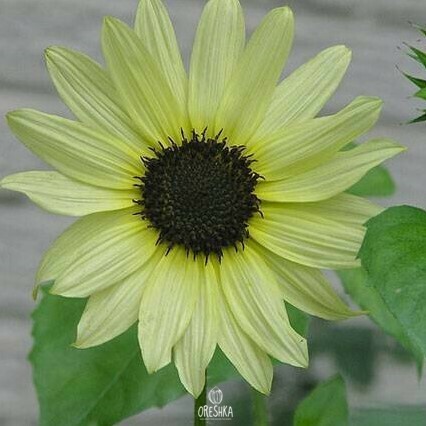
A fully double sunflower with cream-yellow petals arranged in concentric rings — no dark centre, no single ring of petals. Germinates in 5–10 days with no stratification. Blooms in 10–12 weeks. Branching stems produce 5–12 heads per plant when deadheaded.
−40%
What Is Ice Cream Sunflower?
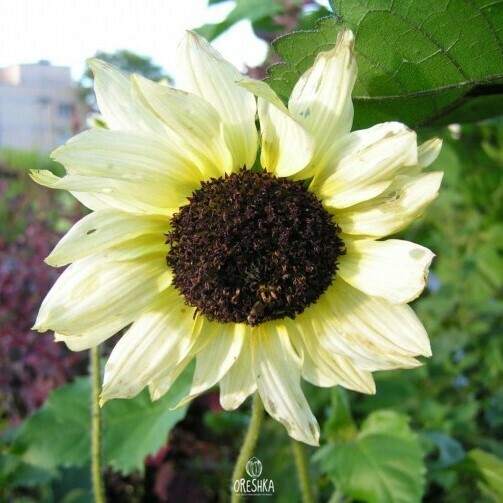
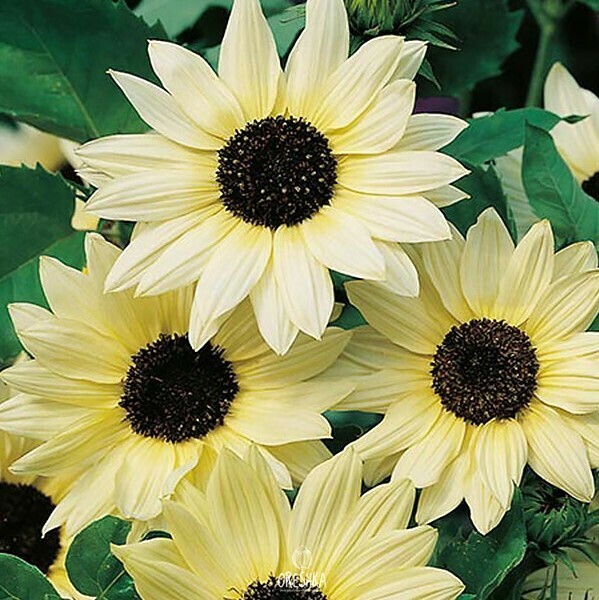
Ice Cream Sunflower is a decorative annual cultivar of Helianthus annuus — the standard sunflower species — bred for fully double, pom-pom-like flower heads rather than the classic single ring of ray petals surrounding a dark seed disc. The petals are cream-yellow to pale gold, arranged in tight concentric rows that fill the entire head, giving the flower a texture closer to a Chrysanthemum or garden Dahlia than a conventional sunflower. The dark centre characteristic of most sunflowers is absent or barely visible.
Unlike single-stemmed giant varieties grown for maximum seed yield or height, Ice Cream is a branching, multi-stem cultivar. Each plant produces a central leading head followed by multiple lateral branches, each terminating in a secondary head. With regular deadheading, plants can carry 5–12 flower heads simultaneously over a 6–8 week season — making it the most productive sunflower variety for cut flower use and border decoration.
The variety is open-pollinated, meaning seeds saved from your plants will produce identical offspring if isolated from other sunflower varieties by 300 m — a practical advantage for seed savers and allotment gardeners.


At a Glance
How to Grow Ice Cream Sunflower — 6 Steps
Ice Cream Sunflower seeds require no cold stratification, scarification, or soaking. Check that seeds are plump and firm — flat or hollow seeds have poor viability. Sow as soon as outdoor soil temperature reaches 12°C (use a cheap soil thermometer at 5 cm depth), or start indoors 3–4 weeks before your last frost date. Seeds stored cool and dry remain viable for 2–3 years.
Sow seeds 2–2.5 cm deep. Shallower sowing allows the seed case to cling to the cotyledons and distort seedlings; deeper sowing wastes the seed's stored energy. Outdoors: space seeds 45–50 cm apart in rows 60 cm apart, in fertile, well-drained soil. Indoors: one seed per 9 cm pot — sunflowers develop a long taproot quickly and do not like root disturbance, so avoid seed trays and transplant before the taproot starts to spiral.
Expect germination in 5–10 days at a soil temperature of 18–24°C. Keep compost or outdoor soil consistently moist during this period — sunflower seeds rot in waterlogged conditions or stall in dry soil. Seedlings emerge with two broad, oval cotyledons followed quickly by the first true leaf. Thin to one plant per 45 cm once seedlings reach 10 cm. No heat mat required for outdoor sowing from late May.
Once established at 15–20 cm, sunflowers tolerate dry spells but produce larger, longer-lasting flowers with weekly deep watering at the base. Avoid watering the crown or foliage — this promotes grey mould. Apply a single feed of low-nitrogen, high-phosphorus/potassium fertiliser at the bud stage. Excess nitrogen produces impressive foliage but delays flowering by 2–3 weeks and softens stems. Stake plants over 1.2 m in exposed gardens.
Ice Cream is a branching variety — remove spent heads promptly (cut back to the next lateral bud or leaf node) to redirect energy into new flowers. Each plant produces 5–12 heads over 6–8 weeks with regular deadheading. For seed saving, stop deadheading the final 2–3 heads in late August and allow them to dry on the plant. The seed head back turns brown and seeds feel loose when ready — typically late September in Zone 5.
Cut dry seed heads and rub the face over a clean sheet to release seeds. Spread on a paper towel indoors for 2–3 weeks to complete drying. Store in a paper envelope or cloth bag in a cool (below 15°C), dry location. Seed viability remains above 80% for 2–3 years under these conditions. Label with harvest year. Ice Cream Sunflower is open-pollinated — seeds will come true if isolated by 300 m from other Helianthus annuus varieties.
Most gardeners sow sunflowers once and get 6–8 weeks of flowers. To extend the season to 14+ weeks with a single variety, sow Ice Cream Sunflower in three batches 3 weeks apart: mid-May, early June, and late June. The late June batch finishes in mid-October in Zone 5, well after standard sunflowers are spent. Each batch uses just 5 seeds — a single packet covers all three sowings with seeds to spare. This succession technique is standard practice among cut flower growers but almost never mentioned in consumer seed instructions.
Comparison: Ice Cream vs Autumn Beauty vs Giant Russian
| Feature | Ice Cream (C35) | Autumn Beauty (C36) | Giant Russian |
|---|---|---|---|
| Flower type | Fully double, pom-pom — no dark centre | Single-petalled, multi-coloured ray | Classic single ray, large disc |
| Stems per plant | Branching — 5–12 heads | Branching — 4–8 heads | Single stem — 1 head |
| Cut flower use | Excellent — no pollen drop | Good | Limited — heavy pollen |
| Time to bloom | 70–84 days | 70–80 days | 80–100 days |
| Seed edibility | Edible, small | Edible, small | Edible, large — best for harvest |
| Height | 1.2–1.8 m | 1.2–1.8 m | 2.0–3.5 m |
Common Mistakes Growing Sunflowers from Seed
Starting in small cells or seed trays
Sunflowers develop a long primary taproot within days of germination. In small cells or standard seed trays, this root hits the base and spirals — creating a rootbound seedling that never fully recovers. Always sow into 9 cm individual pots or direct into the ground. If you must use cells, transplant the moment the seed leaves are fully open, before the taproot reaches 5 cm.
Sowing too early indoors
Sunflowers started indoors more than 4 weeks before transplanting outgrow their pots rapidly and become leggy under indoor light levels. A 3-week-old indoor-sown plant is actually weaker at transplanting than a 10-day-old direct-sown plant outdoors. If you want a head start, sow indoors no earlier than 3 weeks before your last frost date — no sooner.
Feeding with high-nitrogen fertiliser
High-nitrogen feeds (those with the first number in the NPK ratio being the largest — e.g. 20-10-10) produce tall, leafy sunflowers that are significantly later to flower. Sunflowers in average garden soil need no additional nitrogen at all. If you feed, use a product with a high middle and last number (phosphorus and potassium) — these support root development and flowering rather than leafy growth.
Not deadheading branching varieties
Single-stem varieties (Giant Russian, Peredovik) should not be deadheaded. Branching varieties like Ice Cream must be deadheaded to reach their potential. Without deadheading, energy goes into seed production in the first head and later buds remain small or fail to open. Cut spent heads back to the next lateral shoot junction as soon as petals begin to wilt — do not wait until the head is completely dry.
Planting in partial shade
Helianthus annuus is a sun-tracking annual that evolved in open prairie — it requires a minimum of 6 hours of direct sunlight daily. In partial shade (3–4 h), plants grow tall and lean toward the light source, stems become soft and prone to wind damage, and flowering is delayed by 3–4 weeks with significantly fewer heads. A south or west-facing border with no overhead obstruction is the minimum requirement.
Frequently Asked Questions
Can I grow Ice Cream Sunflower in Zone 5, UK or Northern Europe?
Yes. Ice Cream Sunflower is a fast-maturing annual that requires no stratification — it germinates as soon as soil reaches 12°C. In Zone 5 and the UK, direct sow outdoors in late May after last frost, or start under cover in April for transplanting in late May. In Northern Europe (Germany, Poland, Scandinavia), a late May direct sow routinely produces flowering plants by August with blooms continuing through September. Autumn frosts terminate the season, but the plants are fully productive within their window.
How deep should I sow sunflower seeds?
Sow 2–2.5 cm deep. Shallower sowing (under 1 cm) allows the seed case to harden and adhere to the emerging cotyledons, causing a condition called "helmet head" where the seedling cannot open properly. Deeper sowing (over 4 cm) delays emergence and uses up the seed's stored energy reserves before the seedling can photosynthesize. In pots, one seed per 9 cm pot at 2 cm depth gives the most reliable results.
When will Ice Cream Sunflower bloom from seed?
Ice Cream Sunflower blooms 70–84 days (10–12 weeks) from sowing under good conditions — full sun and consistent moisture. The first head on the main stem opens first; lateral branches follow over 6–8 weeks when deadheaded regularly. A late May sowing in Zone 5 produces first flowers from early August with the season extending to mid-October with succession sowings.
What is the difference between Ice Cream Sunflower and a standard sunflower?
Standard sunflowers (Giant Russian, Mammoth) have a single ring of ray petals surrounding a large brown seed disc and are grown for maximum seed yield or height. Ice Cream Sunflower has fully double petals in concentric rings with no visible dark centre — closer in appearance to a large Chrysanthemum or Dahlia. It is also a branching variety producing multiple heads, making it superior for cut flower use, as it produces no pollen drop from its double-petalled structure.
Can I grow Ice Cream Sunflower in a pot or container?
Yes, but use a minimum 30–40 litre container (30 cm diameter, 40 cm deep). Ice Cream Sunflower reaches 1.2–1.8 m and has a significant taproot — smaller containers produce stunted plants with poor flowering. Water daily in summer heat and feed weekly from bud formation with a low-nitrogen, potassium-rich fertiliser. Place in a sheltered full-sun position and stake. Container-grown plants typically produce 3–6 heads rather than the 5–12 achievable in open ground.
Is Ice Cream Sunflower edible — can I eat the seeds?
The seeds are edible and can be roasted, pressed for oil, or fed to birds. The petals are also edible and used as a garnish. However, the seeds are considerably smaller than those of dedicated seed varieties (Giant Russian, Peredovik). If edible seed harvest is the main goal, choose a large-seeded variety. For cut flowers, decoration, and seed saving for the following season, Ice Cream is the better choice.
Do sunflowers need fertiliser to grow well from seed?
In average garden soil, sunflowers require no additional fertiliser. In very poor or sandy soils, one application of balanced granular fertiliser at sowing improves early growth. At bud stage, a single application of high-potassium feed (tomato fertiliser type) supports flower development. Avoid high-nitrogen products throughout — nitrogen delays flowering and produces soft stems. In containers, feed every 2 weeks from bud formation with tomato-type fertiliser.
Buy Ice Cream Sunflower Seeds
15+ fresh seeds · SKU C35 · €5.00 · Worldwide shipping · 2–3 day dispatch
oreshka-seeds.com · Sealed moisture-proof packets · Ships to 40+ countries