How to Grow Northern Red Oak from Seed
Quercus rubra — Canadian Oak · Champion Oak
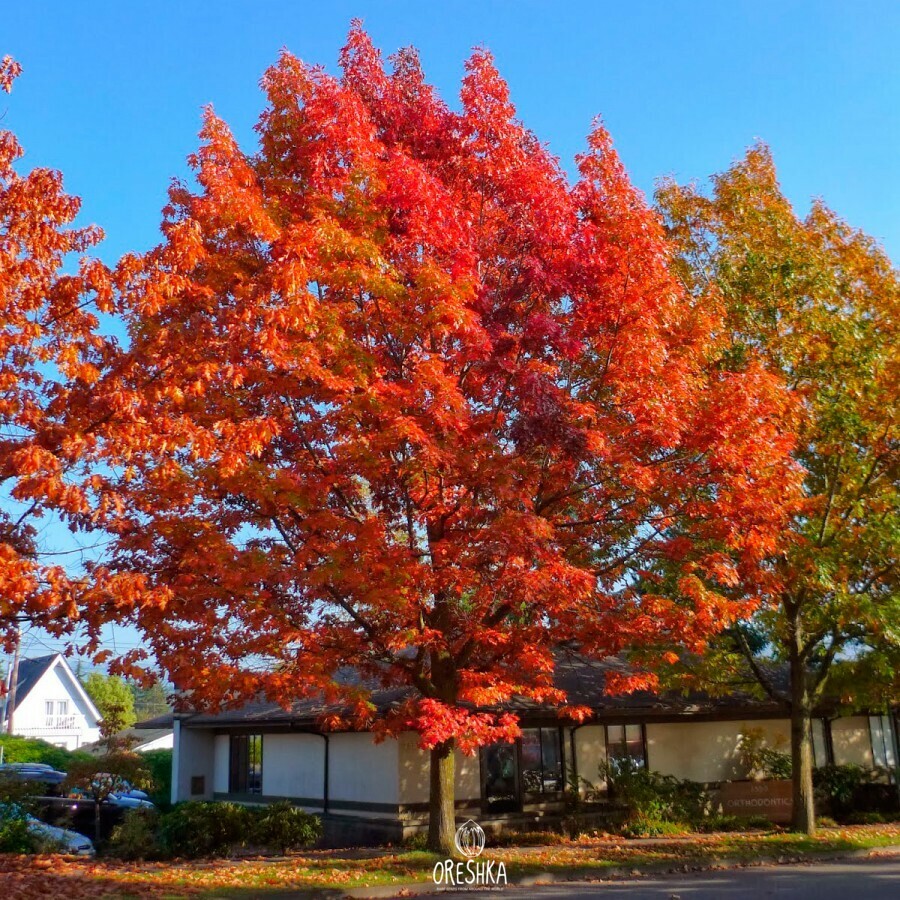
The fastest-growing large oak in the northern hemisphere — 60–90 cm per year, reaching 25 m with brilliant scarlet autumn colour. Unique among oaks: its acorns take two full years to ripen. High phytoncidal properties make it resistant to fungal diseases that afflict English Oak. Organic seeds from Siberia.
The plant
What is Northern Red Oak — and Why Does it Take Two Years to Make an Acorn?
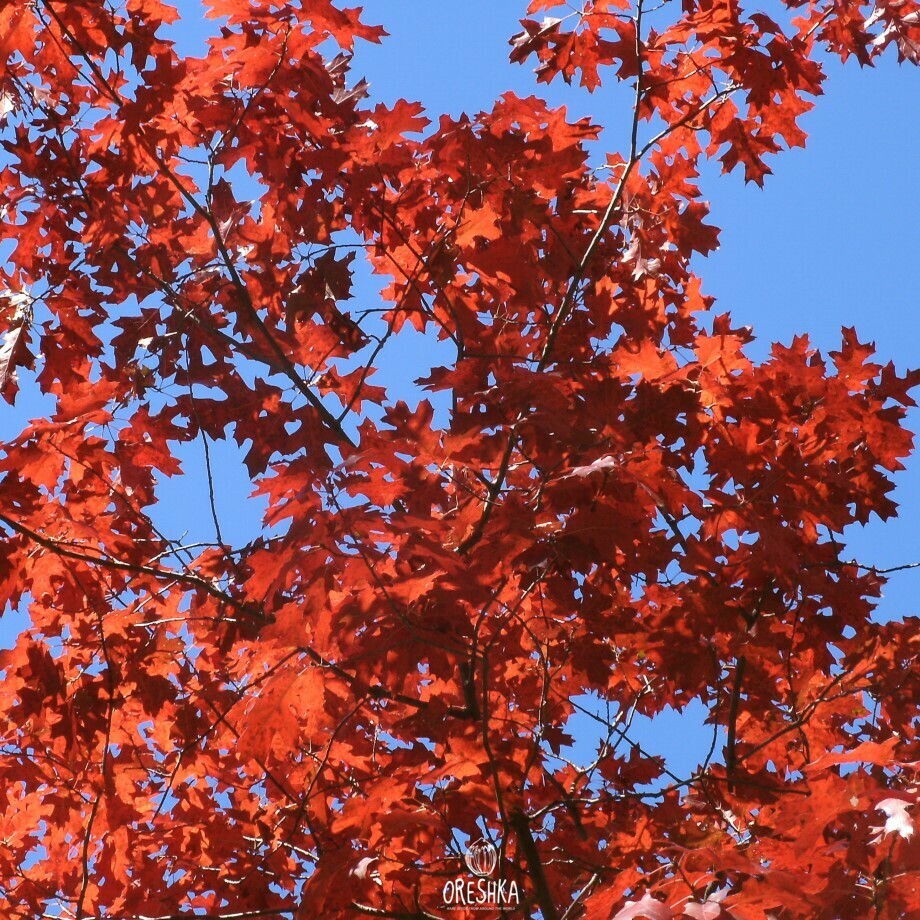
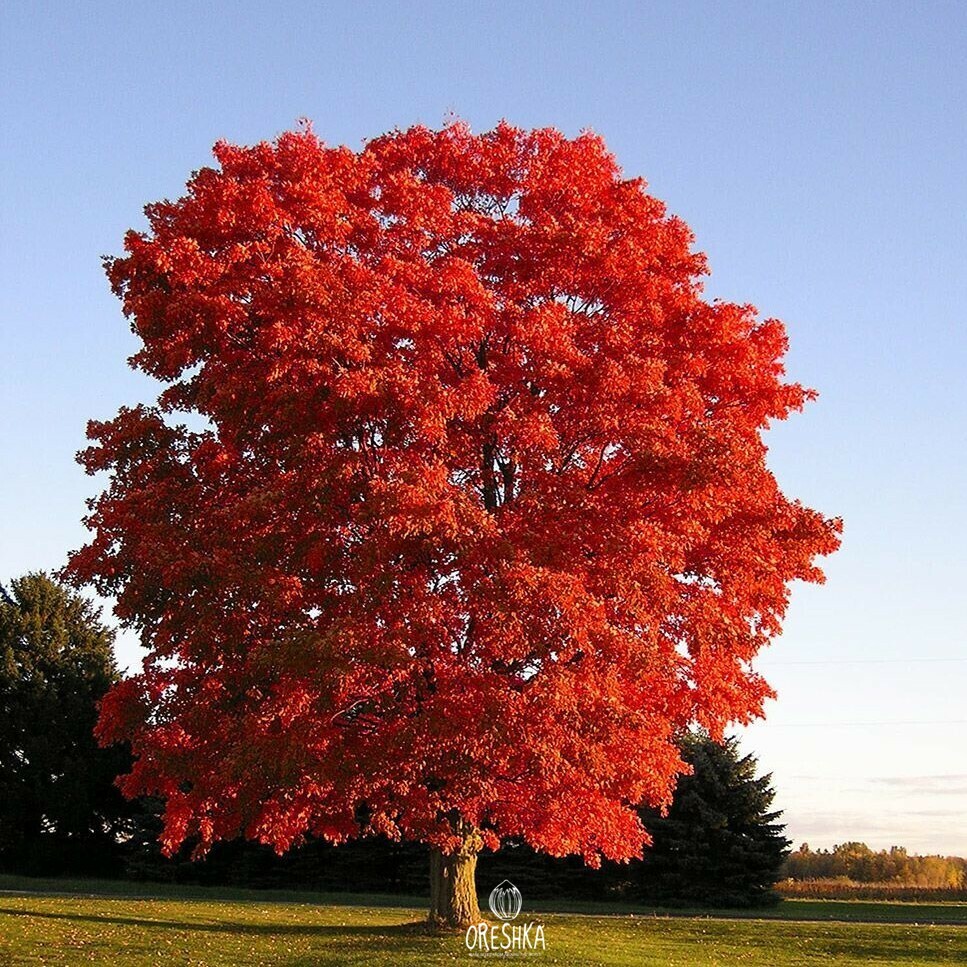
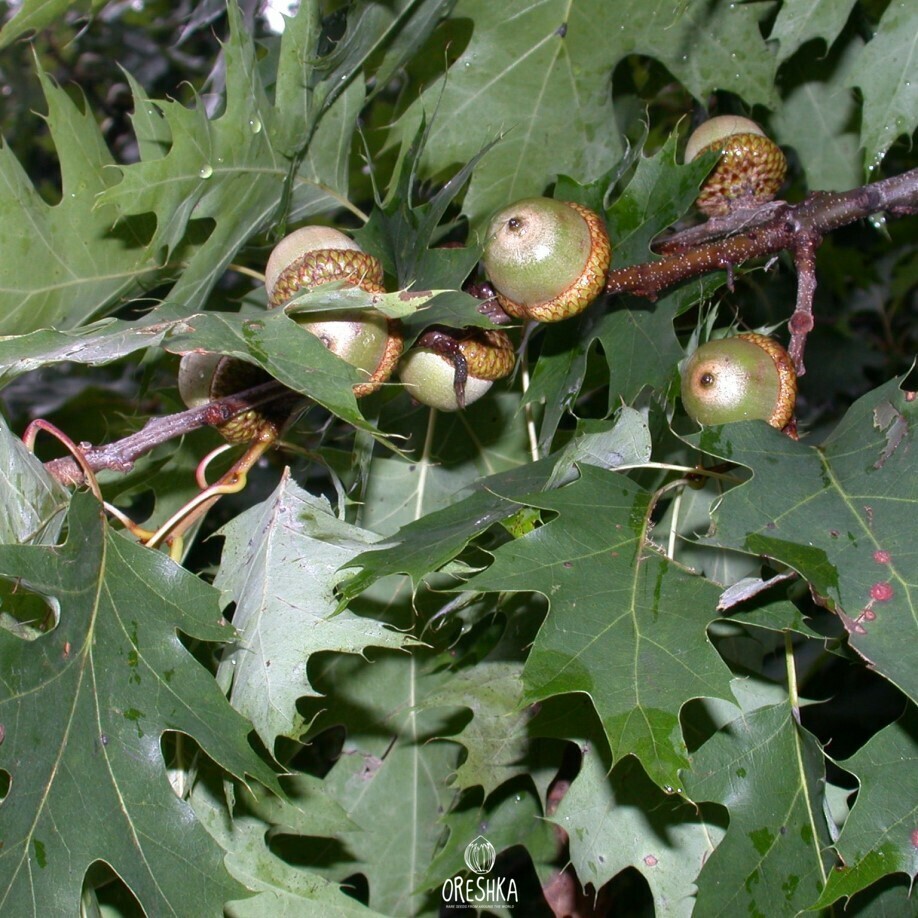
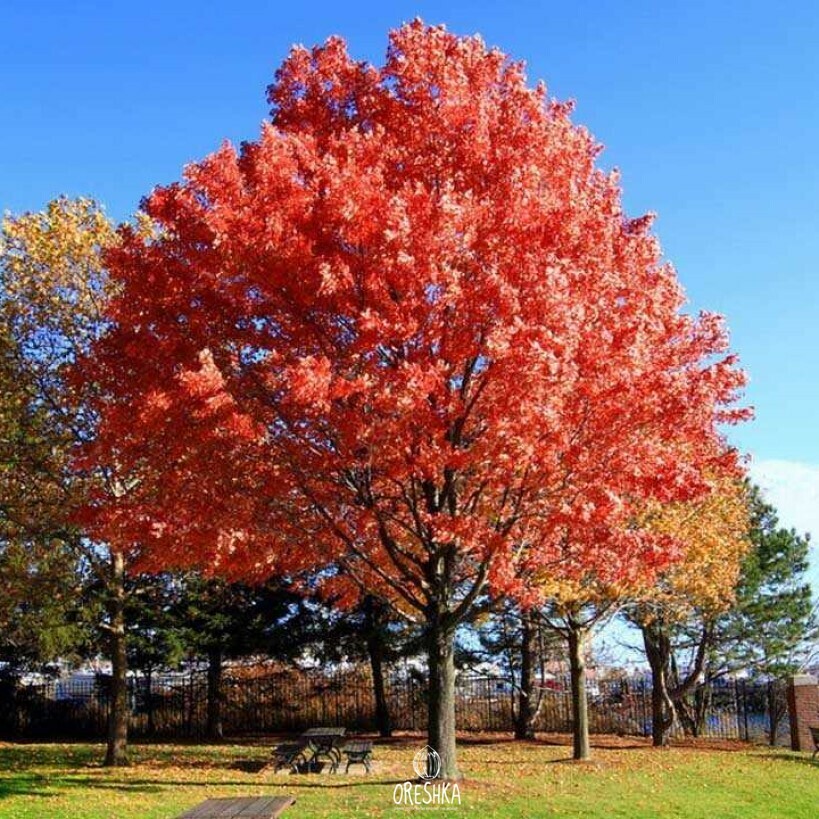
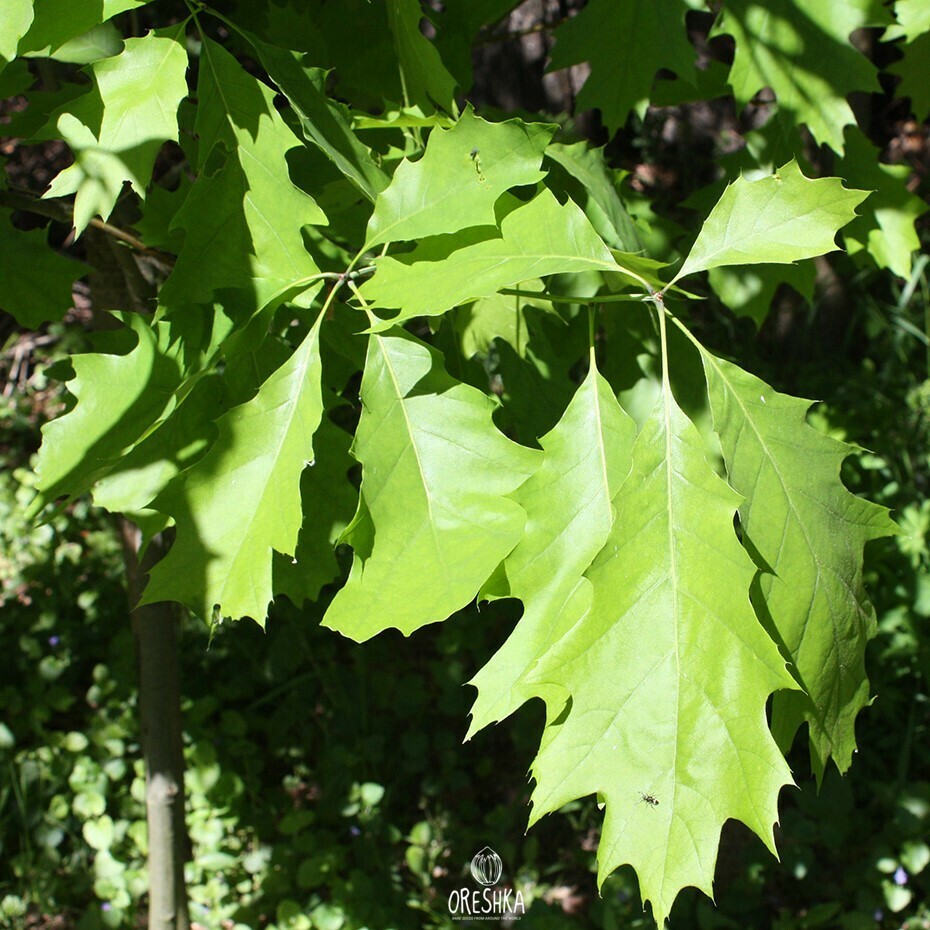
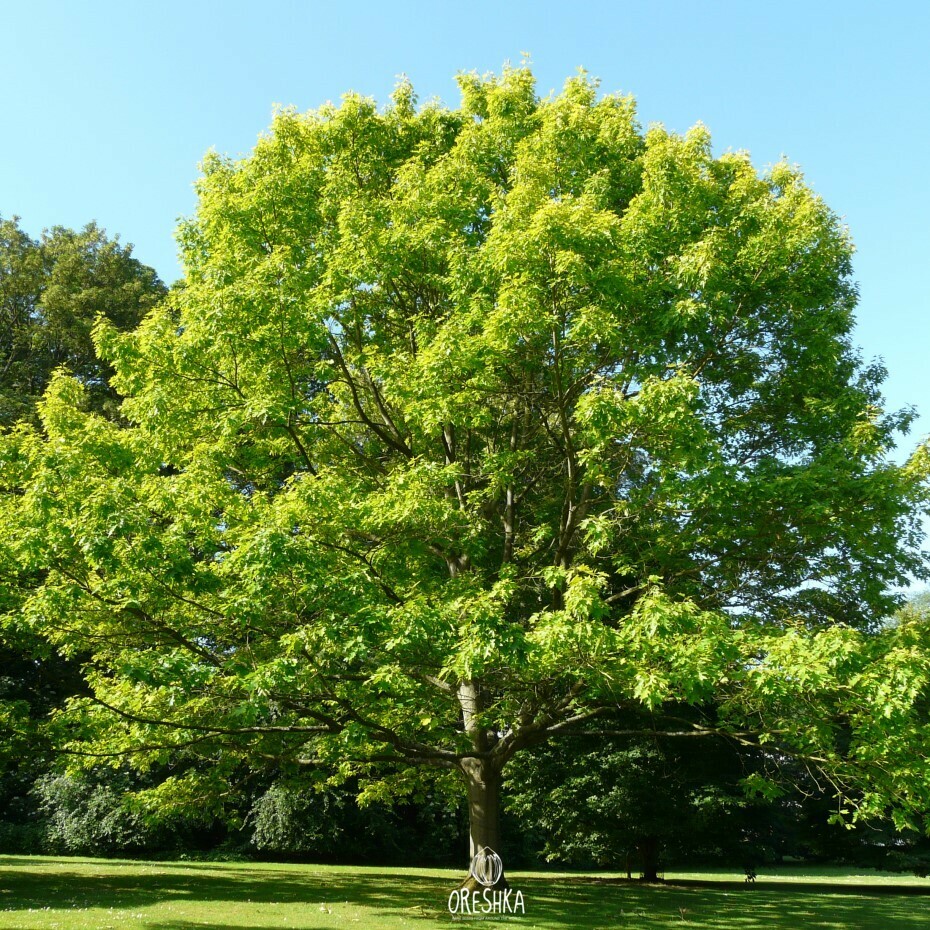
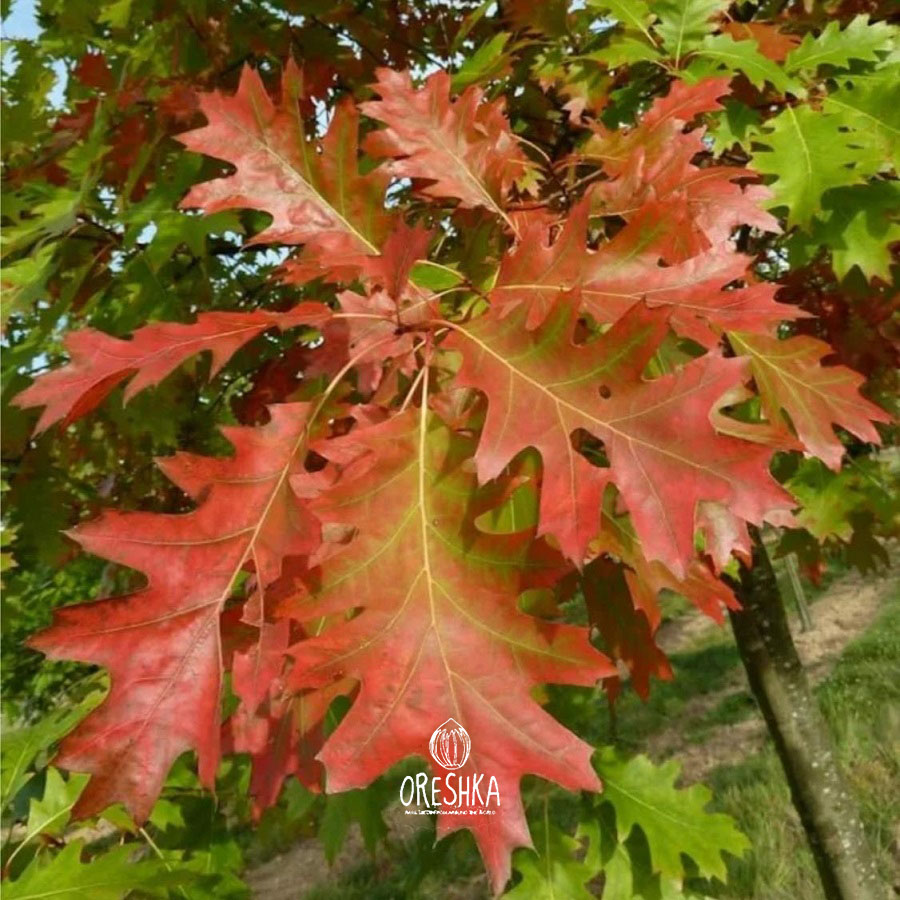
Quercus rubra is a large deciduous oak native to eastern and central North America, from Nova Scotia to Nebraska and south to Georgia. A mature tree reaches 25 m with a dense, tent-shaped crown and a trunk covered with thin, smooth, grey bark that develops fissures in old age. Young shoots are distinctly reddish-felt. The leaves are deeply notched with 4–5 pointed lobes on each side — 15–25 cm long, glossy dark green in summer, brilliant scarlet to deep crimson in October–November.
Among oaks, Quercus rubra is exceptional for growth speed: 60–90 cm per year makes it among the fastest-growing large trees suitable for Zone 3 climates. It is also notably disease-resistant — high phytoncidal properties confer resistance to powdery mildew and most fungal diseases that commonly plague English Oak in European gardens. Susceptibility to leaf miner is the one notable weakness, but leaf miner damage is cosmetic and does not threaten the tree's health.
Organic acorns from Siberia — cold-hardy provenance. Sow fresh in autumn for best germination. Deep pot essential — tap root goes down before the shoot comes up. About our collection →
Quick facts
Quercus rubra at a Glance
Growing guide
How to Grow Northern Red Oak from Acorn — Step by Step
- 01Viability Check and StorageTest acorn viability: submerge in water for 24 hours — discard floaters. Sow viable acorns immediately or store in barely moist sand at 2–4°C for up to 90 days. Never allow to fully dry out — Red Oak acorns die within weeks when desiccated. Check monthly for mould. Any showing a white root tip have broken dormancy — sow those immediately regardless of season.
- 02Cold Stratification or Autumn SowSimplest method: sow directly outdoors in autumn (October–November) — acorns stratify naturally through winter and germinate in April–May. For spring sowing from stored acorns: refrigerate in moist sand at 2–4°C for 4–8 weeks before sowing. Fresh autumn-sown acorns consistently outperform spring-sown stratified acorns in germination rate and seedling vigour.
- 03Sow 3–4 cm Deep — Deep Pot OnlySow one acorn per pot, 3–4 cm deep. Use pots at least 20 cm deep — the tap root extends rapidly before the shoot emerges, and a shallow container causes permanent root coiling. Root trainers or long tree tubes are ideal. The root going down before the shoot coming up is normal — wait 4–6 weeks for the shoot to appear at soil surface after germination.
- 04First Season — Protect from Deer and RabbitsGrowth is vigorous once established — 30–60 cm in the first season. Full sun. Water regularly. Young Red Oak shoots are very palatable to deer and rabbits — protect with individual tree guards in any area where these animals are present. Damage in the first two years can set the tree back significantly. Once the bark has hardened by year 3–4, browsing damage diminishes.
- 05Plant Out — Acid Soil OnlyPlant in permanent position in autumn of year one or spring of year two. Critical: Quercus rubra requires acidic to neutral soil (pH 4.5–6.5) and does NOT tolerate chalk or calcareous soils. Space 10–15 m for a specimen, 3–5 m for woodland planting. Full sun produces the most vigorous growth and best autumn colour. Hardy to −40°C. Wind-resistant once established — good for exposed positions in non-alkaline soils.
- 06Long-term Growth — Scarlet Autumn from Year 5Growth rate of 60–90 cm per year produces a significant tree within a decade. First reliable autumn colour from year 5–8. Acorn production begins at 15–20 years. The tree will outlive the planter — well-established Red Oaks commonly live 200–400 years. The increasing size and wildlife value (hundreds of species of invertebrates, birds, and mammals depend on mature oaks) make every year of growth an ecological investment.
The viability of Red Oak acorns deteriorates rapidly after harvest — far faster than most other tree seeds. Acorns that appear healthy can have internal desiccation that prevents germination. The float test (discard floaters after 24 hours in water) is essential and reliable: sinkers have viable embryos; floaters are hollow or dead. Of our 10 acorns per packet, expect 6–9 viable seeds after the float test in good storage conditions. From those, germination rate of properly stratified fresh acorns is typically 70–90%. Sowing the full packet and expecting 5–7 successful seedlings is a realistic expectation — more than enough to select the best specimens for permanent planting.
Compare
Northern Red Oak vs. English Oak vs. Sessile Oak
| Feature | Quercus rubra Northern Red Oak · L2b | Quercus robur English / Pedunculate Oak | Quercus petraea Sessile / Durmast Oak |
|---|---|---|---|
| USDA Zone | Zone 3 · −40°C | Zone 4 · −34°C | Zone 4 · −34°C |
| Growth rate | 60–90 cm/yr · fastest oak | 30–60 cm/yr | 30–50 cm/yr |
| Acorn ripening | 2 years — unique red oak trait | 1 year — same season | 1 year — same season |
| Autumn colour | Scarlet to deep crimson · intense | Yellow-brown · unreliable | Yellow-brown · unreliable |
| Chalk tolerance | None — acid soil only | Good — most soils | Moderate |
| Disease resistance | High phytoncides · mildew resistant | Susceptible to mildew | More resistant than robur |
Avoid these
Common Mistakes When Growing Red Oak from Acorn
Planting in chalk or alkaline soil
Quercus rubra cannot tolerate calcareous or high-pH soils. Chlorosis (yellowing) develops within 1–2 seasons on chalk. Test soil pH before planting — suitable range is 4.5–6.5. For alkaline gardens, Quercus robur is the better choice.
Using shallow containers
The tap root extends rapidly before the shoot appears. Shallow trays or seed trays cause tap root coiling that permanently distorts the tree's root architecture. Always use deep individual pots (20+ cm), root trainers, or sow directly in the ground.
Letting acorns dry out before sowing
Red Oak acorns die within weeks of desiccation. Never store in paper envelopes or dry conditions. Keep barely moist in sand at 2–4°C. Sow as soon as possible after receiving — fresh acorns give the best results by a significant margin.
Not protecting from deer and rabbits
Young oak shoots are highly palatable. Without tree guards, deer and rabbits will graze them to the ground repeatedly. Use spiral guards or tree tubes in the first 2–3 years in any area with browsing pressure. Even repeated browsing rarely kills the plant — the root system persists — but sets growth back by years.
FAQ
Frequently Asked Questions
Why do Red Oak acorns take 2 years to ripen?
Can Red Oak grow on chalk or alkaline soils?
What is Red Oak autumn colour like?
How long until a Red Oak produces acorns?
What is the phytoncidal property of Red Oak?
How quickly does Northern Red Oak grow?
The Fastest-Growing Large Oak — Scarlet in Autumn, Hardy to −40°C
10 organic acorns · Zone 3 · 2-year acorn cycle · 60–90 cm growth per year · Disease resistant · Ships worldwide
Buy Seeds — €7.50 → Sale −40% · SKU L2b · 10 PCS · Organic · Quercus rubra · Oreshka Seeds