

How to Grow Rose of Sharon from Seed
Hibiscus syriacus — Mugunghwa
The national flower of Korea, cultivated for over 3,000 years. One of the latest-flowering hardy shrubs — blooms July through September when most garden flowers are finished. Hardy to −29°C.
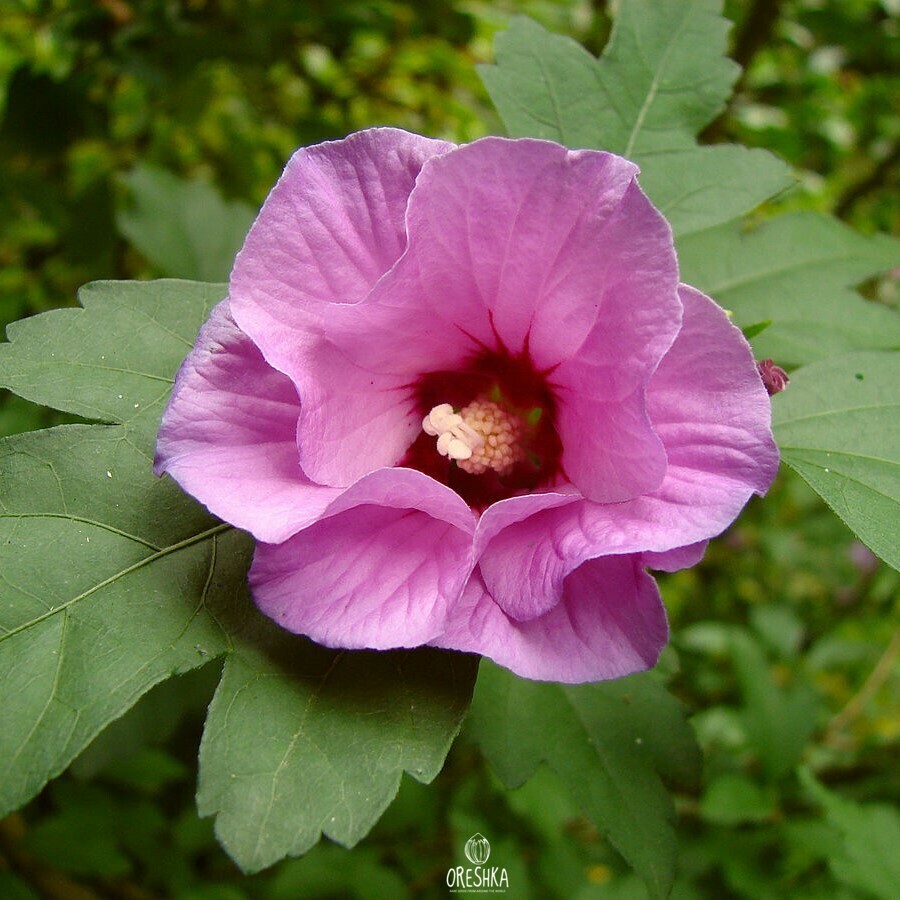
The plant
What is Rose of Sharon — Korea's National Flower?
Hibiscus syriacus is a large, deciduous shrub native to China and India — despite its misleading species name, it does not come from Syria. It has been cultivated in East Asia for over 3,000 years and holds a unique cultural status: it is the national flower of South Korea, where it is called Mugunghwa (무궁화) — meaning "eternal flower" — appearing on the national emblem, military insignia, and the country's highest state decoration.
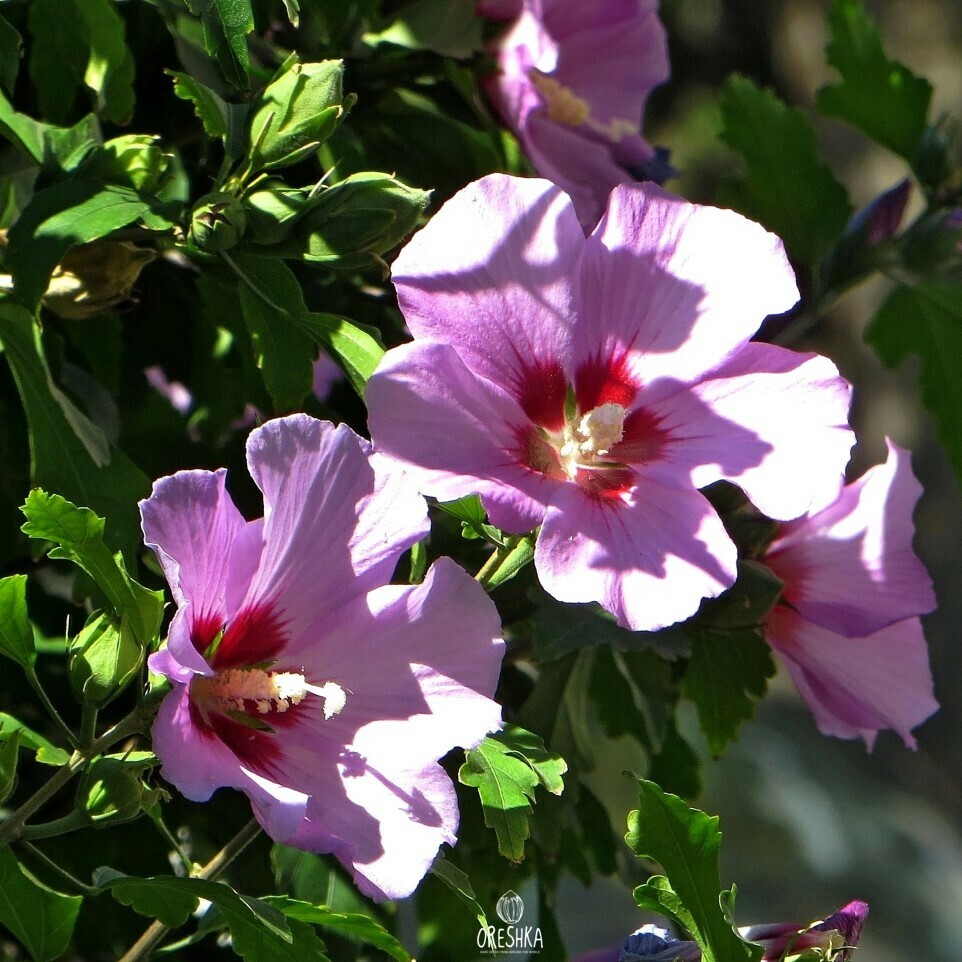
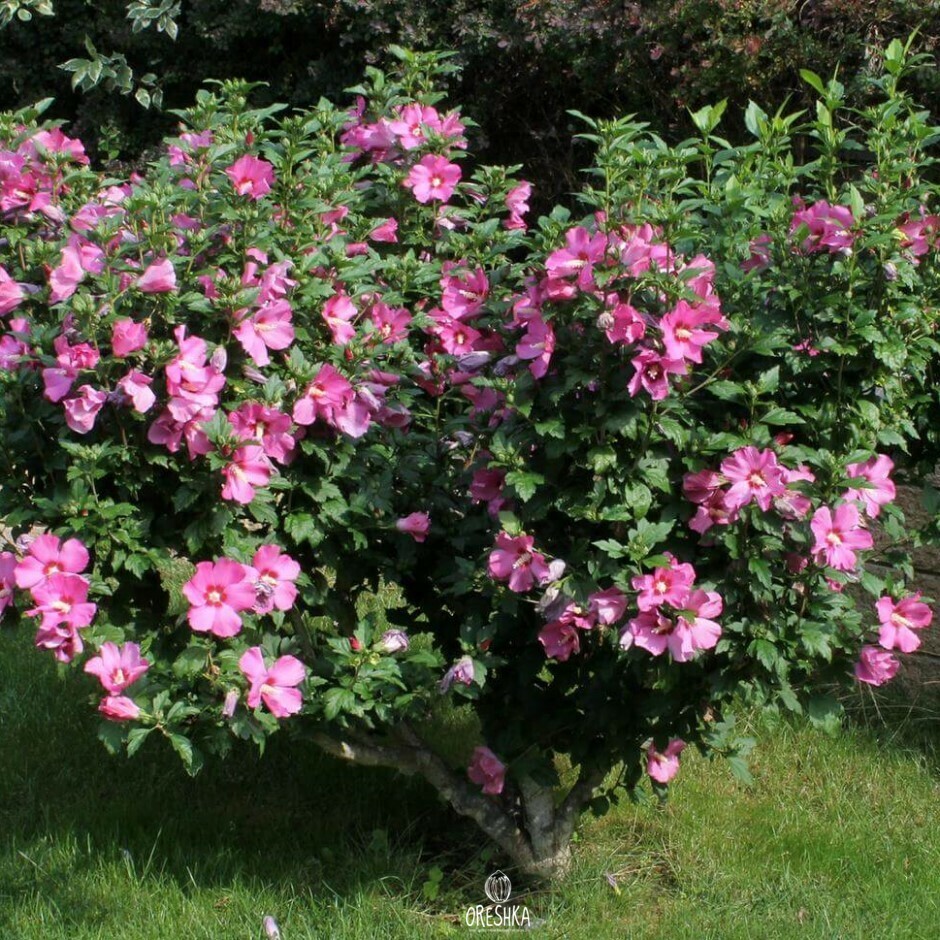
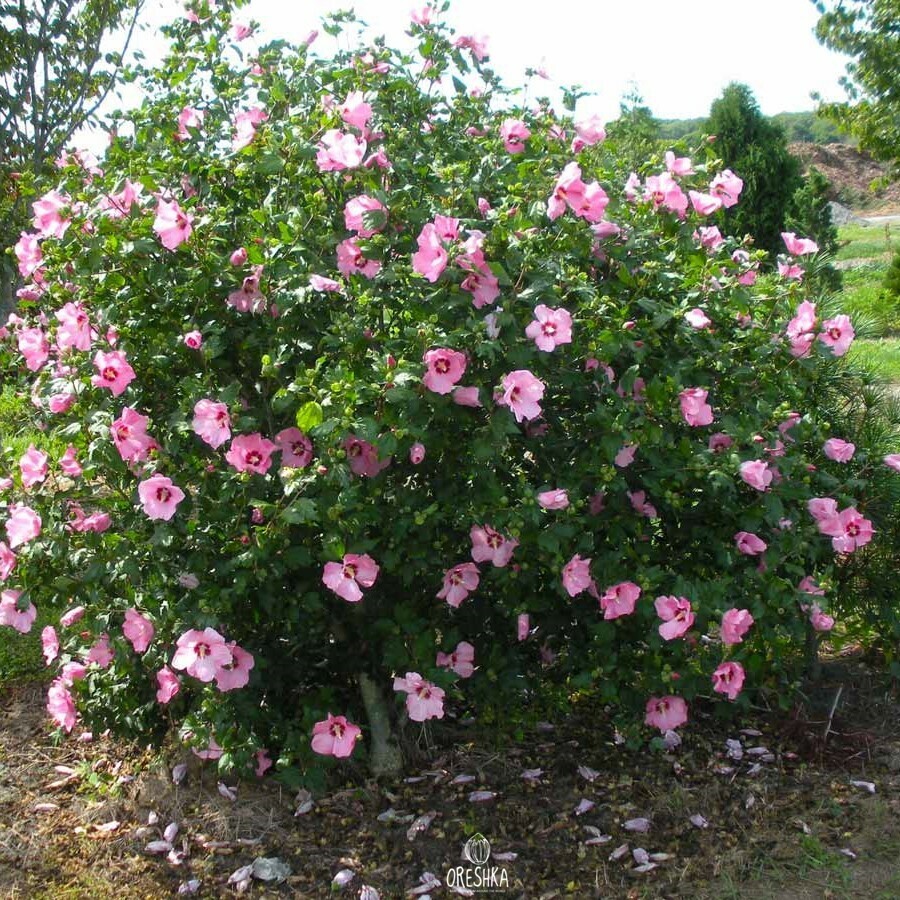
In the garden, Rose of Sharon fills a critical niche: it is one of the very last hardy shrubs to flower, blooming from July through September when most summer plants have finished. Each individual flower lasts only a single day, but a mature shrub produces hundreds of flowers over the 8–10 week season in a continuous succession. The flowers are large — up to 12 cm across — with distinctive single or double petals in white, pink, lavender, and red-purple, almost always with a dark crimson basal eye at the centre.
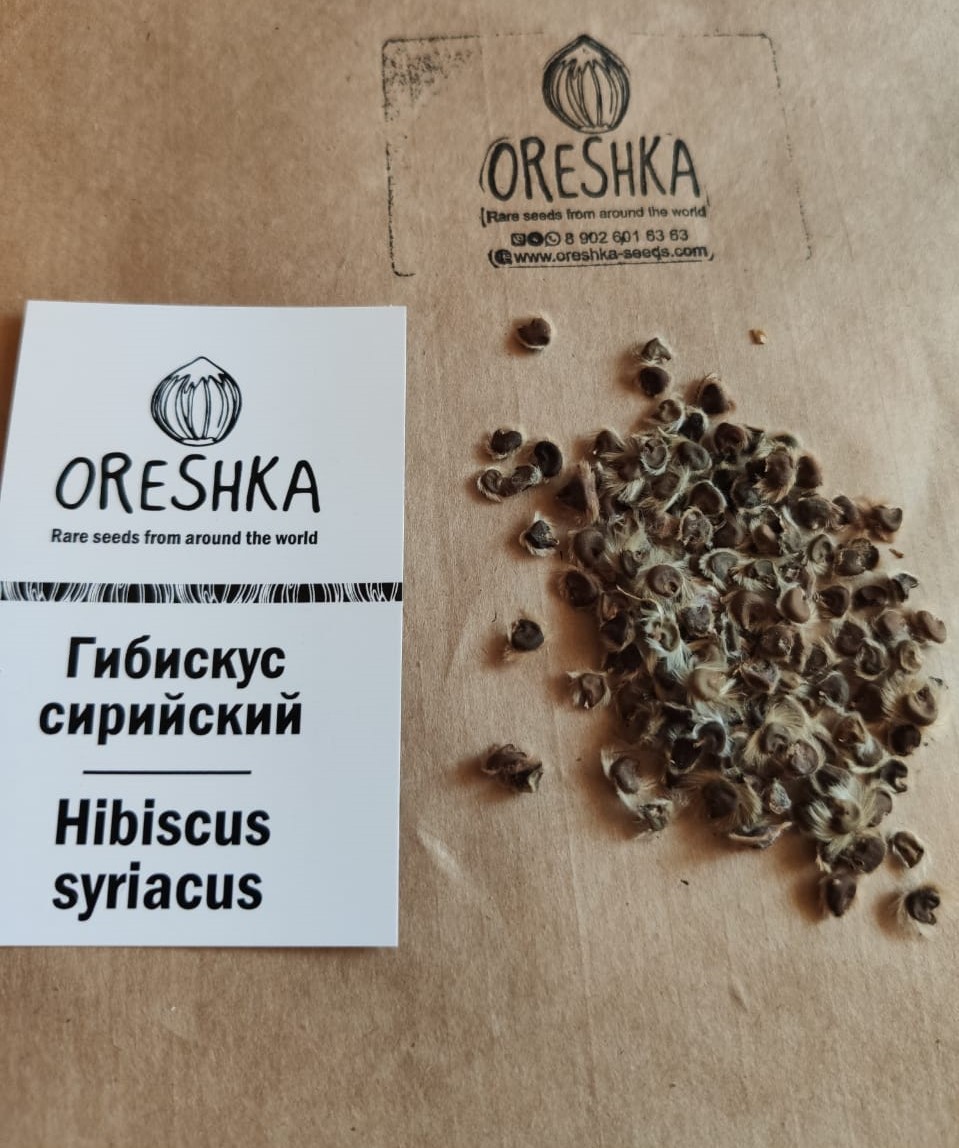
Fresh seeds give significantly better germination. Soak for 24 hours before sowing — this alone can raise germination rate from 40% to 70%+. About our collection →
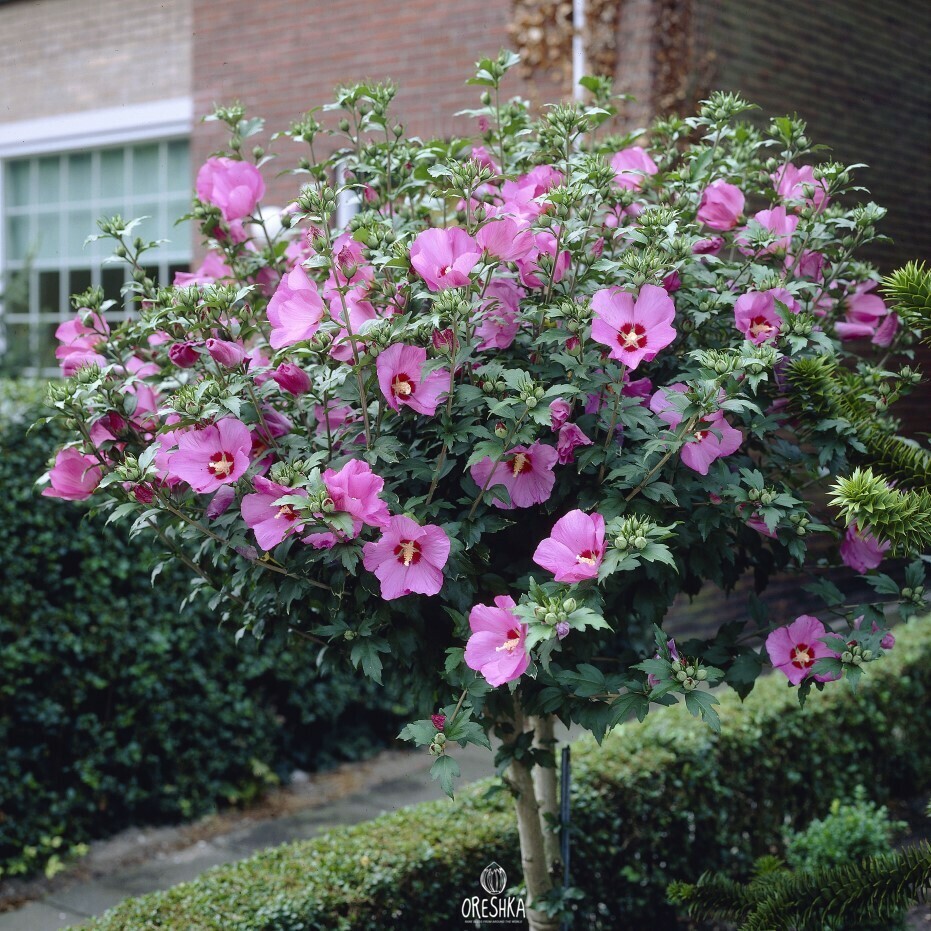
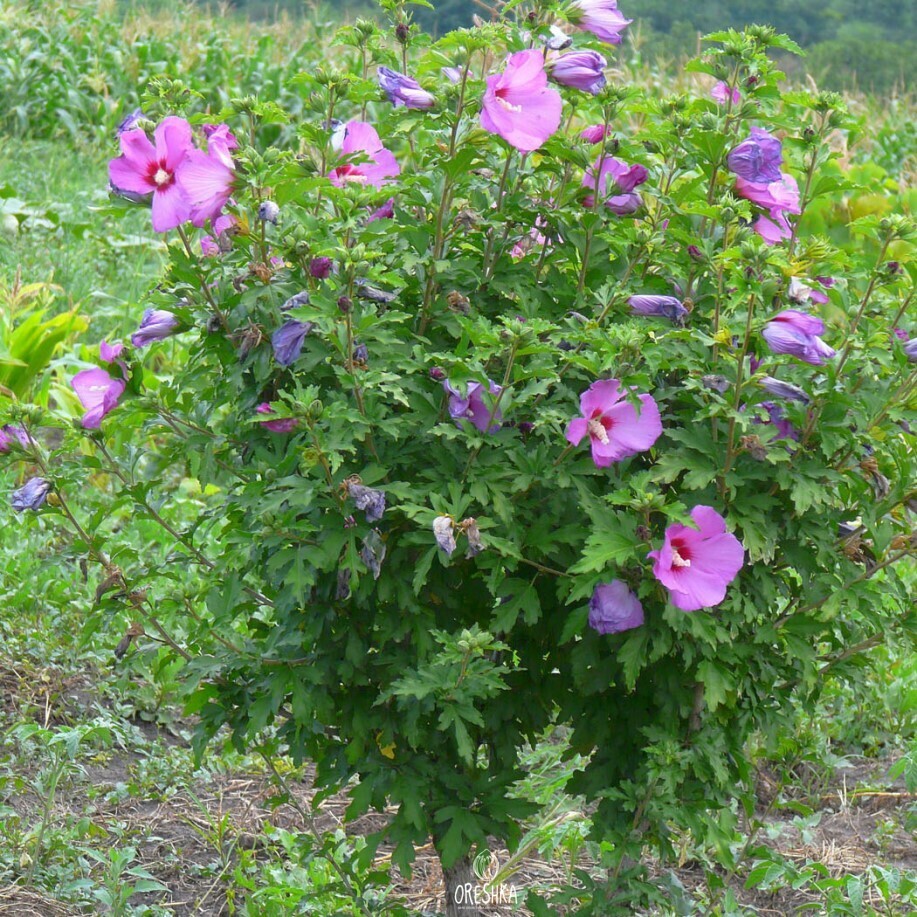
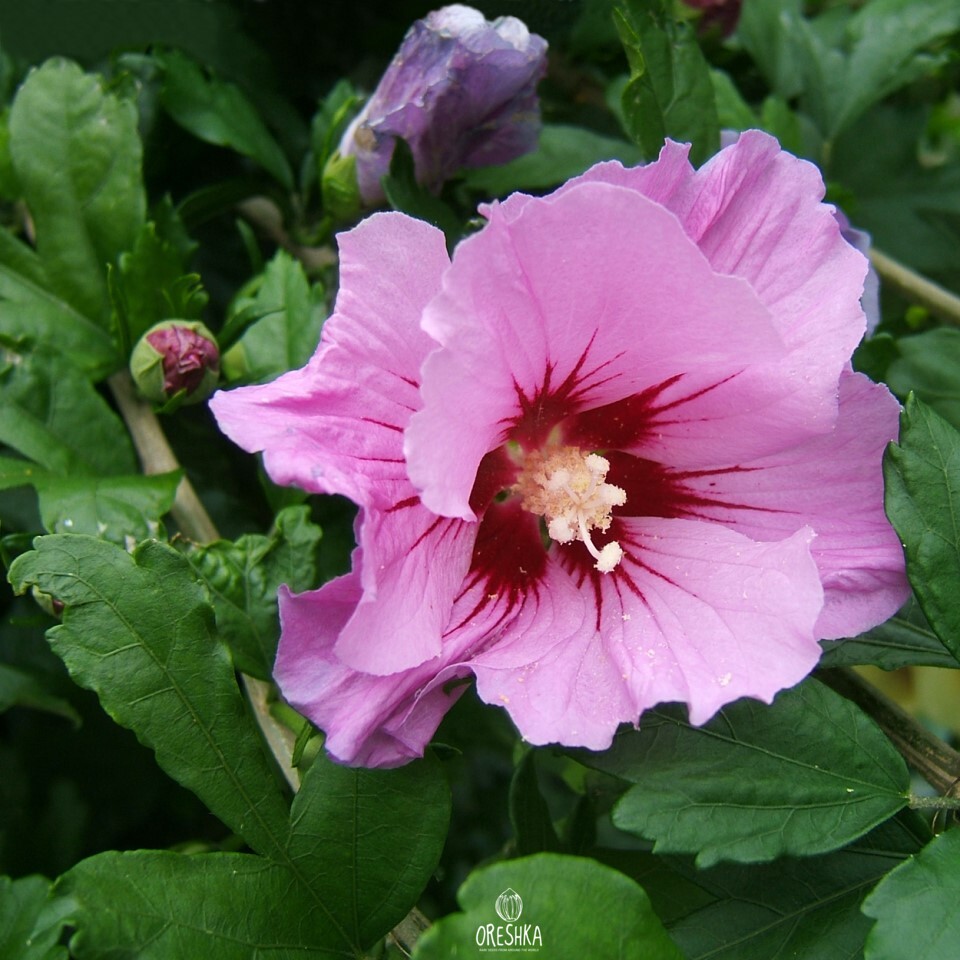
Quick facts
Hibiscus syriacus at a Glance
Flowering calendar
When Rose of Sharon Blooms — The Late-Summer Gap Filler
Most hardy flowering shrubs finish by July. Hibiscus syriacus starts in July and carries through to October — filling the late-summer gap that few other hardy shrubs can.
Growing guide
How to Grow Rose of Sharon from Seed — Step by Step
No cold stratification required. A 24-hour warm soak before sowing is the single most effective germination aid.
- 01 24-Hour Warm Water SoakPlace seeds in a cup of warm water (40–45°C) and allow to cool naturally. Leave to soak for 24 hours. This softens the hard seed coat and significantly improves germination rate — from approximately 40% without soaking to 70%+ with soaking. Seeds that sink to the bottom are most viable. Sow soaked seeds immediately; do not allow them to dry out.
- 02 Sow 5–6 mm Deep at 20–25°CFill trays or individual 7 cm pots with moist seed compost and perlite (3:1). Sow soaked seeds 5–6 mm deep. Unlike many flower seeds, Hibiscus syriacus needs to be covered — it does not require light to germinate. Keep at 20–25°C; bottom heat dramatically improves both speed and rate of germination. Cover tray with clear plastic. Seeds germinate in 14–28 days.
- 03 Germination and Early CareSeedlings emerge in 14–28 days at 20–25°C. Remove plastic cover when seedlings reach 3–4 cm. Provide bright light — 14–16 hours of daylight or grow-light time. Water when the top 1–2 cm of soil dries; do not overwater. Young hibiscus seedlings are susceptible to damping off — good air circulation is essential at this stage.
- 04 Pot On and Grow On IndoorsTransplant to individual 9–12 cm pots when seedlings develop 3–4 true leaves. Use well-draining, moderately fertile potting mix (pH 6.0–7.0). Keep in a warm, bright position. Water regularly but allow the soil to partially dry between waterings. Feed monthly with a balanced fertiliser from May to August in the first year.
- 05 Harden Off and Plant OutHarden seedlings off over 10–14 days before planting out after last frost. Choose a sunny, sheltered position with well-draining soil. Rose of Sharon tolerates most soil types — clay, sandy, chalky — but dislikes waterlogging. Space 1.5–2 m from neighbouring plants; it is a large shrub at maturity. Stake young plants in exposed positions against wind rock.
- 06 Pruning for Maximum FlowersRose of Sharon blooms on new season's wood — hard annual pruning in early March produces the most vigorous growth and the best flowering. Cut all main stems back by one-third to one-half each spring. Without pruning, the shrub becomes leggy with fewer, smaller flowers over time. Hard pruning also maintains a compact shape and prevents the shrub from outgrowing its space. First flowers appear in year 2–3 from seed.
The most common reason Rose of Sharon fails to flower well is not getting pruned. Hibiscus syriacus blooms exclusively on new season's growth — wood produced in the current year. Unpruned shrubs produce a few flowers on long, leggy stems. Cut back hard in early March, before any leaf emergence, reducing stems by at least one-third and ideally one-half. You will see vigorous new growth within 3–4 weeks and dramatically more flowers from July. The later in spring you prune, the later and fewer the flowers — March is the window. Do not be tempted to prune in autumn or winter.
Compare
Hibiscus syriacus vs. Buddleja vs. Lavatera — Late-Summer Flowering Shrubs
| Feature | Hibiscus syriacus Rose of Sharon · C1 | Buddleja davidii Butterfly Bush | Lavatera olbia Tree Mallow |
|---|---|---|---|
| Flowering period | July–September | June–September | June–October |
| USDA Zone | Zone 5 · −29°C | Zone 5–6 | Zone 7–8 · less hardy |
| Mature height | 3–5 m · controllable by pruning | 2–3 m | 1.5–2.5 m |
| Flower size | Up to 12 cm | Small flowers in large panicles | 6–8 cm · hollyhock-type |
| Invasive status | Non-invasive | Invasive in some regions | Non-invasive |
| Lifespan | 25–50+ years | 10–20 years | 5–10 years |
Avoid these
Common Mistakes When Growing Rose of Sharon from Seed
Skipping the pre-soak
Hibiscus syriacus seeds have a hard seed coat. Without a 24-hour warm water soak, germination rates drop significantly. This is the single cheapest and most effective improvement to germination — never skip it.
Not pruning in spring
Rose of Sharon flowers on new wood — without hard annual pruning in March, the shrub becomes leggy and flowers poorly. Cut back by one-third to one-half each spring before leaf emergence. This is the most important maintenance task for good flowering.
Planting in shade or poor drainage
Hibiscus syriacus requires at least 6 hours of direct sun daily for good flowering. In shade, it produces foliage with few flowers. Waterlogged soil causes root rot — plant in well-draining soil or raised beds in heavy clay gardens.
Expecting flowers in year one
From seed, first flowers appear in year 2–3. Year one plants focus on root and framework development. This is normal — do not discard plants that fail to flower in their first season.
Planting too close together
Hibiscus syriacus reaches 3–5 m at maturity. Planting at 60–80 cm spacing (as sometimes suggested for hedging) leads to overcrowding, reduced flowering, and the need for frequent heavy pruning. Space at 1.5–2 m minimum for long-term success.
FAQ
Frequently Asked Questions
Is Hibiscus syriacus hardy in cold climates?
When does Rose of Sharon flower and how long does it bloom?
What colours does Rose of Sharon produce from seed?
Why is it called Rose of Sharon if it is not a rose?
Is Rose of Sharon good for pollinators?
How tall does Hibiscus syriacus grow and can it be kept smaller?
The Last Hardy Shrub to Flower — from July to September
Zone 5 · Hardy to −29°C · Ships worldwide in 2–3 days · Blooms year after year for 25–50+ years
Buy Seeds — €5.32 → Sale −40% · SKU C1 · Hibiscus syriacus · Oreshka Seeds