

How to Grow Snowberry from Seed
Symphoricarpos albus — Common Snowberry · Waxberry
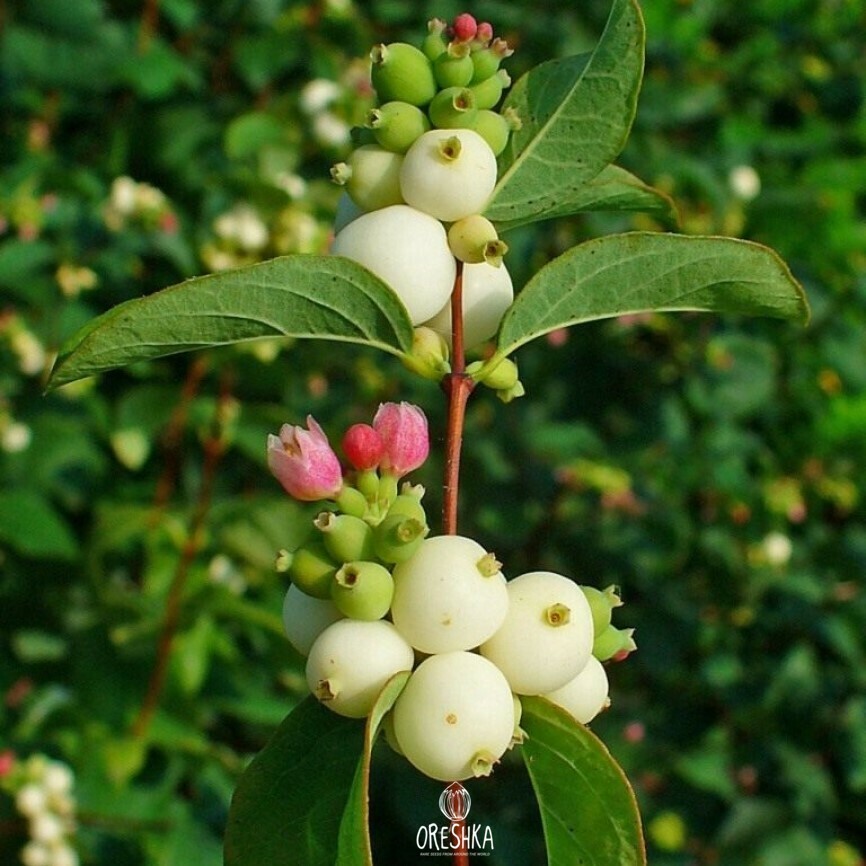
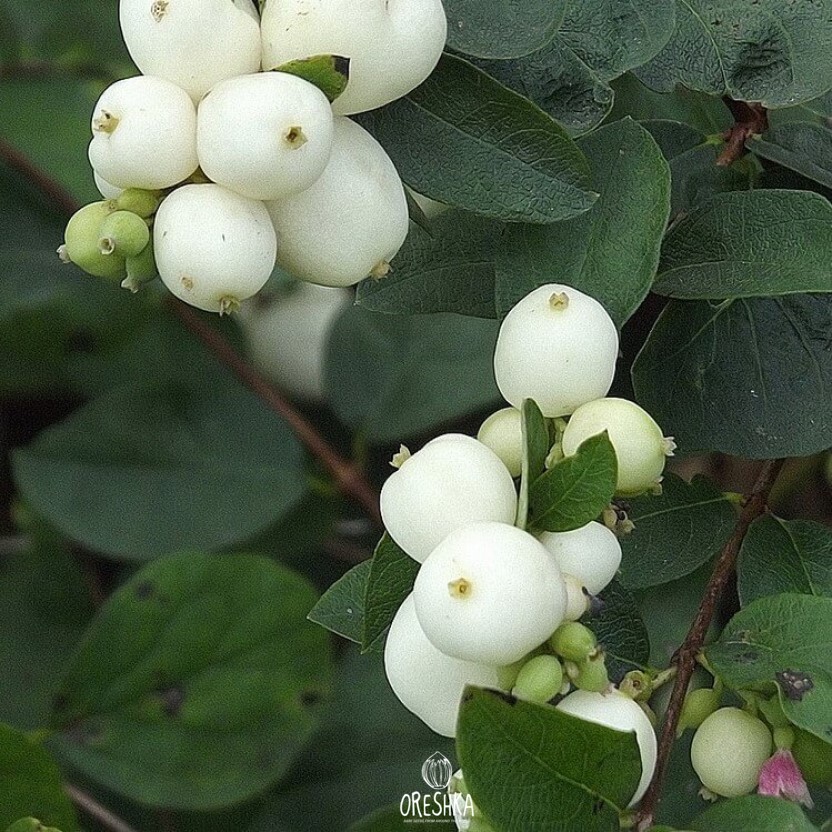
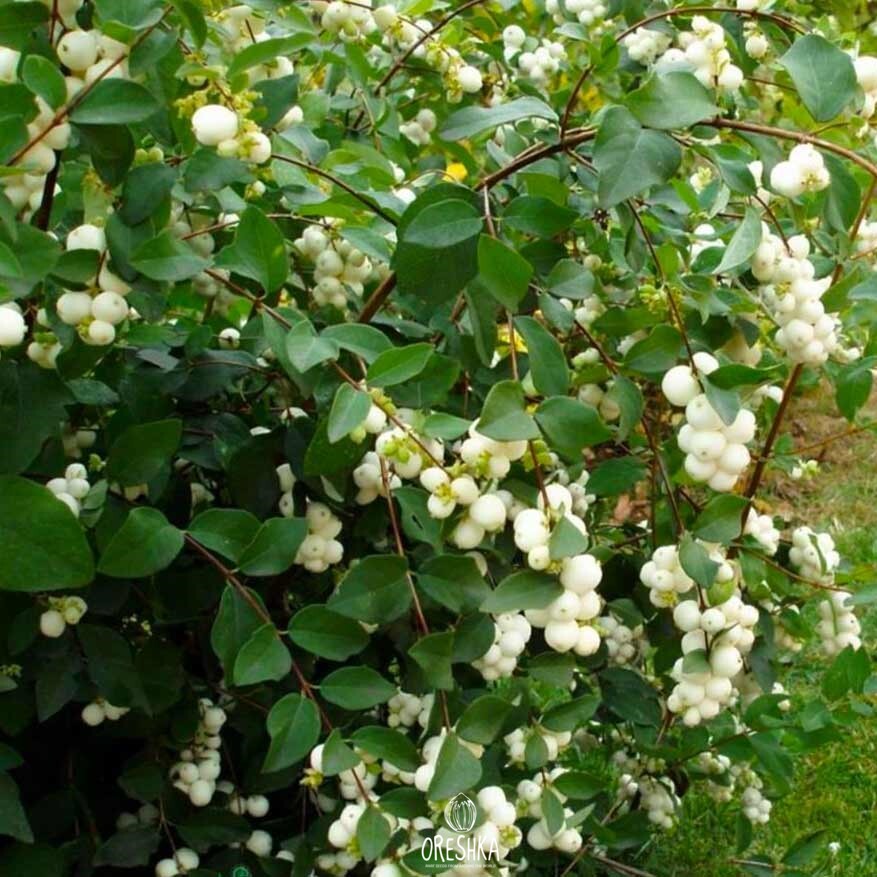
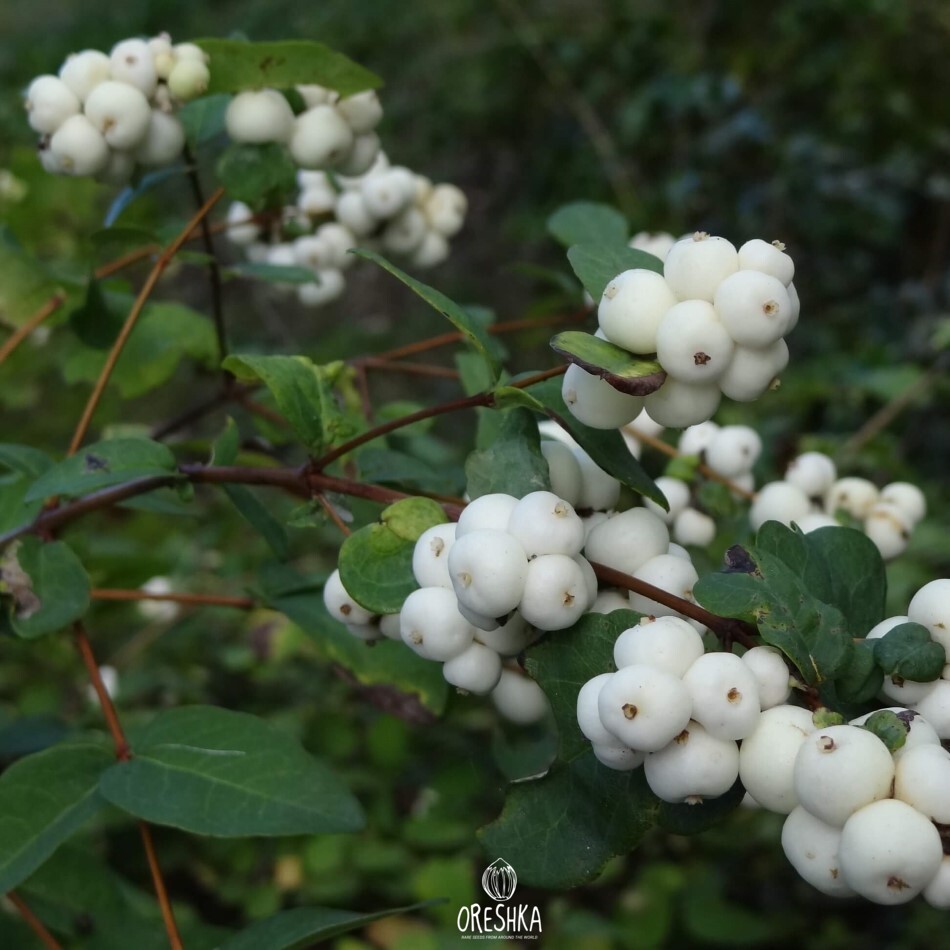
White berries on bare winter branches from September to February — 5 months of ornamental interest when most other shrubs are dormant. Grows in full, dry shade under mature trees where little else survives. Flowers from May to September — one of the longest flowering periods of any temperate shrub.
The plant
What is Snowberry — and Why is it the Solution for Full Dry Shade?
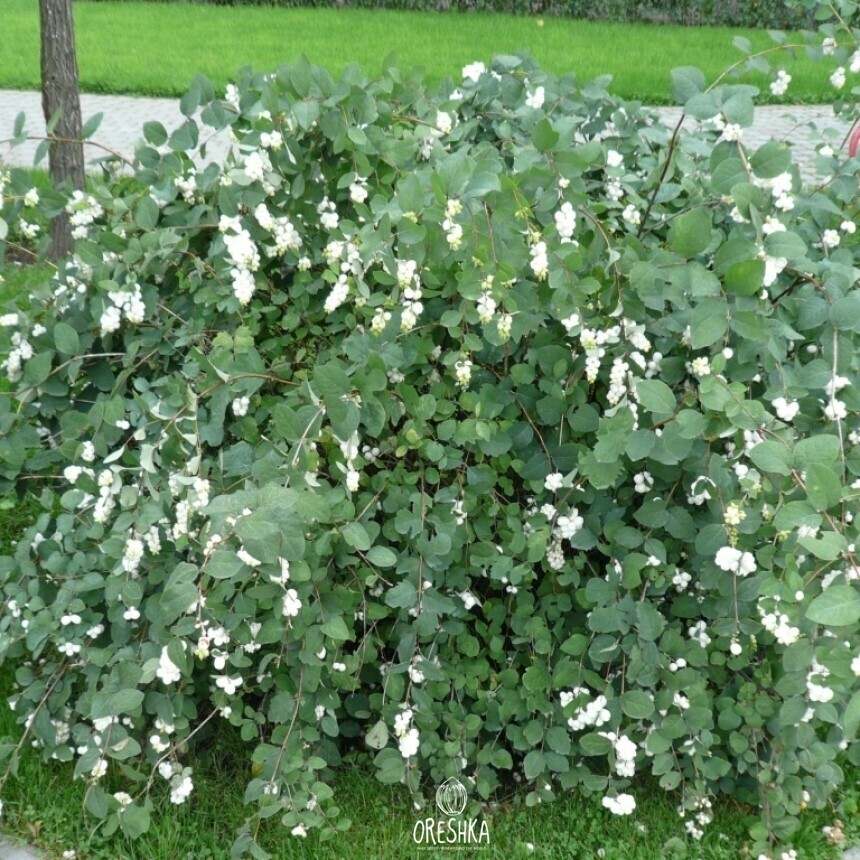
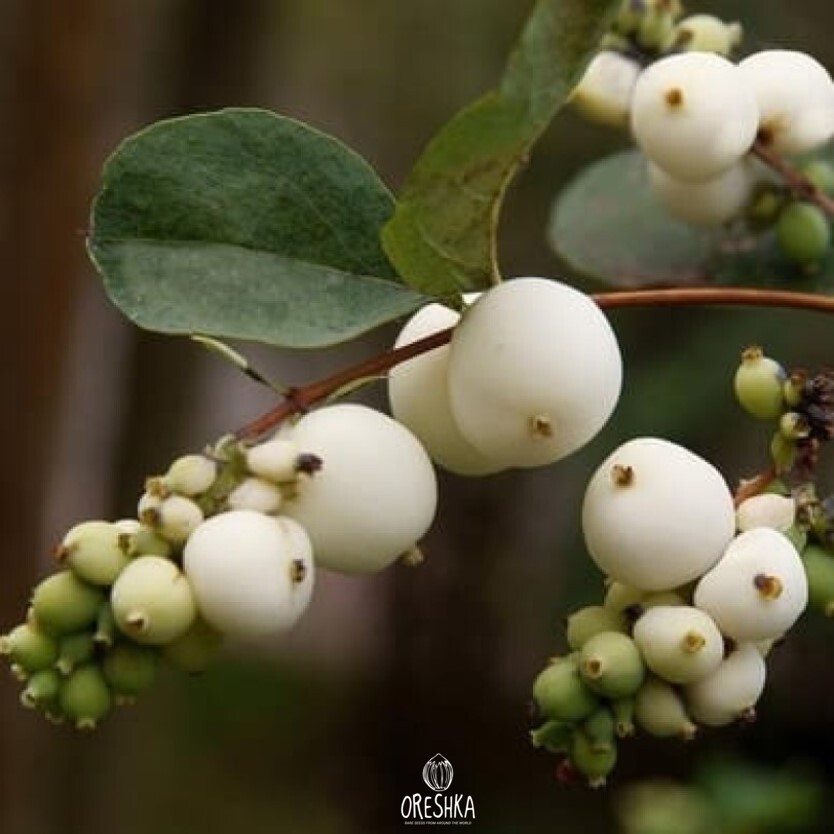
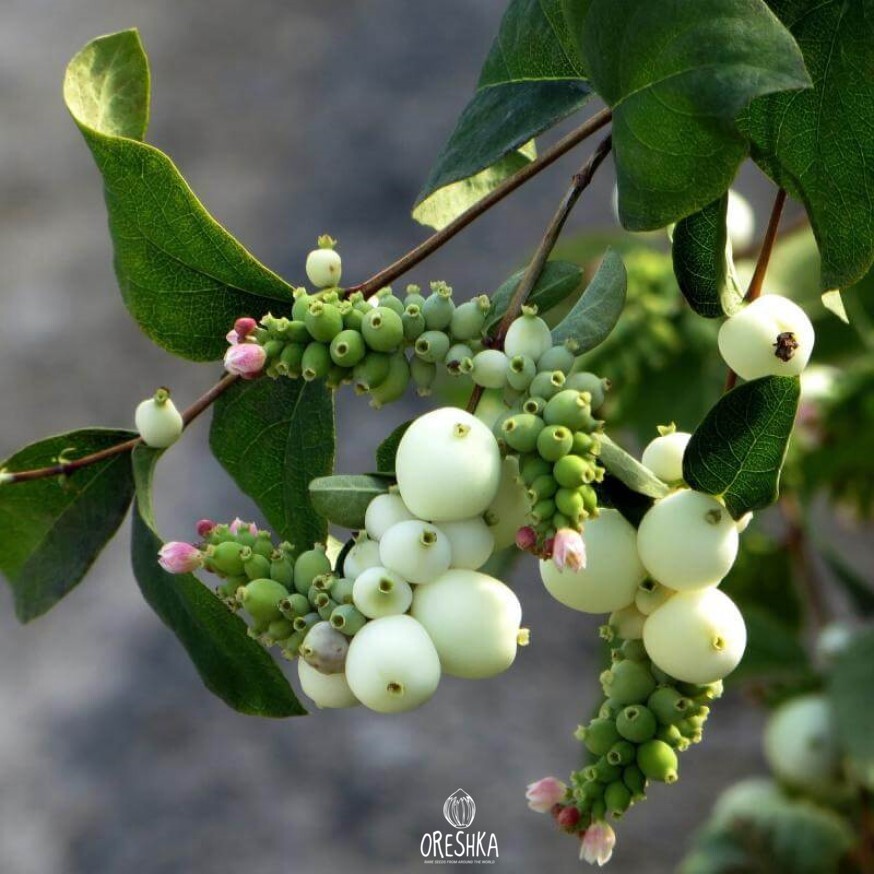
Symphoricarpos albus is a deciduous shrub native to North America, introduced to Europe in the early 18th century and now naturalised across much of the continent. It grows to 1.5 m with thin, arching stems and produces small pink bell flowers from May all the way through September — one of the longest continuous flowering periods of any temperate ornamental shrub. The signature white berries ripen in September and remain on the bare grey branches throughout winter, providing ornamental interest from September to February.
Its defining horticultural quality is exceptional tolerance of full, dry shade. Symphoricarpos albus is one of a very small group of ornamental shrubs that genuinely flowers and berries under dense deciduous tree canopy where the soil is dry and root-compacted. This makes it one of the first choices in landscape design for the problem position that every garden has: the area under large trees where little else grows.
Double dormancy requires either warm + cold stratification (4–6 months total) or direct autumn sowing for natural stratification. Simplest method: sow outdoors in September. About our collection →
Quick facts
Symphoricarpos albus at a Glance
Growing guide
How to Grow Snowberry from Seed — Step by Step
- 01Double Dormancy — Warm Then ColdSymphoricarpos albus seeds have a double dormancy — they require warm stratification (60–90 days at 20–25°C) followed by cold stratification (60–90 days at 2–4°C) before germination. Mix seeds in moist sand and keep at room temperature for 2–3 months, then transfer to the refrigerator for 2–3 months. Alternatively — and much more simply — sow directly outdoors in September. Over winter, the seeds experience the full natural warm-then-cold cycle and germinate reliably in spring. The autumn outdoor sow is strongly recommended.
- 02Sow 0.5 cm Deep — Any SoilAfter completing double stratification, sow seeds 0.5 cm deep in free-draining compost at 15–20°C. For outdoor autumn sowing, scatter seeds 0.5 cm deep into prepared ground in September–October. Symphoricarpos is tolerant of a wide pH range (5.0–8.0) and adapts to almost any soil — clay, loam, sandy, alkaline, or acidic. This is one of the most undemanding shrubs to establish from seed.
- 03Germination — 2 to 4 Weeks After StratificationAfter both stratification periods, germination occurs in 14–28 days at 15–20°C. Germination rate from properly stratified seeds is 60–80%. Seedlings emerge as thin, upright shoots with small oval leaves. Prick out into individual 9 cm pots when the first true leaf pair is fully developed. Symphoricarpos is not demanding about compost type — standard multi-purpose compost is fine.
- 04First Season — Easy GrowingSnowberry seedlings grow steadily — 20–40 cm in the first season. Grow in any position from full sun to deep shade. Water regularly in the first season to establish the root system. Once established, Symphoricarpos albus is drought-tolerant. No feeding needed in average soils. The thin, slightly arching stems are characteristic of the species — this is the natural growth habit, not weak growth.
- 05Plant Out — Any Position Including Full ShadePlant in permanent position in the first or second year. Symphoricarpos albus is among the most adaptable of all ornamental shrubs: full sun to full shade, dry to moist soils, pH 5.0–8.0, urban pollution, exposed sites. Space 1–1.5 m for specimens; 60–80 cm for hedging. It spreads by suckers — allow space or remove suckers annually to control spread. Hardy to −35°C without any protection.
- 06Flowering May–September, Berries September–FebruaryFirst flowers appear in year 2–3. Small pink bell flowers are produced in dense racemes from May continuously through September — 4–5 months — a remarkable duration for a temperate shrub. White berries (up to 1 cm) ripen in September and remain on bare branches through winter until February. For maximum berry production, plant two or more plants to ensure cross-pollination. The winter display — pure white berries against frost-covered bare stems — is the primary ornamental feature.
The most rewarding use of Snowberry is in the problem position that every garden has: the area under a large deciduous tree where the soil is dry, compacted, and shaded, and where most plants struggle or fail entirely. Symphoricarpos albus will establish here when almost nothing else will, providing year-round ground cover foliage, summer flowers for bumblebees, and winter berries for waxwings. Plant 3–5 plants spaced 60–80 cm apart under the tree canopy, water them through the first summer only, and leave them to establish. Within 3–4 years they will have spread by suckers to fill the area and require no further attention. This is one of the genuinely reliable dry-shade solutions in northern European gardening.
Compare
Snowberry vs. Guelder Rose vs. Elderberry — Winter Berry Shrubs
| Feature | Symphoricarpos albus Snowberry · L21 | Viburnum opulus Guelder Rose | Sambucus nigra Elderberry |
|---|---|---|---|
| Berry season | Sep–Feb · 5 months | Sep–Dec · 3 months | Aug–Sep · 1–2 months |
| Shade tolerance | Full dry shade · unique | Partial shade | Full sun preferred |
| USDA Zone | Zone 4 · −35°C | Zone 3 · −40°C | Zone 4 · −34°C |
| Berry edibility | Toxic to humans · birds eat freely | Toxic raw · birds eat | Edible cooked · wine · jam |
| Flower period | May–Sep · 5 months | May–Jun · 4–6 weeks | Jun–Jul · 4–6 weeks |
| Height | 1–1.5 m · arching | 2–4 m · upright | 3–6 m · large shrub/tree |
Avoid these
Common Mistakes When Growing Snowberry from Seed
Skipping double dormancy — expecting fast germination
Symphoricarpos albus seeds require both warm stratification (2–3 months at room temperature) AND cold stratification (2–3 months in the refrigerator) before they will germinate. Seeds sown without this preparation will not germinate in the first season. The simplest solution: sow outdoors in September and let winter provide the full natural cycle.
Allowing children access to berries
The white berries are attractive to children but toxic — containing chelidonic acid and saponins that cause vomiting and dizziness. Plant Snowberry in areas away from regular children's play zones, or use it specifically in adult wildlife gardens. The berries are safe for birds, including waxwings and thrushes, which consume them freely.
Not controlling suckers in formal gardens
Symphoricarpos albus spreads by root suckers and gradually expands into a thicket. In informal wildlife and woodland gardens this is desirable. In formal borders, remove suckers annually by cutting flush with the soil or pulling while the soil is moist. Uncontrolled suckers can spread several metres from the parent plant over 5–10 years.
Planting only one specimen and expecting berries
While Symphoricarpos albus can self-pollinate, berry production is significantly better with cross-pollination between two or more plants. Plant at least 2–3 plants for maximum berry display. In a single-specimen planting, expect a moderate berry set rather than the full spectacular winter display shown in photographs.
FAQ
Frequently Asked Questions
Are Snowberry berries toxic?
How long do Snowberry berries last on the plant?
Can Snowberry grow in full shade?
Does Snowberry spread aggressively?
What wildlife does Snowberry attract?
Where is Snowberry native to?
White Berries on Bare Winter Branches — September to February
15 fresh seeds · Zone 4 · Full shade tolerant · Waxwing winter food · 5-month flower period · Ships worldwide
Buy Seeds — €5.00 → Sale −40% · SKU L21 · 15 PCS · Symphoricarpos albus · Oreshka Seeds