How to Grow Sugar Apple from Seed
Annona squamosa — Custard Apple
One of the sweetest fruits on Earth — sugar content of 18–25% Brix, higher than most tropical fruits. Native to the Caribbean and Central America, now cultivated across tropical Asia. Grown as a container tree in temperate climates.
The plant
What is Sugar Apple — and Why Is It One of the Sweetest Fruits on Earth?
Annona squamosa is a small deciduous tree, 3–6 m in open ground, native to the Caribbean, Central America, and tropical South America. Over the past 500 years it has spread across tropical Asia — India, Thailand, the Philippines, Vietnam — where it is grown commercially at significant scale. In Southeast Asian markets it is ubiquitous; in European supermarkets it is virtually unknown.
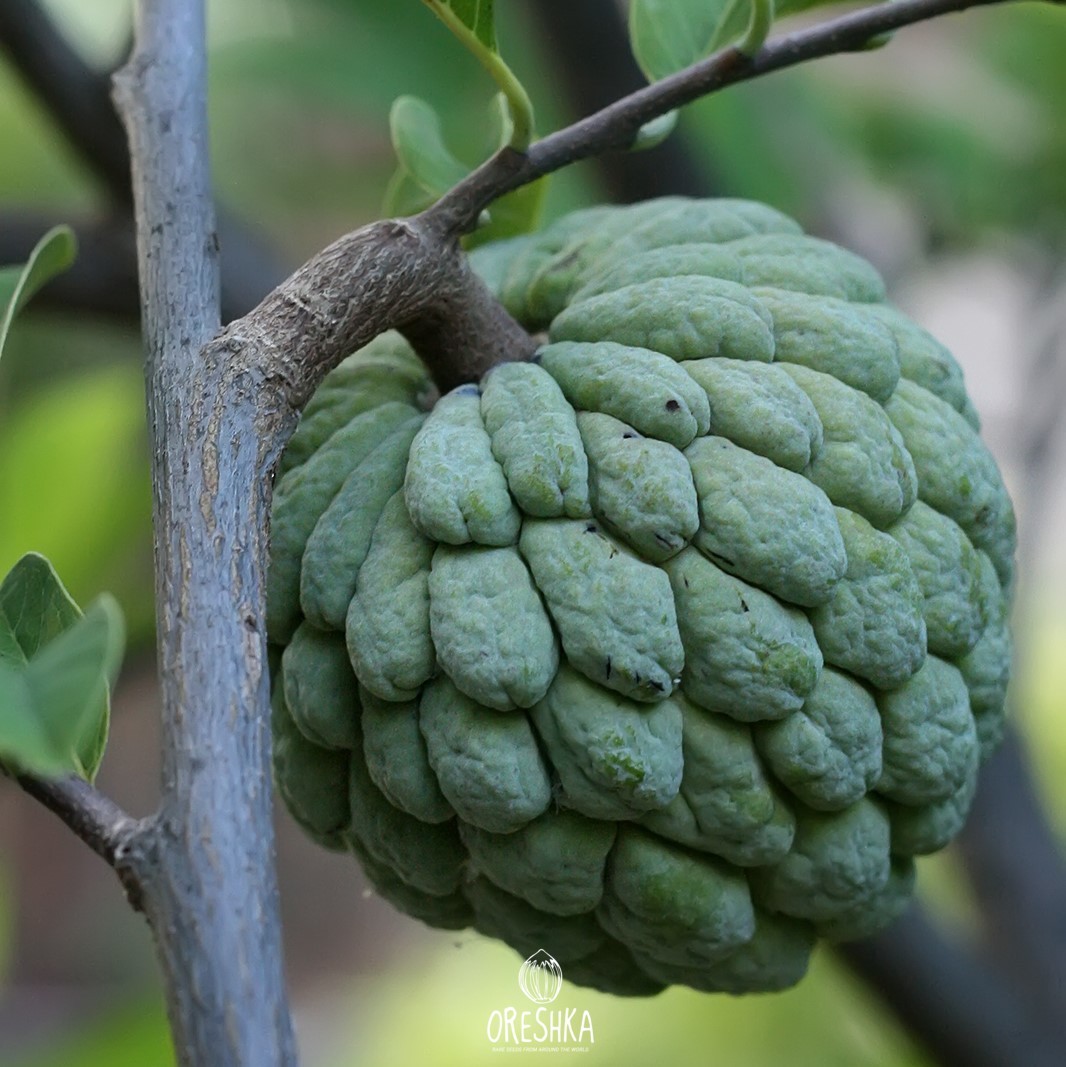
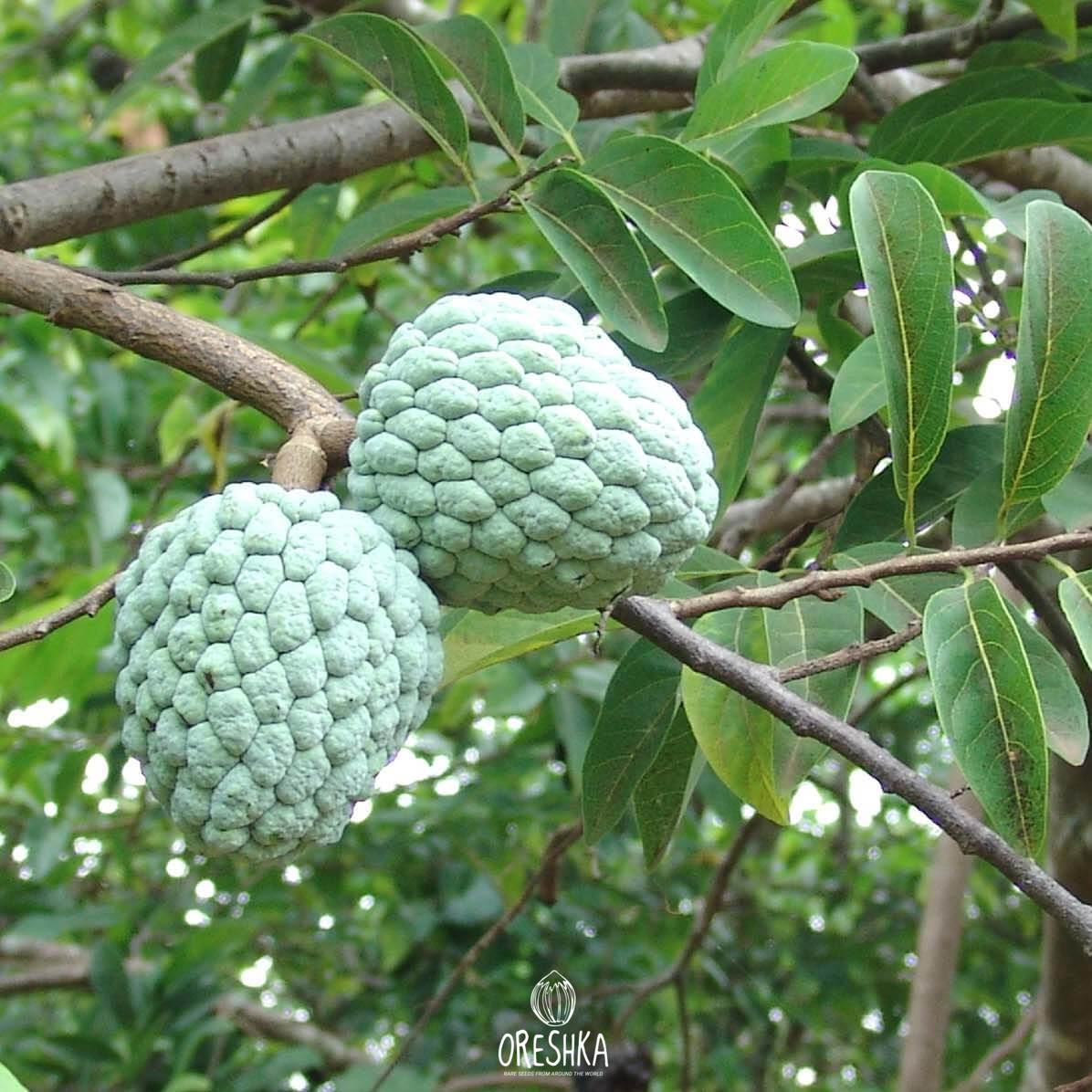
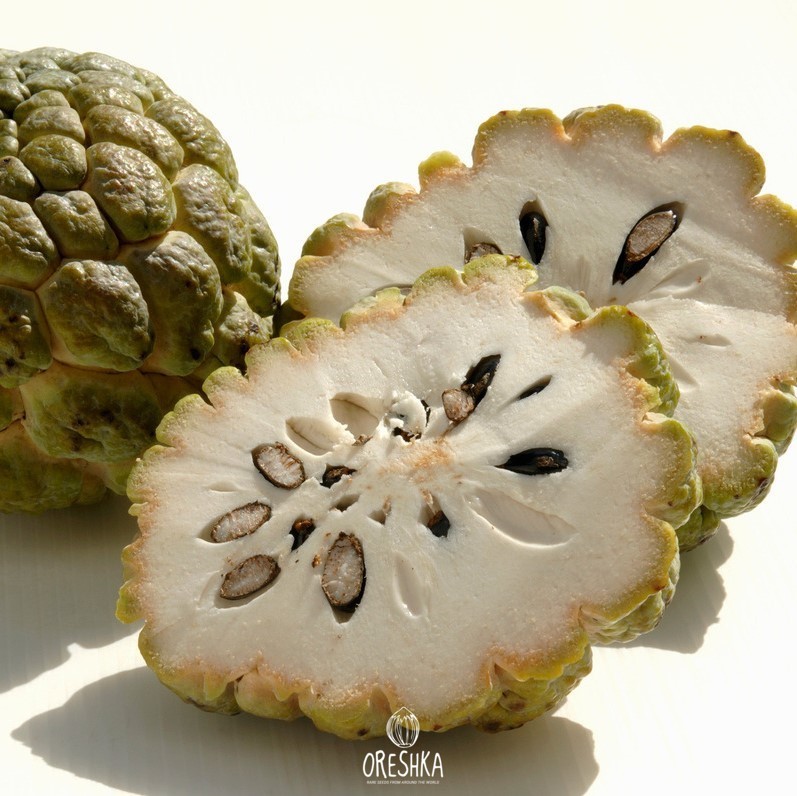
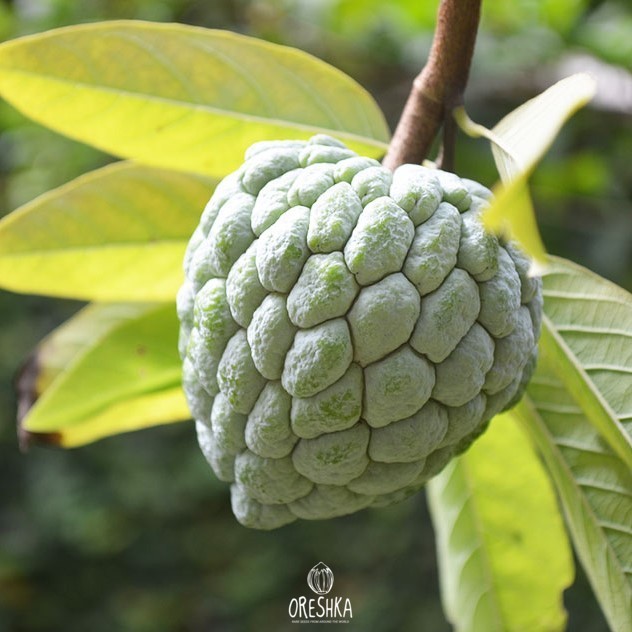
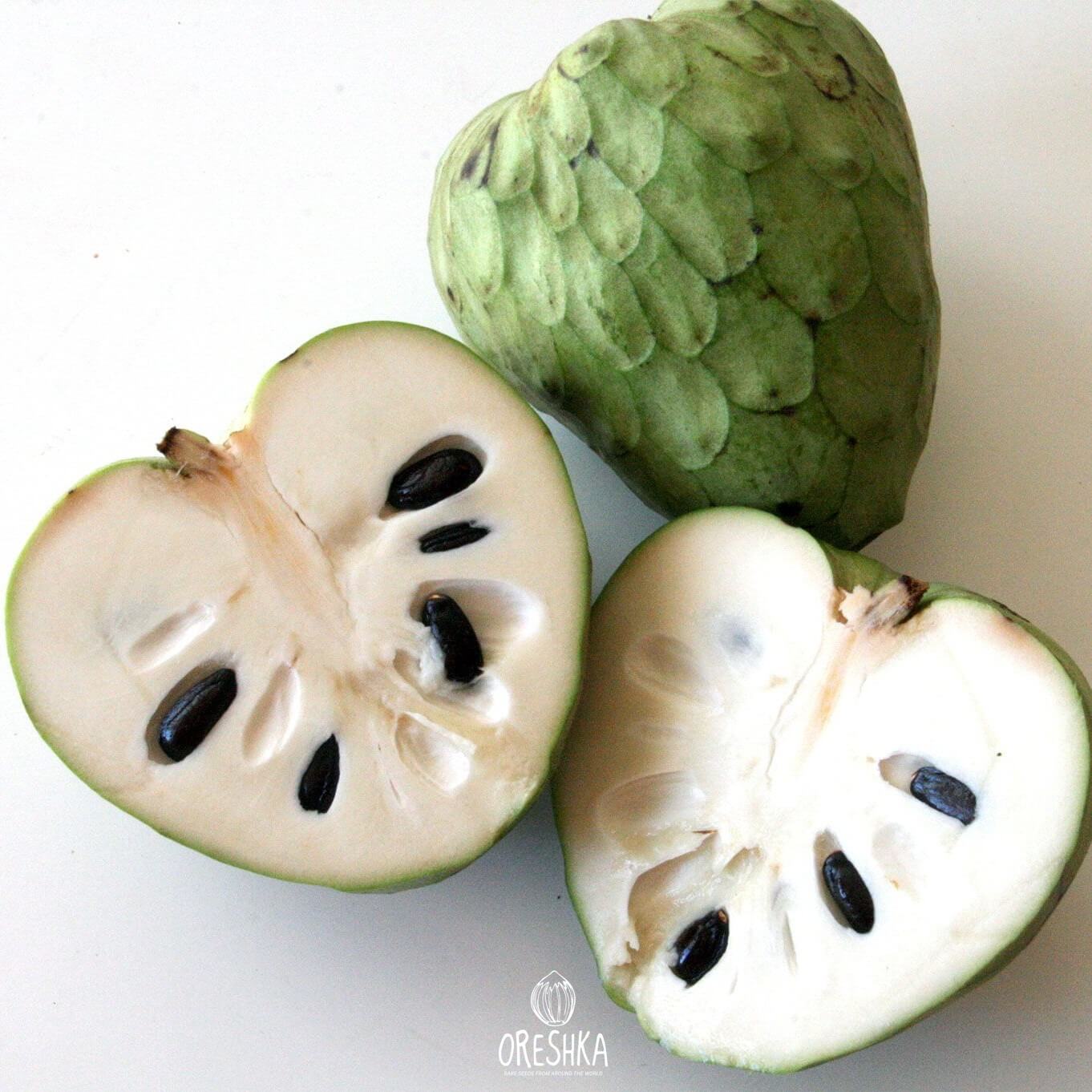
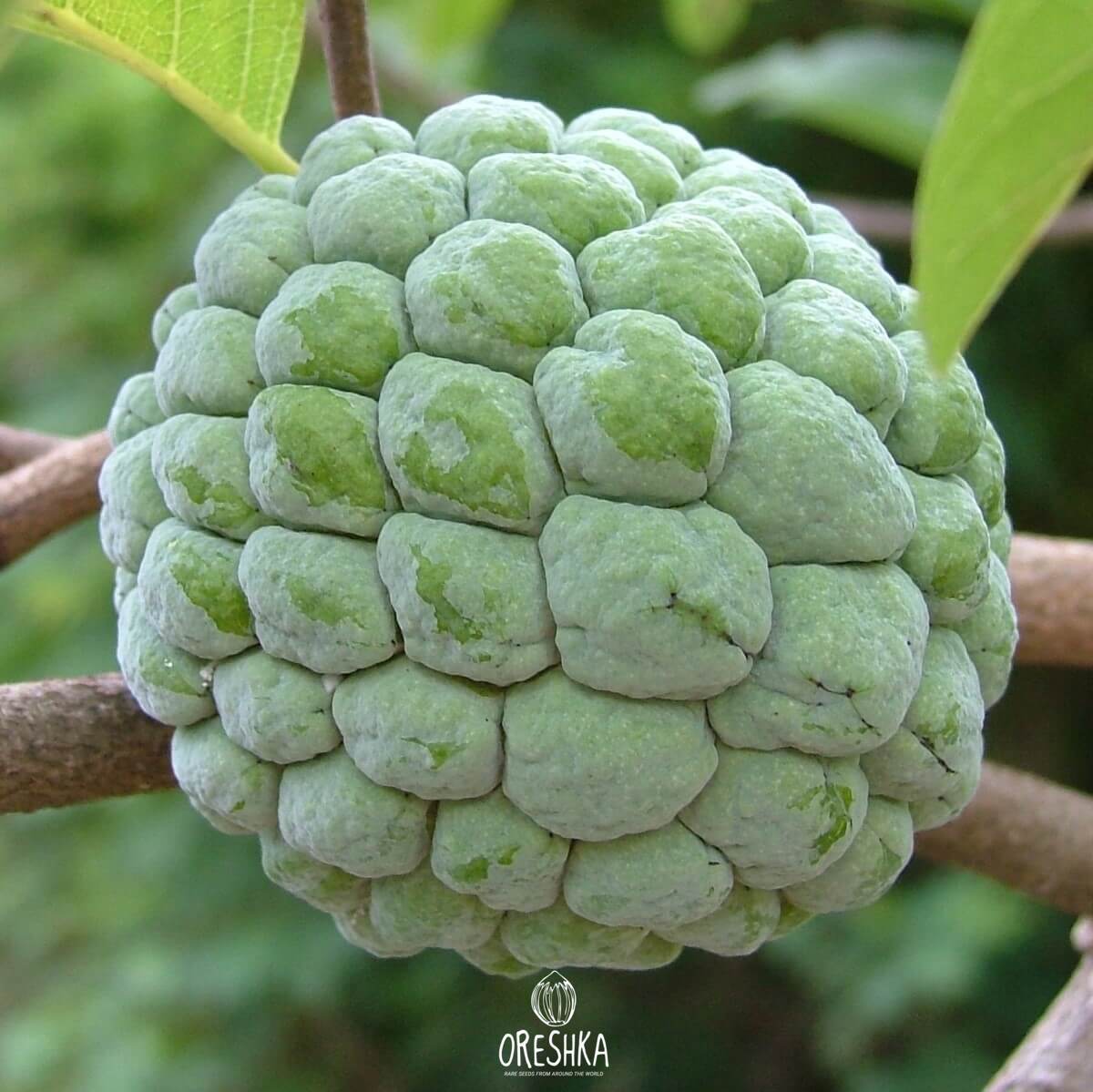
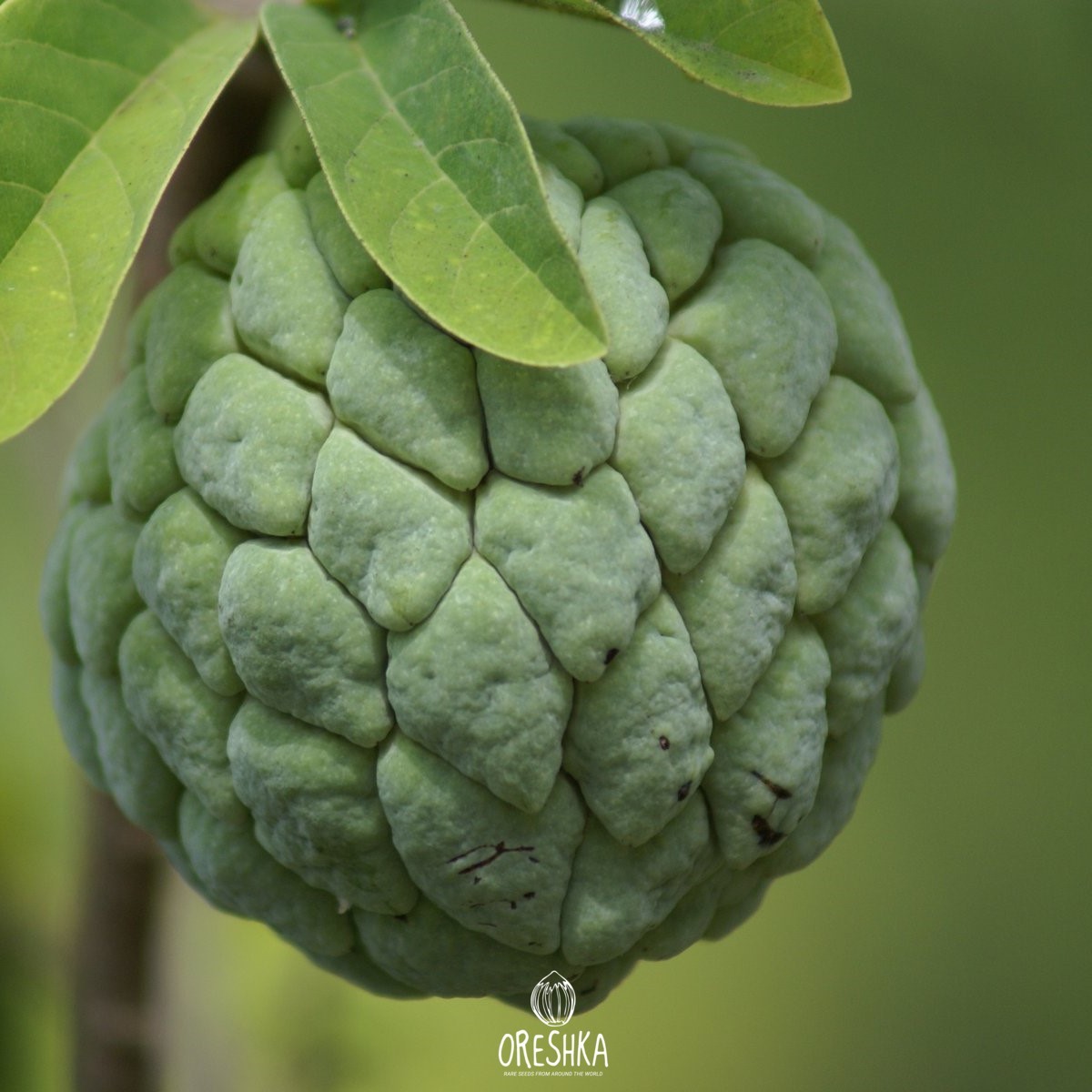
The fruit is unmistakable: a compound structure made of individual berry segments fused together, covered in distinctive rounded scales (hence the species name squamosa). When fully ripe, the segments separate easily from each other, exposing white to cream-coloured fibrous-creamy pulp of extraordinary sweetness. Brix sugar content measures 18–25% — comparable to the sweetest varieties of table grape and significantly higher than mango (14–18%) or pineapple (12–16%).
Fresh seeds give best germination — Annona squamosa seeds lose viability rapidly in dry storage. Sow within 2–3 weeks of receipt. Scarify lightly and soak 24–48 hours before sowing. About our collection →
Quick facts
Annona squamosa at a Glance
Growing guide
How to Grow Sugar Apple from Seed — Step by Step
Requires warmth throughout. No cold period. Scarification + 24h soak before sowing recommended.
- 01Scarification — Scratch the Seed CoatLightly rub one side of the seed with 120-grit sandpaper until the shiny surface is dulled — do not cut into the seed interior. This breaks the impermeability of the hard seed coat. Without scarification, germination takes 4–6 weeks; with it, 2–3 weeks. Alternatively, skip scarification and extend the warm soak to 48 hours.
- 02Warm Soak — 24 to 48 HoursPlace scarified seeds in warm water (30–35°C) for 24–48 hours. Change water once after 24 hours. Seeds that sink to the bottom are viable. Keep the soak water warm — place the container near a heat source or use a thermos flask. Cold water (below 20°C) reduces the effectiveness of soaking.
- 03Sow 2 cm Deep — Bottom Heat Strongly RecommendedUse individual 10–12 cm pots with free-draining, fertile mix (loam:perlite:compost 2:1:1). Sow seeds 2 cm deep with the scarified side down if possible. Cover with a clear plastic bag or propagator lid to maintain humidity. Maintain 25–30°C — bottom heat mat is strongly recommended. Without bottom heat at 25°C+ germination is slow and erratic. Initial germination position can be in low light or darkness.
- 04Germination — 2 to 6 WeeksGermination at 25–30°C: 14–42 days. It is erratic — seeds from the same pack can sprout anywhere in this range. Maintain consistent warmth (not below 22°C at night) and humidity. Remove plastic cover gradually when shoots reach 5 cm. Move immediately to full sun. High humidity is critical in the first month — dry air causes leaf drop even in seedlings with established roots.
- 05Growing On — Indoor / Greenhouse CultureIn temperate Europe: Annona squamosa spends summer outdoors in full sun (once temperatures exceed 20°C reliably) and overwinters indoors or in a heated greenhouse at a minimum of 10–15°C. It is deciduous — it drops leaves in cool or dry conditions, which is normal dormancy. Water regularly in summer, reduce significantly in winter. Repot every 2–3 years to a maximum of 60-litre containers. Annual hard pruning after fruiting encourages branching and next year's flowering wood.
- 06Flowering, Hand Pollination, and First FruitFirst flowers appear in year 3–5. Flowers are fragrant, creamy-yellow, 2.5–3.8 cm long, produced along the branches. In temperate growing conditions, hand pollination is essential — use a soft brush to transfer pollen between flowers in early afternoon when flowers are most receptive. Successful pollination is visible within 1–2 weeks as the flower base swells. Each fruit takes 4–5 months to fully ripen, reaching 10 cm diameter with white sweet pulp and 20–60 glossy black seeds.
Hand pollination technique matters more than most guides admit. Annona squamosa flowers are protogynous — the stigma (female part) is receptive in the afternoon of day one, but pollen (male) is not released until day two. To hand pollinate successfully: collect pollen from day-two flowers (creamy, slightly opening) with a brush. Transfer immediately to day-one flowers (tightly closed, with a green-cream colour). The stigma surface is sticky and receptive — even a brief contact deposits enough pollen. Do this on 3–4 consecutive days across multiple flowers for the best fruit set. A single successful pollination produces a full fruit — and the wait is worth it.
Compare
Sugar Apple vs. Cherimoya vs. Atemoya
| Feature | Annona squamosa Sugar Apple · P33b | Annona cherimola Cherimoya | Atemoya squamosa × cherimola hybrid |
|---|---|---|---|
| USDA Zone | Zone 10 · +4°C | Zone 9 · −5°C (slightly hardier) | Zone 10 · +4°C |
| Fruit texture | Segments separate · fibrous-cream | Smooth, fused pulp · creamy | Between both parents |
| Sugar content | 18–25% Brix (highest) | 14–18% Brix | 16–20% Brix |
| Fruit surface | Bumpy scales · segments visible | Smooth, fused scales | Intermediate |
| Heat tolerance | Excellent — tropical origins | Moderate — highland origin | Good |
| From seed | Available (our stock) | Available as seeds | Hybrid — grafted only |
Avoid these
Common Mistakes When Growing Sugar Apple from Seed
Germinating at room temperature (below 22°C)
Annona squamosa requires sustained warmth for germination — below 22°C, seeds may rot before germinating. Use a heat mat set to 27–30°C. This single step transforms unreliable germination into consistent results.
Not hand pollinating indoors
Without the natural Nitidulid beetle pollinators present in tropical gardens, indoor-grown Sugar Apple produces no fruit without hand pollination. This is the most common reason container-grown trees flower prolifically but set no fruit.
Letting the tree get too cold in winter
Below 10°C, Annona squamosa drops all leaves and enters dormancy. Below 4°C, root damage begins. Below 0°C, the tree dies. In temperate climates, bring indoors before night temperatures fall below 12°C — earlier than most growers expect.
Overwatering in winter dormancy
When the tree drops its leaves in autumn (natural dormancy response to lower temperatures), reduce watering to once every 2–3 weeks. Overwatering a dormant Annona squamosa causes root rot rapidly.
Crushing or ingesting the seeds
Annona squamosa seeds contain annonaceous acetogenins including squamocin, which are mildly toxic if the seed is crushed or chewed. The pulp is safe; the seeds should be swallowed whole and passed naturally if accidentally ingested, or — better — removed before eating.
FAQ
Frequently Asked Questions
Can I grow Sugar Apple outdoors in Europe?
How does Sugar Apple taste?
Does Sugar Apple need hand pollination indoors?
How many seeds does a Sugar Apple fruit contain?
What is the difference between Sugar Apple and Cherimoya?
How large does Sugar Apple grow in a container?
Grow One of the Sweetest Fruits on Earth — 7 Fresh Seeds
Annona squamosa · 18–25% Brix · Container or tropical garden · Hand pollination guide included · Ships worldwide
Buy Seeds — €7.50 → Sale −40% · SKU P33b · 7 PCS · Annona squamosa · Oreshka Seeds