

How to Grow Sycamore Maple from Seed
Acer pseudoplatanus — Great Maple · Yavor
One of the most important honey plants among northern European trees — abundant spring nectar yielding pale, fragrant maple honey. The largest maple in European cultivation, thriving in exposed coastal sites, chalk, heavy clay, and urban pollution where other maples fail. Peeling bark reveals striking pale inner layers on mature specimens.
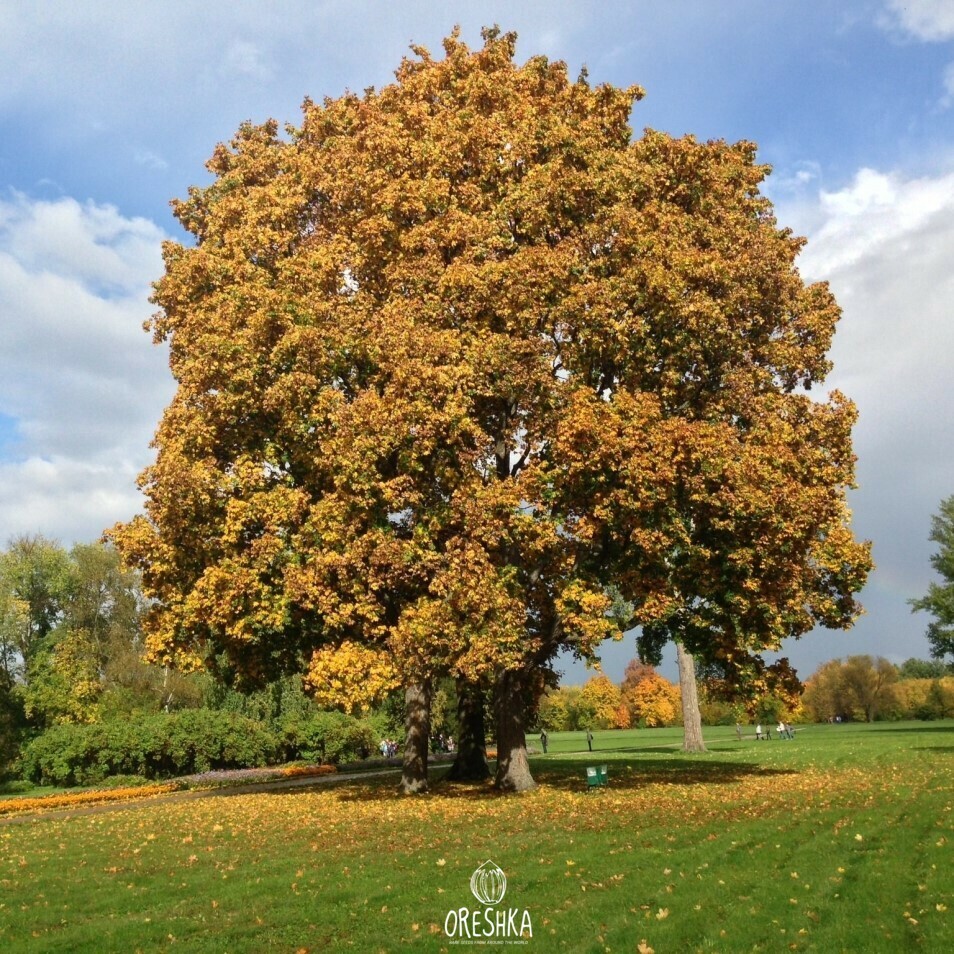
The plant
What is Sycamore Maple — the Beekeeper's Tree?
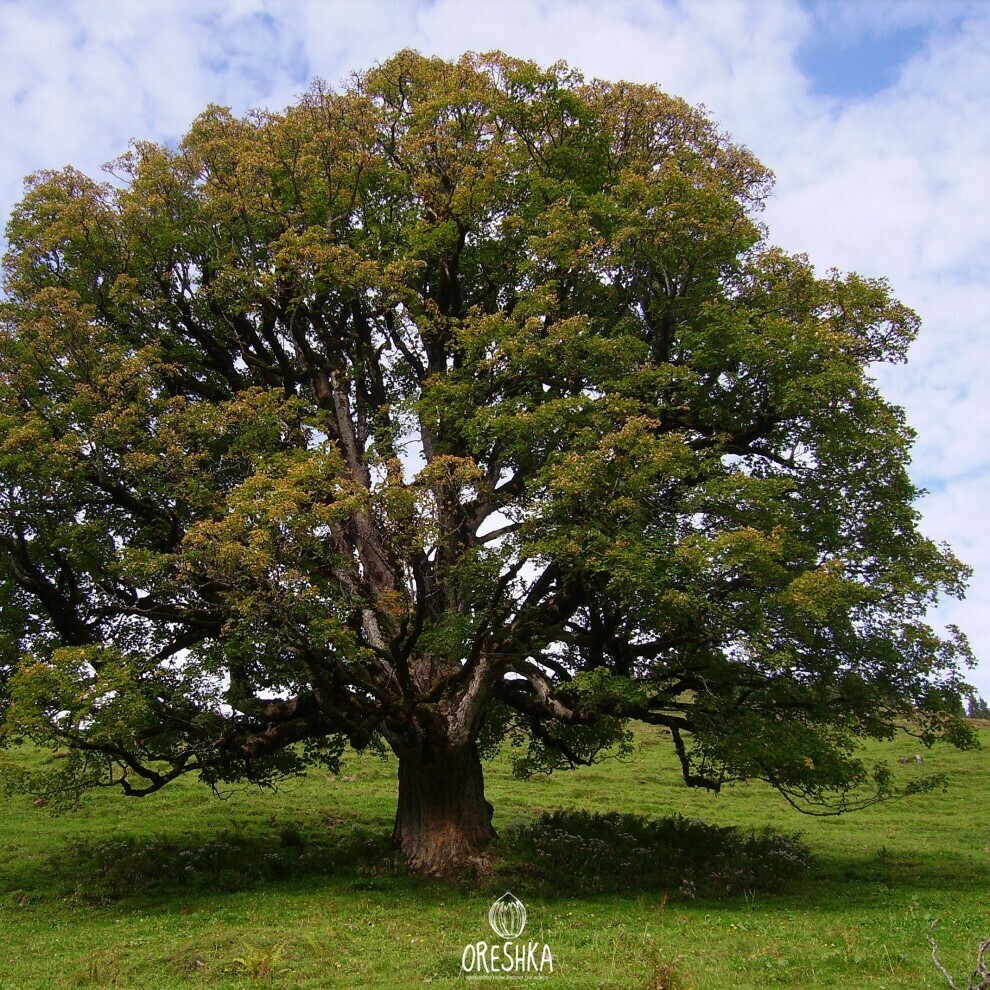
Acer pseudoplatanus is the largest maple in European cultivation — a major deciduous tree reaching 20–35 m with a wide domed crown, native to central and southern Europe and western Asia. It has naturalised extensively in the British Isles, Ireland, and northern Europe, where it is one of the most common and recognisable large trees in the landscape. The species name 'pseudoplatanus' — false plane tree — refers to the superficial resemblance of mature bark to the London Plane (Platanus × acerifolia): both develop attractive peeling bark that exposes pale inner layers.
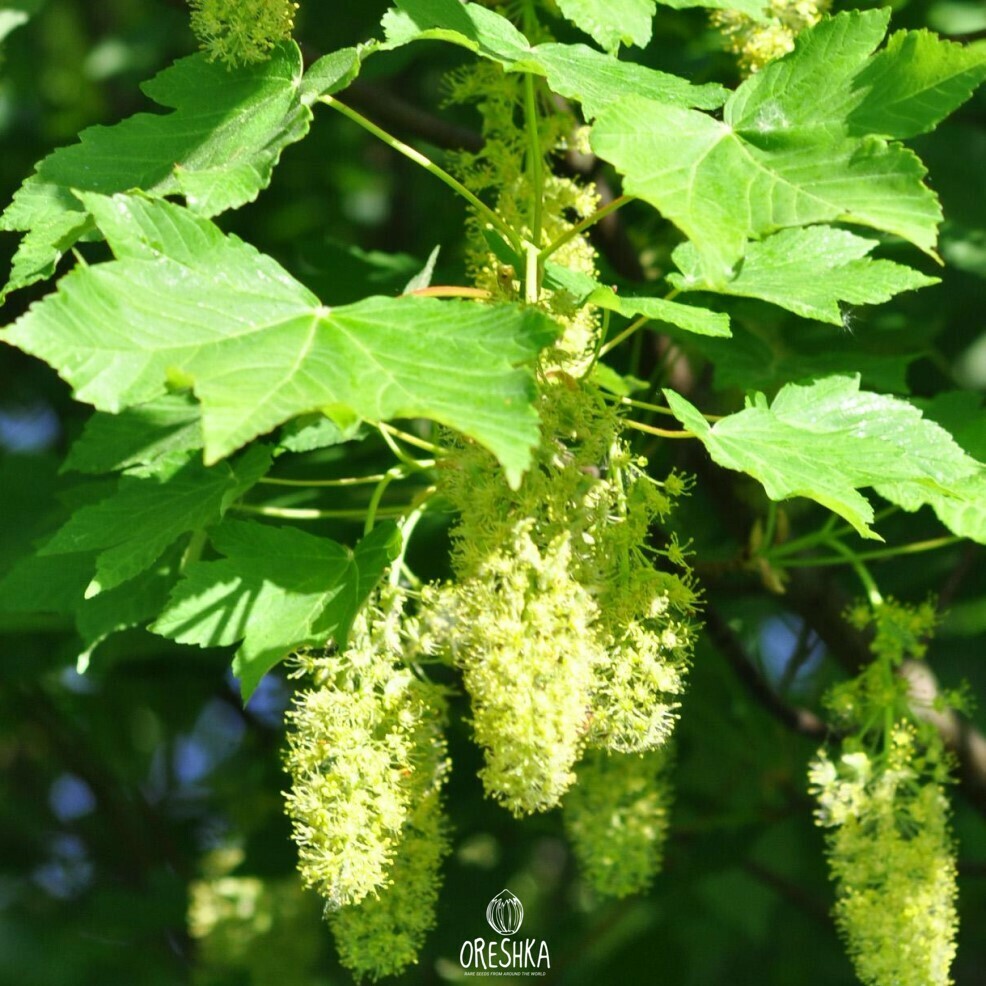
Among European beekeepers, Acer pseudoplatanus holds a special place as one of the most productive spring honey plants. The pendant flower clusters that emerge in April–May produce abundant nectar and pollen over 2–3 weeks. The honey produced — pale yellow, fragrant, mild-tasting — is considered one of the finest tree honeys in European beekeeping tradition. A single mature sycamore in full flower can contribute substantially to a hive's spring honey stores during the critical build-up period.
Sow fresh in autumn for easiest germination — fresh seeds need no stratification treatment. Spring sowing requires 60–90 days cold. 10 fresh seeds per pack. About our collection →
Quick facts
Acer pseudoplatanus at a Glance
Growing guide
How to Grow Sycamore Maple from Seed — Step by Step
- 01Autumn Sow Fresh — No Stratification NeededThe simplest method: sow fresh samaras in autumn (October–November) directly into a prepared seedbed or into deep individual pots. Fresh Acer pseudoplatanus seed does not require stratification — it germinates prolifically in spring. If sowing in spring from stored or dried seed, refrigerate in moist sand at 2–4°C for 60–90 days. Fresh autumn-sown seed reliably outperforms spring-sown stratified seed in germination rate and speed.
- 02Sow 1–2 cm Deep — Any SoilSow samaras 1–2 cm deep — the wing can remain attached. Acer pseudoplatanus is the least soil-fussy of all maples, germinating equally in heavy clay, chalk, sandy loam, and urban soils. For container growing, standard free-draining compost at 10–15°C. For outdoor direct sowing in the permanent position, prepare a shallow seedbed and sow multiple seeds at the desired location, thinning to one plant after germination.
- 03Germination — April to MayAfter natural winter stratification, seeds germinate April–May at 10–15°C — often in large numbers from outdoor autumn sowings. The large strap-shaped cotyledons are distinctive and immediately recognisable. The first true five-lobed maple leaves appear within 2–3 weeks. Thin to one plant per sowing point, or prick out from containers when the first true leaf appears. Growth is vigorous — transplant promptly before the tap root becomes too long.
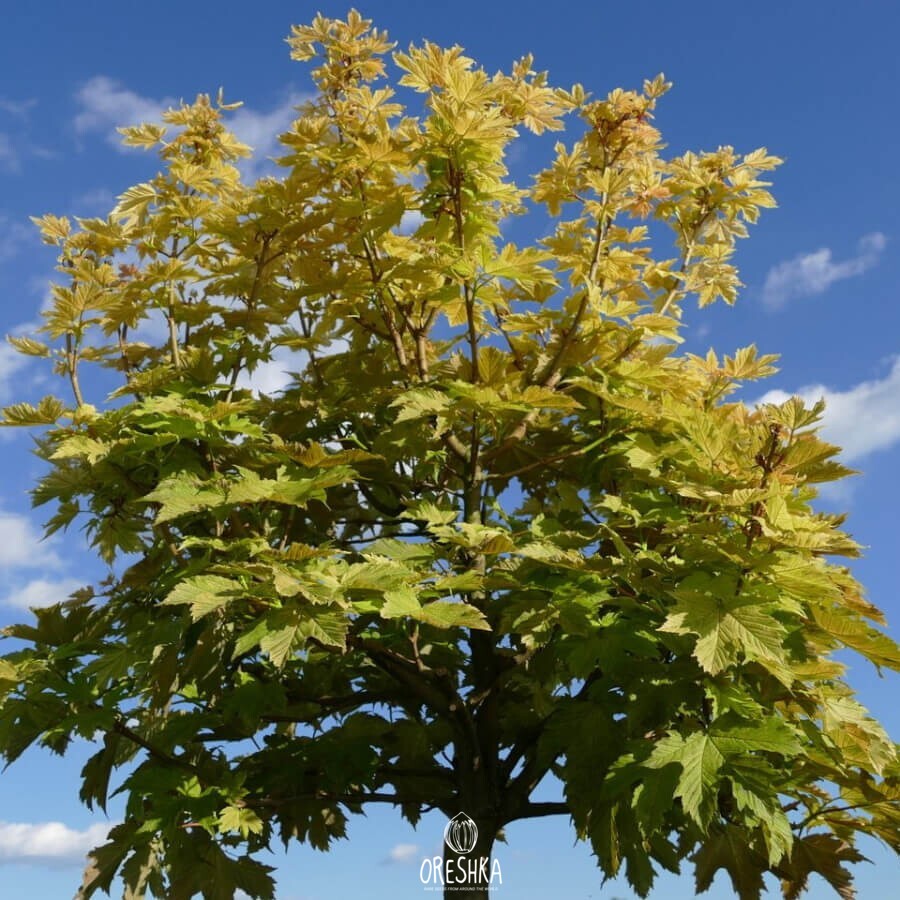
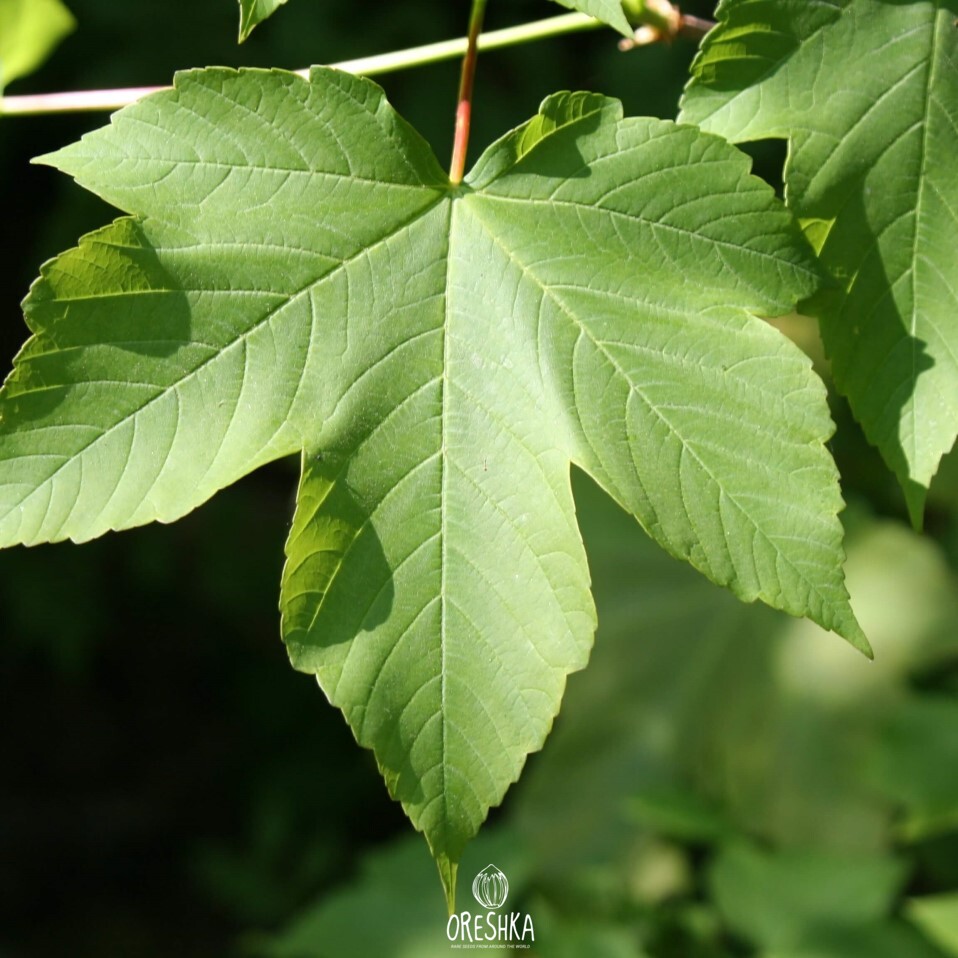
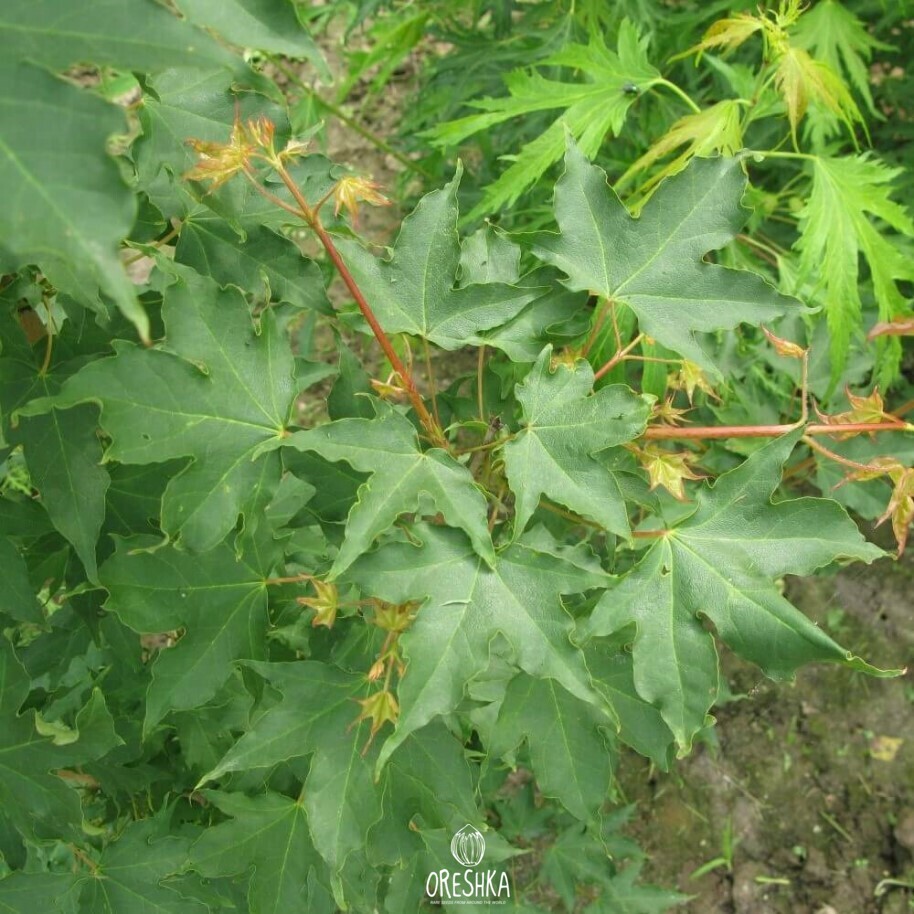
- 04First Growing Season — Rapid EstablishmentAcer pseudoplatanus is the most vigorous large maple — first-year seedlings commonly reach 50–80 cm in a good growing season. Full sun to partial shade. Tolerates any soil, coastal salt spray, strong winds, and urban pollution — one of the most adaptable large trees available. Water in the first summer. No feeding required. The large opposite leaves, up to 25 cm across, are dark green above with a pale bluish-green underside.
- 05Plant Out — First Autumn or Second YearPlant in permanent position in autumn of year one or spring of year two — the earlier the better, as Acer pseudoplatanus transplants most reliably when young. Allow full space: 8–12 m from other large trees and structures. For woodland, shelter belt, or amenity planting, space 3–4 m. This tree is not suitable for small gardens without long-term management commitment. It tolerates hard pruning and can be pollarded to manage size — a traditional practice in European arboriculture.
- 06Established Tree — Honey, Bark, and CanopyFrom year 5–8, Acer pseudoplatanus begins flowering — pendant clusters of small yellow-green flowers in April–May yield abundant nectar for bees. Pale, fragrant maple honey is produced. The bark begins exfoliating on mature trees (20+ years), revealing pale inner layers. At 50+ years, the trunk develops a striking patchwork of grey, silver, brown, and pinkish tones. As a forest or parkland tree, the species is extremely long-lived — 200–400 years — becoming a significant landscape feature over generations.
Acer pseudoplatanus is the most reliable large tree for genuinely exposed coastal positions — sites with persistent salt-laden winds, thin chalky soils, and high rainfall — where most other large trees fail or grow poorly. It has been used for centuries in Atlantic coastal regions of Scotland, Ireland, the Faroe Islands, and Scandinavia as a primary shelter-belt species precisely because of this tolerance. A well-placed sycamore windbreak can transform a coastal garden — reducing wind speed enough to allow the cultivation of a much wider range of plants in its lee. For beekeepers in coastal areas, the spring nectar flow from a well-established sycamore near hives is a significant and reliable annual contribution to honey production.
Compare
Sycamore Maple vs. Norway Maple vs. London Plane
| Feature | Acer pseudoplatanus Sycamore Maple · L28 | Acer platanoides Norway Maple | Platanus × acerifolia London Plane |
|---|---|---|---|
| USDA Zone | Zone 4 · −34°C | Zone 3 · −40°C | Zone 5 · −26°C |
| Honey value | Excellent — major spring nectar | Good — early spring nectar | Low — not a significant nectar plant |
| Coastal exposure | Outstanding — first choice coastal | Good | Good — urban heat tolerant |
| Peeling bark | Yes — mature patchwork effect | No — furrowed only | Yes — famous exfoliating bark |
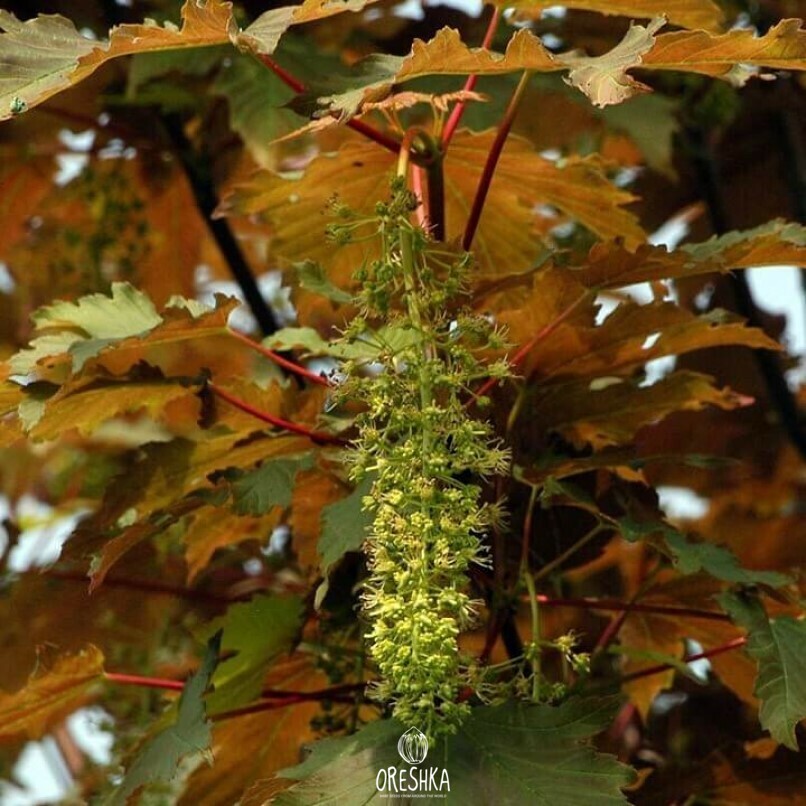
| Autumn colour | Yellow-orange · reliable | Yellow · sometimes good | Yellow-brown · unremarkable |
| Soil tolerance | Chalk · clay · salt · any | Most soils | Urban compacted soils |
Avoid these
Common Mistakes When Growing Sycamore Maple from Seed
Allowing seedlings to self-seed uncontrolled
Acer pseudoplatanus self-seeds very prolifically — a single tree near a garden produces hundreds of seedlings in borders, lawn edges, and paving cracks each spring. Remove unwanted seedlings while tiny (2–4 leaves) before the tap root establishes. They pull easily at this stage. Larger seedlings require digging and become increasingly difficult to remove as the tap root develops.
Planting too close to structures
This is a large tree at maturity — 20–35 m with a wide crown. Planting within 8–12 m of buildings, underground utilities, and other mature trees creates long-term structural conflicts. Plant at full recommended spacing from the outset. In small gardens, consider regular pollarding (hard pruning of the crown every 3–5 years) from the start if space is limited.
Drying out seeds before spring sowing
Acer pseudoplatanus seeds lose viability rapidly when dried. Seeds dried to low moisture content before spring sowing have significantly reduced germination rates — sometimes failing entirely. Fresh seed sown immediately in autumn is by far the most reliable approach. If storing for spring, keep in a cool, moist environment (5–8°C) in barely moist sand or peat — not in dry paper envelopes.
Mistaking it for an invasive species
Acer pseudoplatanus is sometimes labelled invasive in UK native woodland conservation contexts because of its prolific self-seeding in disturbed ground. In garden, amenity, shelter-belt, and agricultural contexts it is entirely appropriate and ecologically valuable — providing one of the most important spring nectar flows for bees. Context matters — it is a problem only when unmanaged in specific native woodland conservation sites.
FAQ
Frequently Asked Questions
Is Sycamore Maple a good honey plant?
Is Sycamore Maple the same as Sycamore?
How large does Sycamore Maple grow?
Does Sycamore Maple self-seed aggressively?
What is the bark of Sycamore Maple like?
Is Sycamore Maple native to the UK?
The Beekeeper's Tree — Great Maple for Exposed Sites
10 fresh seeds · Zone 4 · Spring honey plant · Peeling ornamental bark · Coastal & chalk tolerant · Ships worldwide
Buy Seeds — €7.50 → Sale −40% · SKU L28 · 10 PCS · Acer pseudoplatanus · Oreshka Seeds