

How to Grow Wild Martagon Lily from Seed
Lilium martagon — Saranka
Wild-collected from Ural mountain conifer forests. Listed in the Red Book of Russia. The lily that Siberian legend says grew from a Cossack warrior's heart — and lives for over 100 years in the same spot.
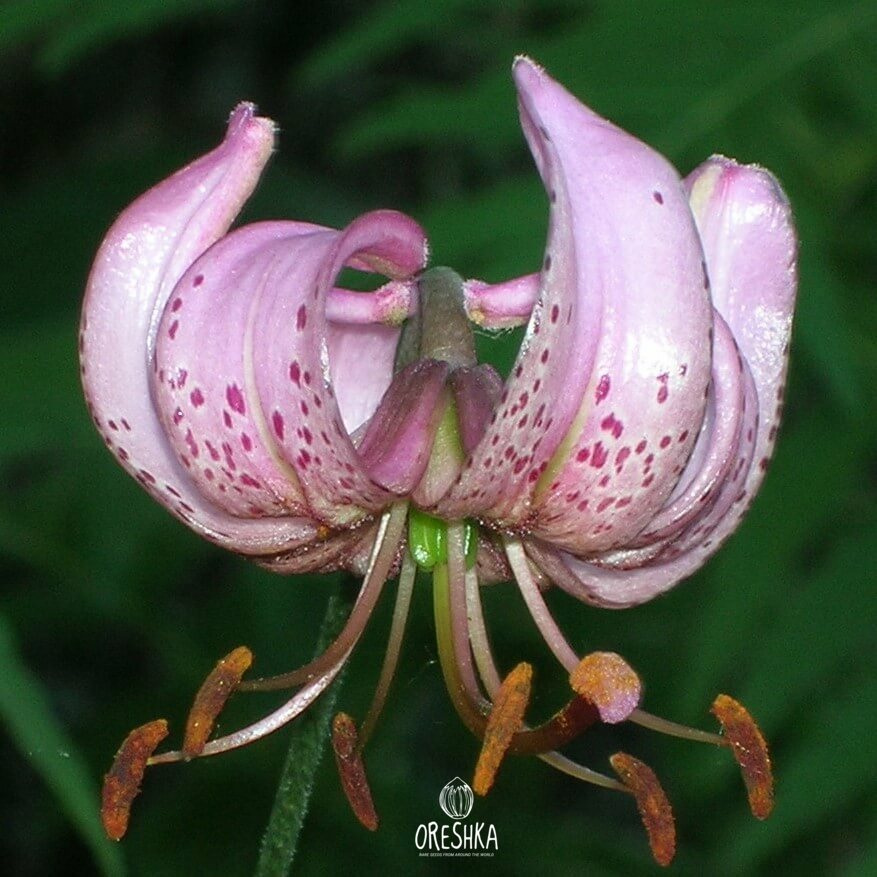
The plant
What is Lilium martagon — The Lily That Lives for a Century?
Lilium martagon is one of the oldest cultivated lilies in Europe — documented in gardens since the 16th century — yet it remains rare in cultivation because of its unusual patience: it grows slowly, takes 4–6 years to first flower from seed, and asks almost nothing in return. Once established, it blooms reliably every year without division or intervention, often outliving the gardener who planted it.
In Russia, it is known as Saranka — a name with deep roots in Siberian culture. Ural and Siberian indigenous peoples used its bulbs for food and medicine for centuries. A Cossack legend says the flower grew from the heart of a fallen warrior during Yermak's conquest of Siberia in the 16th century, symbolising courage and fortitude. The name Saranka is thought to derive from a Tungus word for the bulb, which was dried and eaten in times of hardship.
In the wild, Lilium martagon grows in the forest and forest-steppe zones of Siberia and the Ural mountains — in conifer clearings, under deciduous canopy, in the dappled shade where few other lilies venture. It is tolerant of cold that would kill most garden lily hybrids, rated reliably at USDA Zone 3 (−40°C).
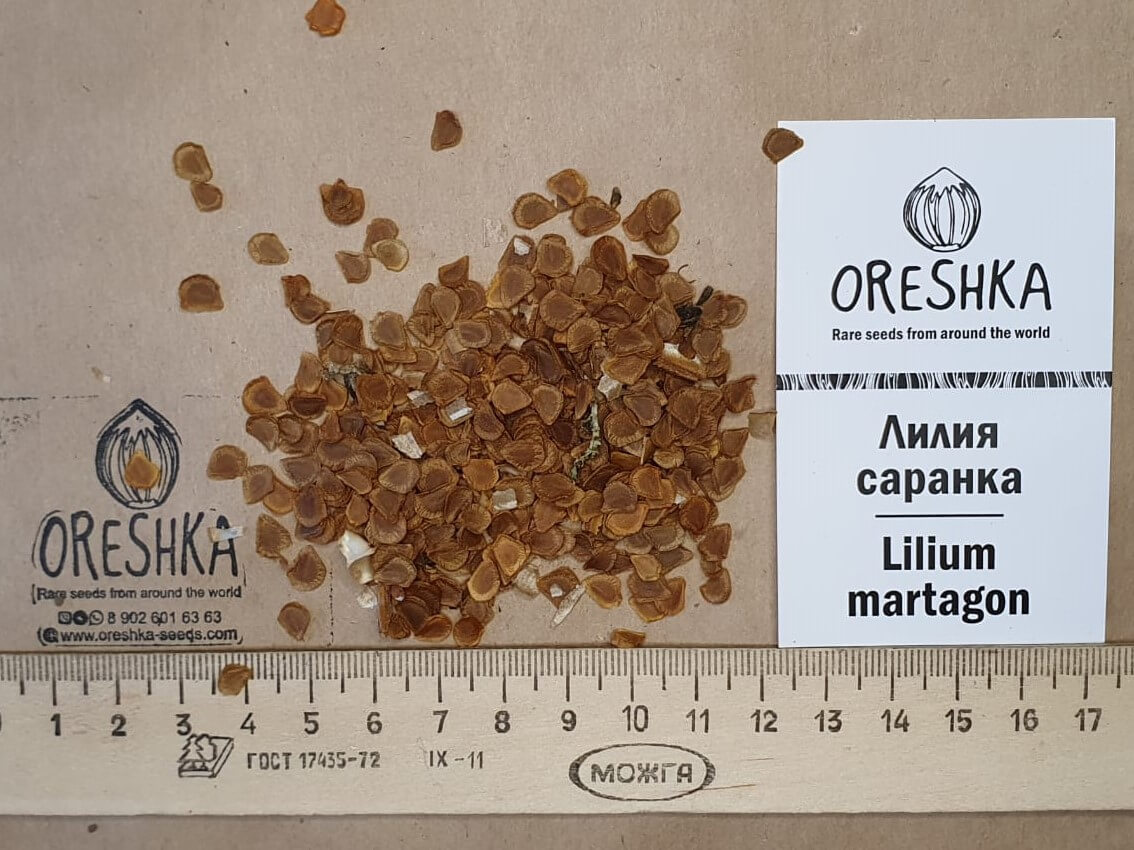
Seeds wild-collected from Ural mountain conifer forest populations with documented provenance. Freshness is critical for Lilium martagon — germination drops sharply after 3 months of dry storage. Our seeds are collected and dispatched within the same season. About our collection →
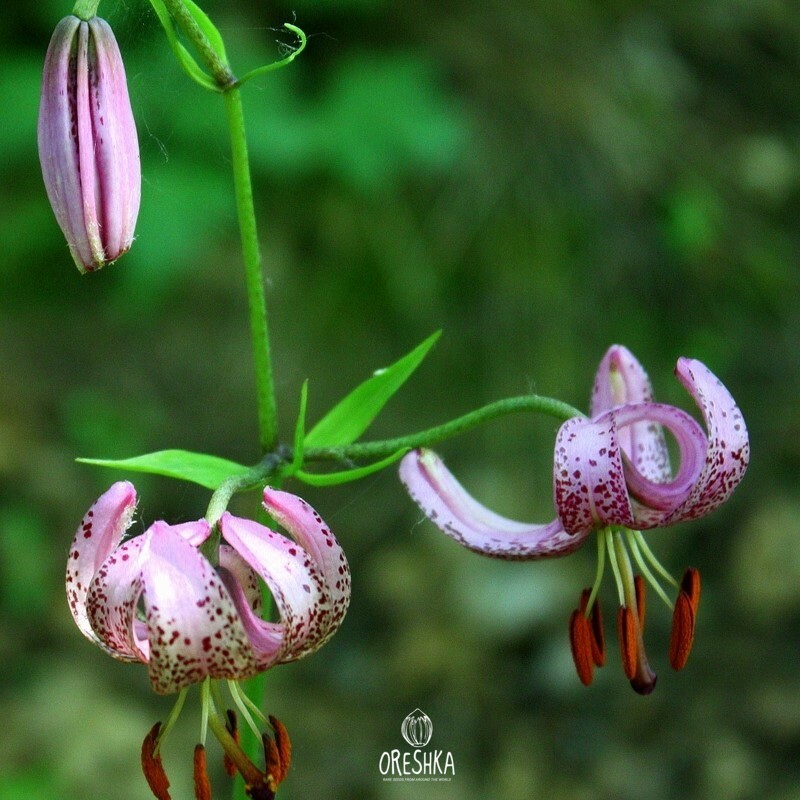
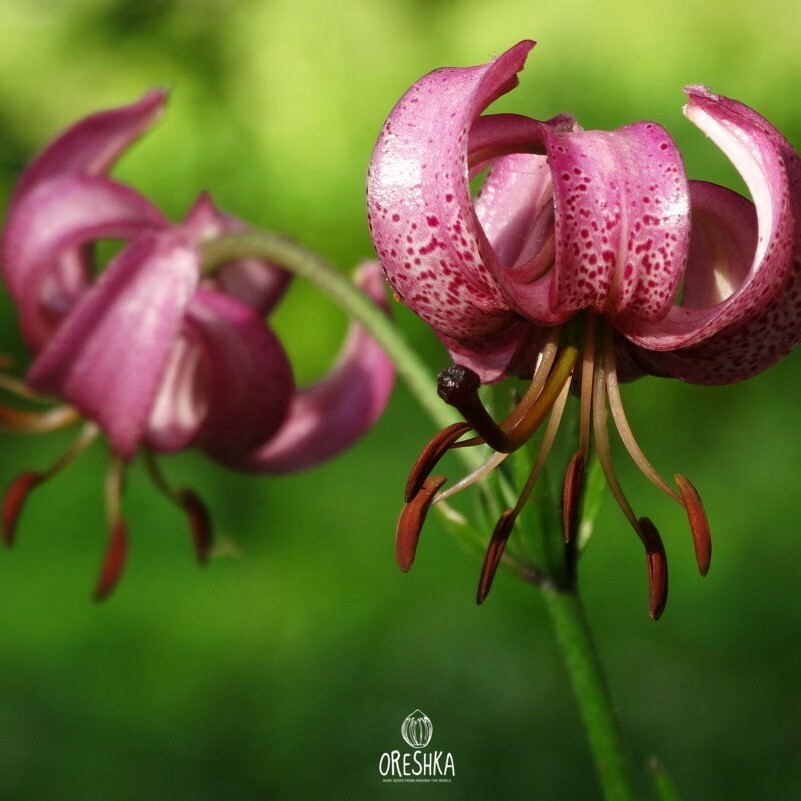
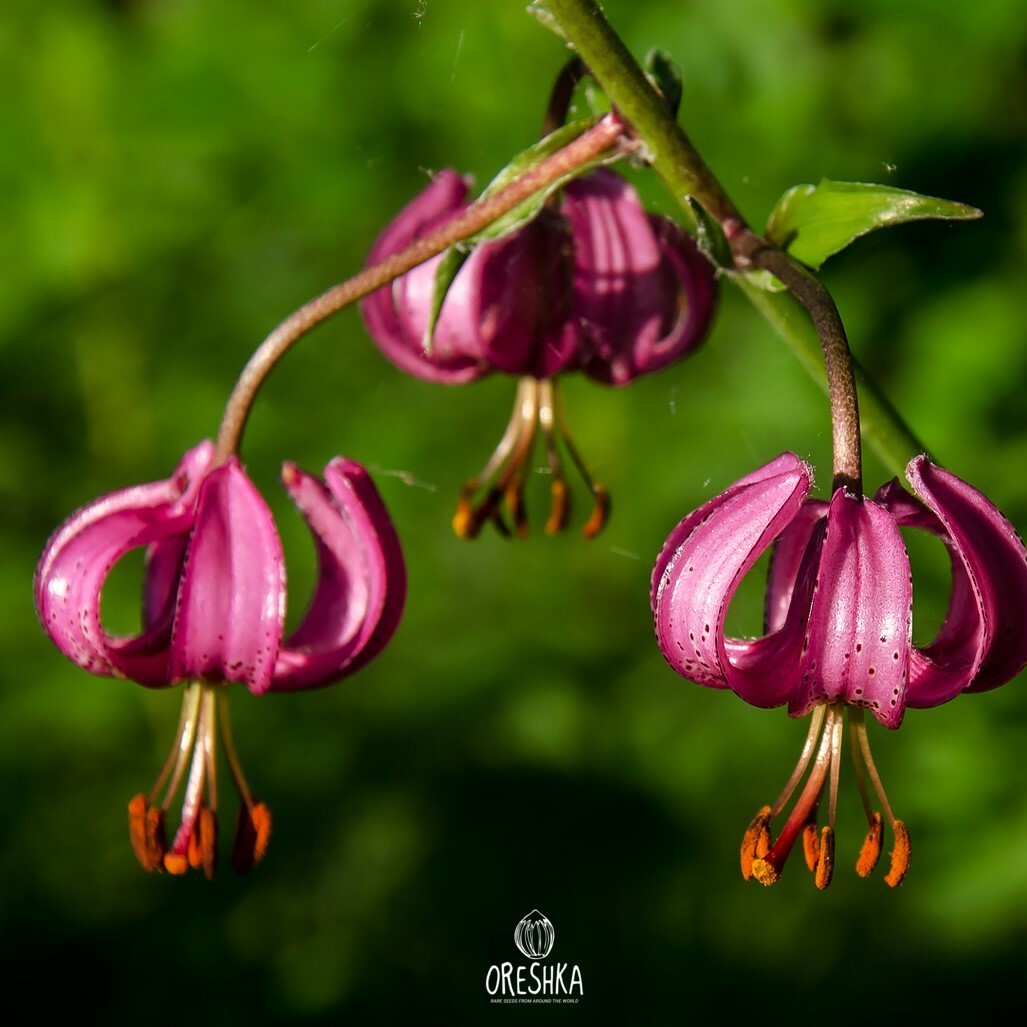
Quick facts
Lilium martagon at a Glance
What to expect
Year by Year — The Martagon Calendar
Lilium martagon is not a fast plant. Understanding what to expect each year makes the wait manageable — and rewarding.
Growing guide
How to Grow Lilium martagon from Seed — Step by Step
The double dormancy is the key fact. Two stratification stages, not one. Total pre-sowing time: 4–6 months.
- 01 Warm Stratification — First Stage (8–12 Weeks)
Mix seeds with slightly moist peat or vermiculite in a sealed zip bag. Keep at 18–22°C (room temperature) for 8–12 weeks. This warm period triggers root development inside the seed — the first half of a two-part dormancy that mirrors Ural forest conditions. Check every 2 weeks: the medium should stay barely moist, not wet. Do not move to cold until this phase is complete.
- 02 Cold Stratification — Second Stage (8–12 Weeks)
After the warm stage, transfer the bag directly to the refrigerator at 2–5°C. Keep there for a further 8–12 weeks. This cold period triggers shoot development — the second half of the dormancy cycle. After this stage, some seeds will already show a tiny pale root. Sow immediately — do not allow them to dry out.
- 03 Sowing — 1–2 cm Deep
Fill pots with well-draining slightly acidic soil — a mix of loam, peat and coarse sand (1:1:1) works well. Sow seeds 1–2 cm deep and 5 cm apart. Water gently and keep at 15–18°C. Unlike Metasequoia, Martagon does not need light to germinate — a depth covering is correct. Tiny grass-like shoots typically emerge within 2–4 weeks of sowing.
- 04 Year One and Two — Patience is the Method
Year one produces a single grass-like leaf 5–10 cm tall. Year two produces a rosette. Both years: water moderately, feed monthly with a low-nitrogen fertiliser (high potassium helps bulb development). The key rule: do not overwater and never let the bulb sit in waterlogged soil. Keep in pots or a sheltered nursery bed through both seasons.
- 05 Planting Out — Third Year, Permanent Position
Choose a position that mimics the natural habitat: partial shade under deciduous trees, with humus-rich, well-drained soil (pH 5.5–6.5). Plant bulbs 15–20 cm deep in autumn or early spring. Space 30–40 cm apart. Mulch with leaf mould or composted bark. Lilium martagon does not like full sun or heavy clay — both cause bulb failure.
- 06 First Flowering and Beyond — Year 4 to 100
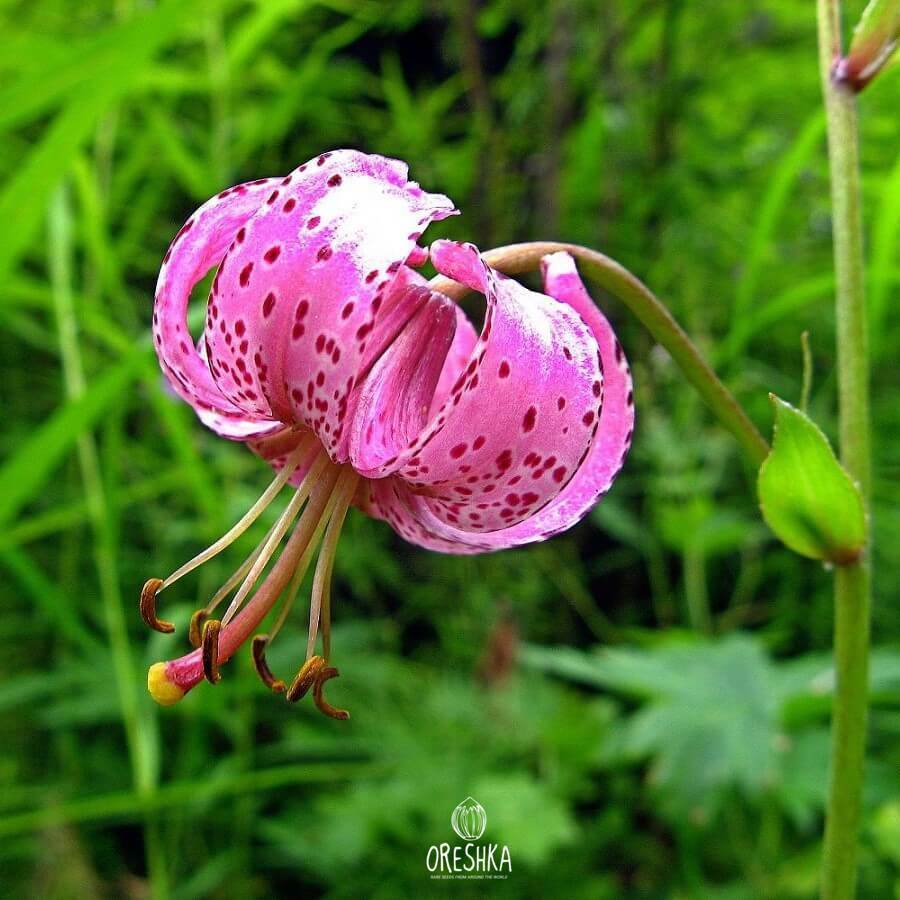
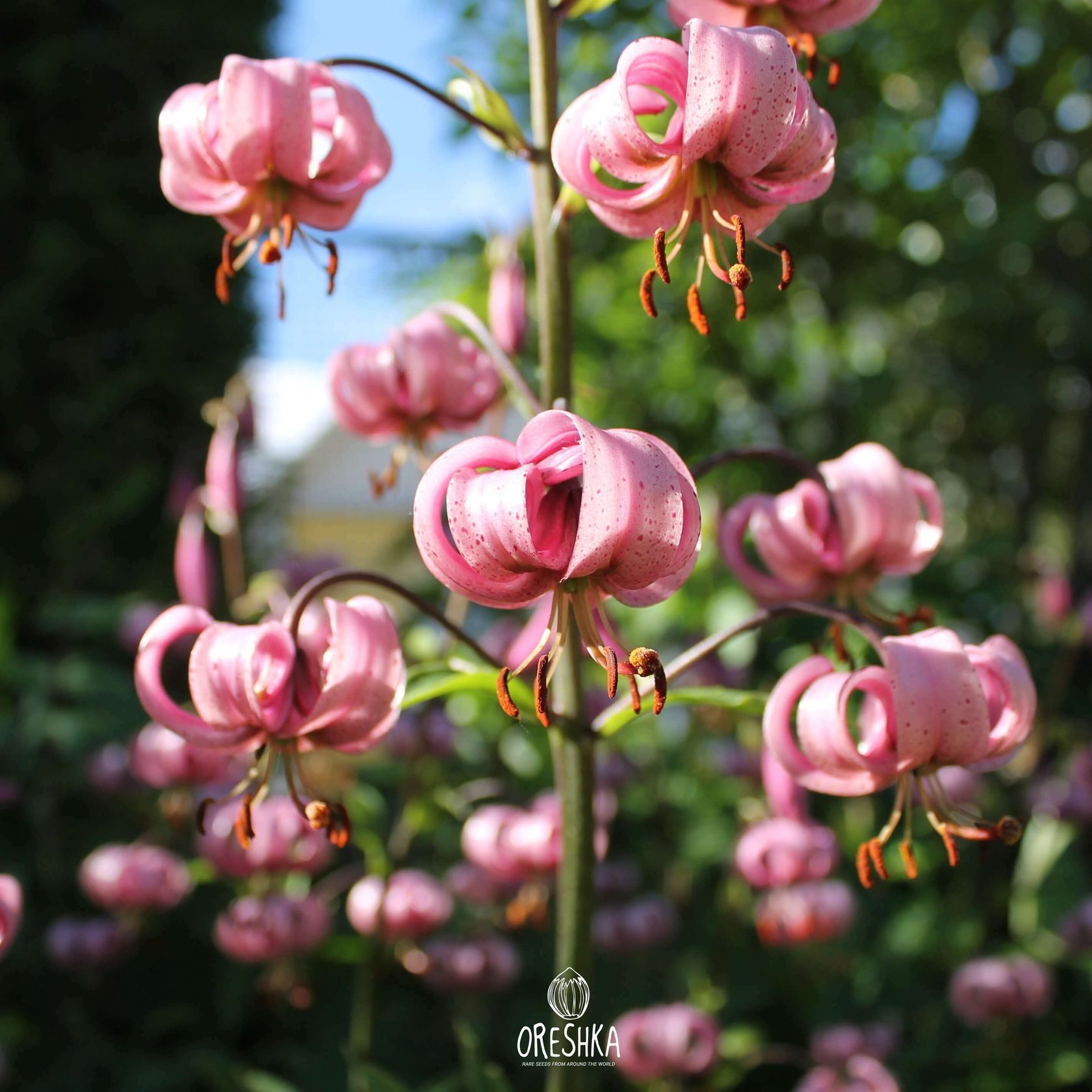
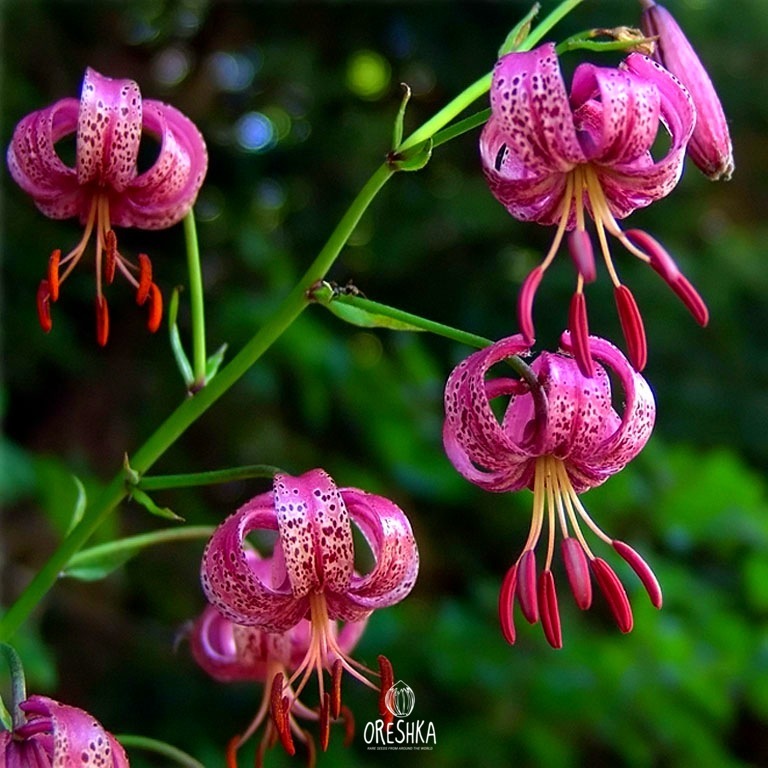
Expect first flowers in year 4–6. Early stems may carry only 5–15 flowers; mature plants carry 10–50 per stem at 80–150 cm height. Flowers are nodding with reflexed, heavily spotted petals in shades of orange, pink and deep rose — the classic Turk's Cap form. Once established, leave the plant completely undisturbed. Moving or dividing a settled Martagon sets it back by years.
The most overlooked fact about Lilium martagon seed: freshness is everything. Seeds stored dry at room temperature lose viability rapidly — germination can drop from 60% to under 10% within three months of harvest. When you receive seeds, start stratification immediately. Do not store them. Also: most failures with Martagon come from skipping the warm stage and jumping straight to cold stratification. Both stages are mandatory. A seed that has only been cold-stratified will not germinate — it simply waits for next year's warm period, and you will think you have dead seeds.
Compare
Lilium martagon vs. Common Garden Lily Hybrids
| Feature | Lilium martagon Wild Saranka · T46 | Asiatic Hybrid Lily Garden centre standard | Oriental Hybrid Lily Fragrant garden lily |
|---|---|---|---|
| USDA Zone | Zone 3 · −40°C | Zone 4 · −34°C | Zone 5–6 · −23°C |
| Lifespan | 100+ years undisturbed | 3–5 years, needs division | 3–5 years, needs division |
| Shade tolerance | Thrives under trees | Full sun only | Full sun only |
| Flowers per stem | 10–50 nodding flowers | 5–15 upward-facing | 5–12 large outward-facing |
| Wild species? | Yes — Red Book listed | No — hybrid cultivar | No — hybrid cultivar |
| Care once established | None needed — naturalises | Annual division needed | Annual division needed |
Avoid these
Common Mistakes When Growing Lilium martagon from Seed
Skipping the warm stratification stage
The most common error. Lilium martagon has a double dormancy — warm first, then cold. Going straight to cold stratification means the seed never receives its first trigger. The seed simply waits, dormant, and appears dead. Always complete the full warm stage (8–12 weeks at 18–22°C) before moving to cold.
Using old or dried-out seeds
Freshness is critical. Seeds dry-stored at room temperature for more than 3 months lose viability rapidly. Start stratification immediately upon receiving seeds — do not store them on a shelf waiting for a convenient time.
Overwatering seedlings and young bulbs
Lilium martagon bulbs are highly sensitive to rot in years one and two. Use well-draining substrate, water moderately, and never let pots sit in water. More young plants are lost to overwatering than to any other cause.
Planting in full sun or heavy soil
In its natural habitat, Martagon grows in conifer forest clearings and under deciduous canopy — not in open sunny borders. Full sun in a warm summer scorches leaves and stresses the bulb. Heavy clay causes rotting. Choose partial shade with humus-rich, well-drained soil.
Moving or disturbing established plants
Once Lilium martagon is established and flowering, leave it completely alone. Dividing or transplanting sets back flowering by 2–3 years. The plant naturalises slowly and rewards patience — interference undoes years of bulb development.
FAQ
Frequently Asked Questions
How long does it take to grow Lilium martagon from seed to first flower?
Can I grow Martagon Lily in a cold climate — UK, Scandinavia, Zone 3?
Why does Martagon Lily need both warm and cold stratification?
What is the difference between Lilium martagon and garden hybrid lilies?
Can I grow Martagon Lily in shade or under trees?
Is Lilium martagon edible or medicinal — what is Saranka?
Grow the Lily That Lives for a Century
10 fresh wild-collected seeds · Ural mountains origin · Zone 3 · −40°C · Ships worldwide
Buy Seeds — €5.00 → Sale −40% · SKU T46 · 10 PCS per pack · Red Book species · Oreshka Seeds