

How to Grow Balkan Pine from Seed
Pinus peuce — Pine of Rumelia
Native to the high mountains of the Balkans at 1,000–2,300 m elevation. Naturally resistant to white pine blister rust — the disease that destroys most 5-needle pines. The preferred rootstock for grafting rare Pinus species worldwide.
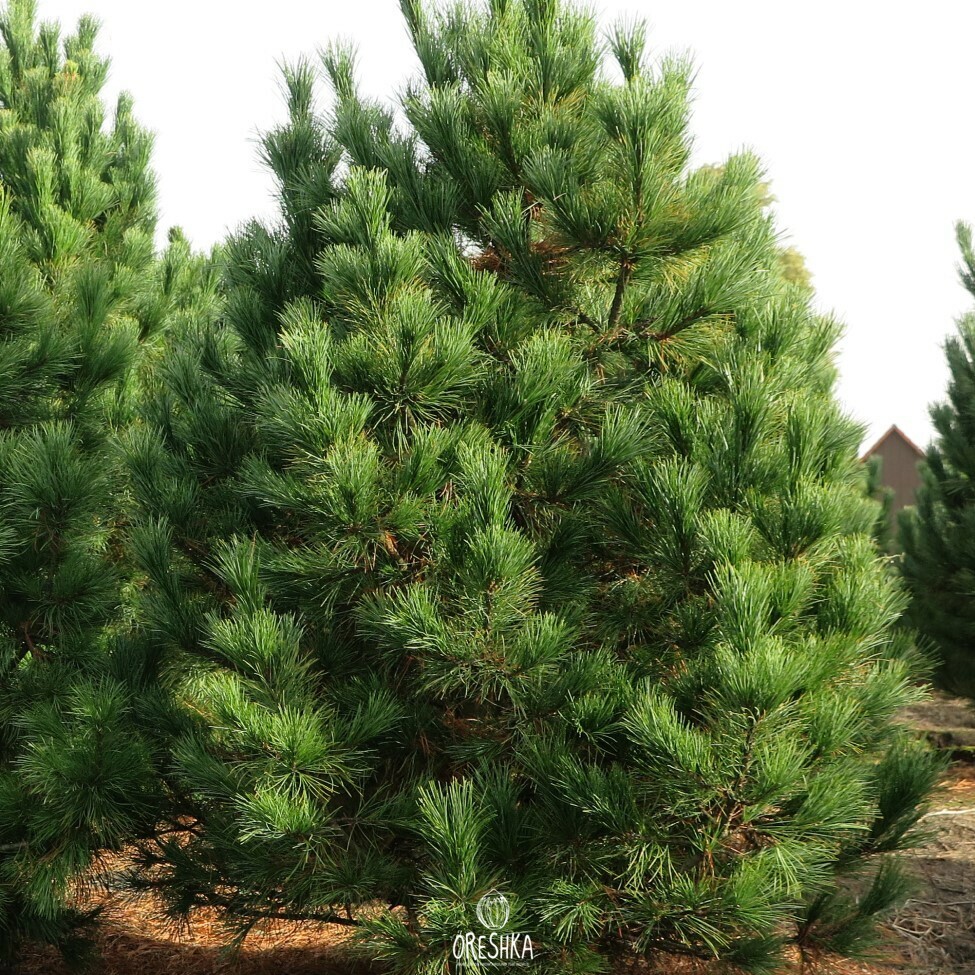
The plant
What is Balkan Pine — the Disease-Proof 5-Needle Pine?
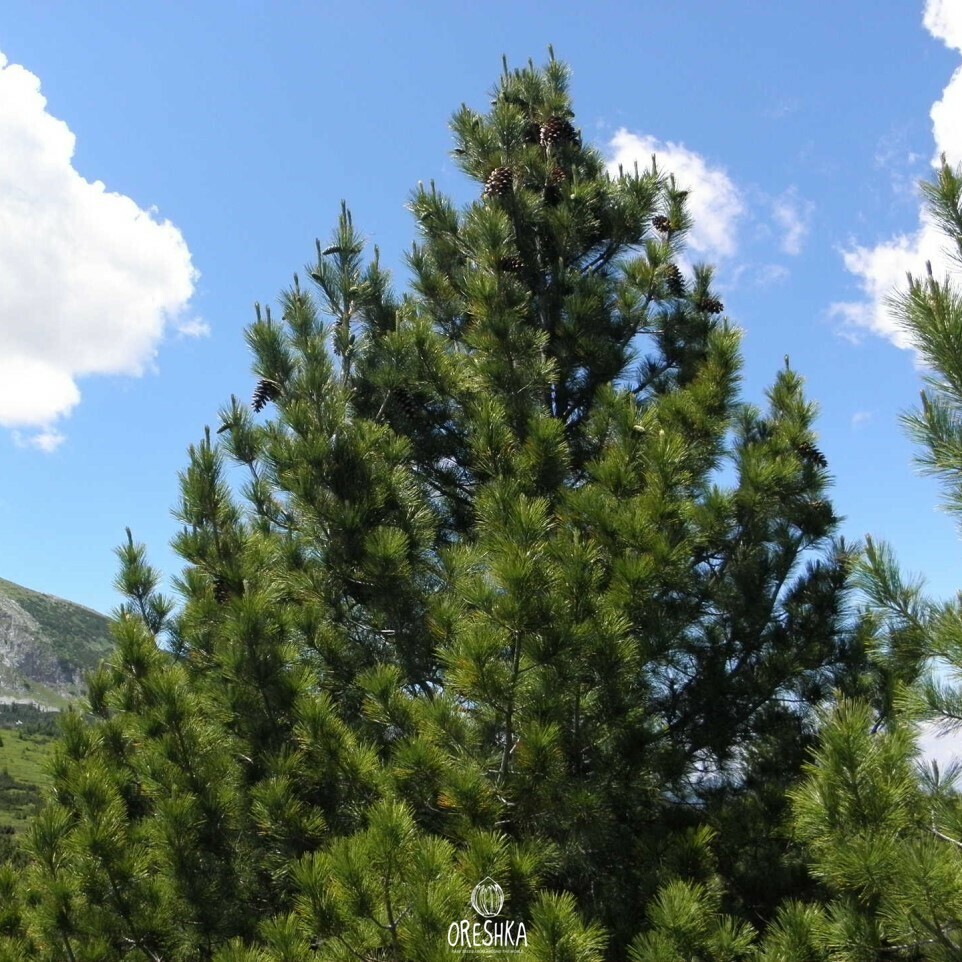
Pinus peuce is one of the rarest and most ecologically restricted pines in Europe — endemic to just six countries in the western Balkans (North Macedonia, Bulgaria, Albania, Serbia, Montenegro, and Greece), where it grows in pure stands and mixed forests between 1,000 and 2,300 metres above sea level. Its entire natural range is smaller than Belgium.
What makes Pinus peuce exceptional is not its rarity but its genetics. While virtually every other 5-needle pine in the northern hemisphere — Pinus strobus, Pinus cembra, Pinus wallichiana — is devastated by white pine blister rust (Cronartium ribicola), Pinus peuce carries a natural resistance that allows it to thrive where other pines die. This has made it the preferred rootstock for grafting rare and collector pine species in professional nurseries worldwide.
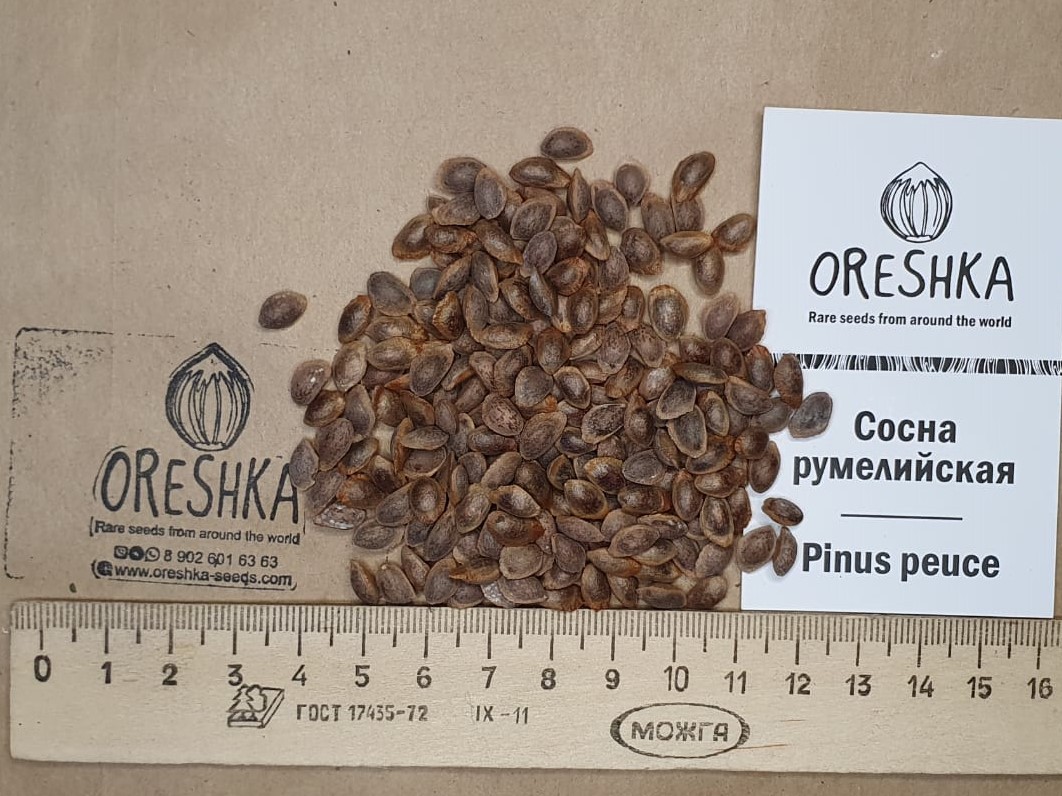
Seeds collected from verified Pinus peuce parent stock. Fresh stratification gives 50–70% germination. Do not skip cold treatment — Balkan Pine will not germinate reliably without it. About our collection →
Quick facts
Pinus peuce at a Glance
Growing guide
How to Grow Balkan Pine from Seed — Step by Step
- 01Cold Stratification — 4 to 6 WeeksMix seeds with lightly moist peat or vermiculite in a sealed zip bag. Refrigerate at 2–5°C for 4–6 weeks. All 5-needle pines need cold to break dormancy — this mimics the natural winter they experience at high altitude in the Balkans. Check every 2 weeks: medium stays barely moist. Begin sowing as soon as you see any seeds sprouting in the bag.
- 02Sowing — 1 cm Deep, Cool TemperatureFill deep pots or trays with well-draining compost mixed with coarse grit (2:1). Sow stratified seeds 1 cm deep. Cover with a thin layer of grit to prevent moss and algae. Keep at 15–20°C — Pinus peuce prefers cooler germination temperatures than most ornamental trees. Do not use bottom heat above 22°C. Keep in bright indirect light until germination.
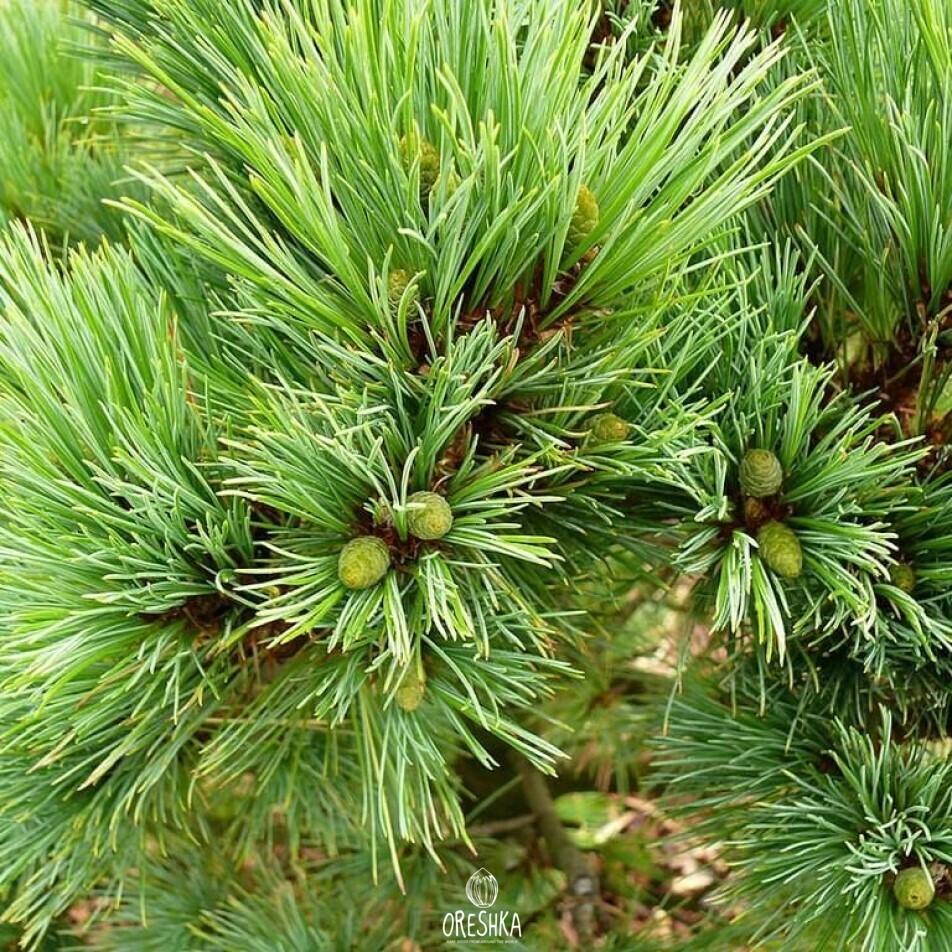
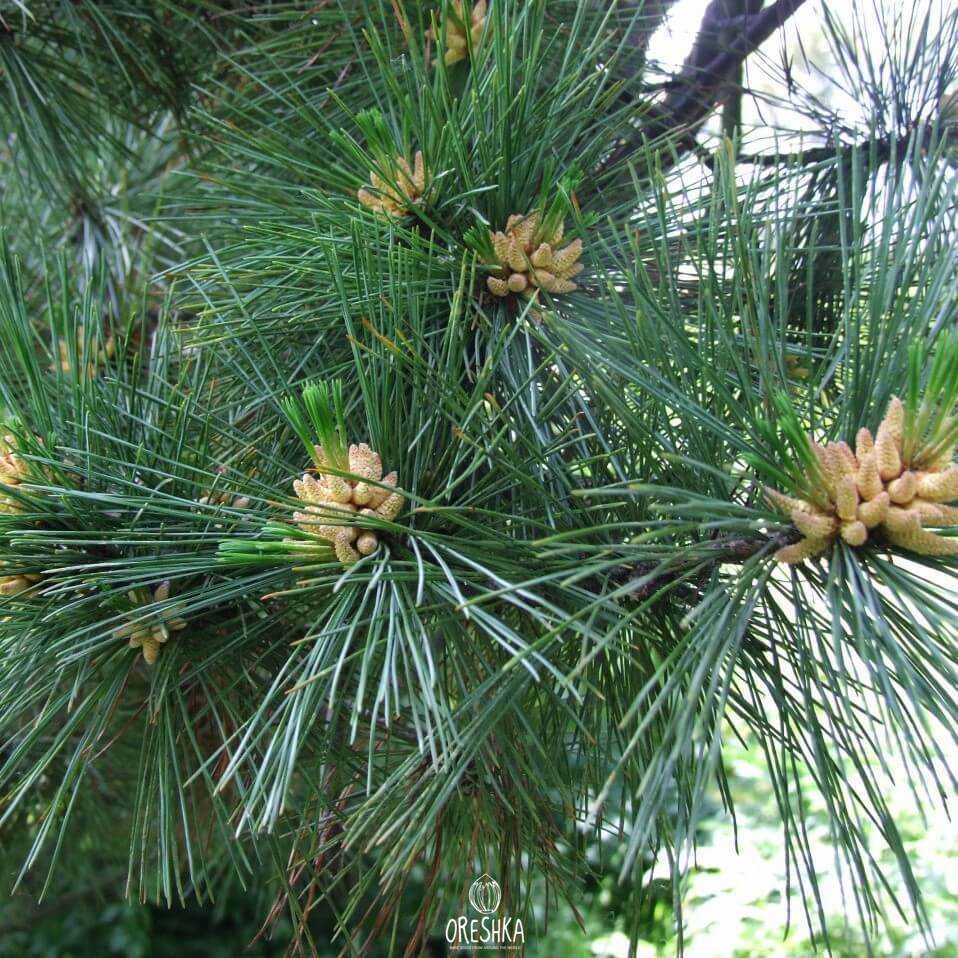
- 03Germination — 14 to 35 DaysSeeds germinate in 2–5 weeks at 15–20°C. Seedlings emerge as a small tuft of 5–8 seed leaves (cotyledons), followed by the first true needles in groups of five — the characteristic 5-needle bundle of all Pinus section Strobus species. Maintain consistent moisture. Move to full sun once seedlings are established. Damping off is the primary risk — ensure good drainage and air circulation.
- 04First Year — Lean ConditionsExpect 5–15 cm of growth in year one. Keep in individual pots outdoors in full sun from late spring. Water regularly but allow soil to dry between waterings. Do not feed with nitrogen-heavy fertiliser — lean soil encourages strong root development and the compact habit characteristic of mountain-origin pines. Pinching new candles in spring controls size if needed.
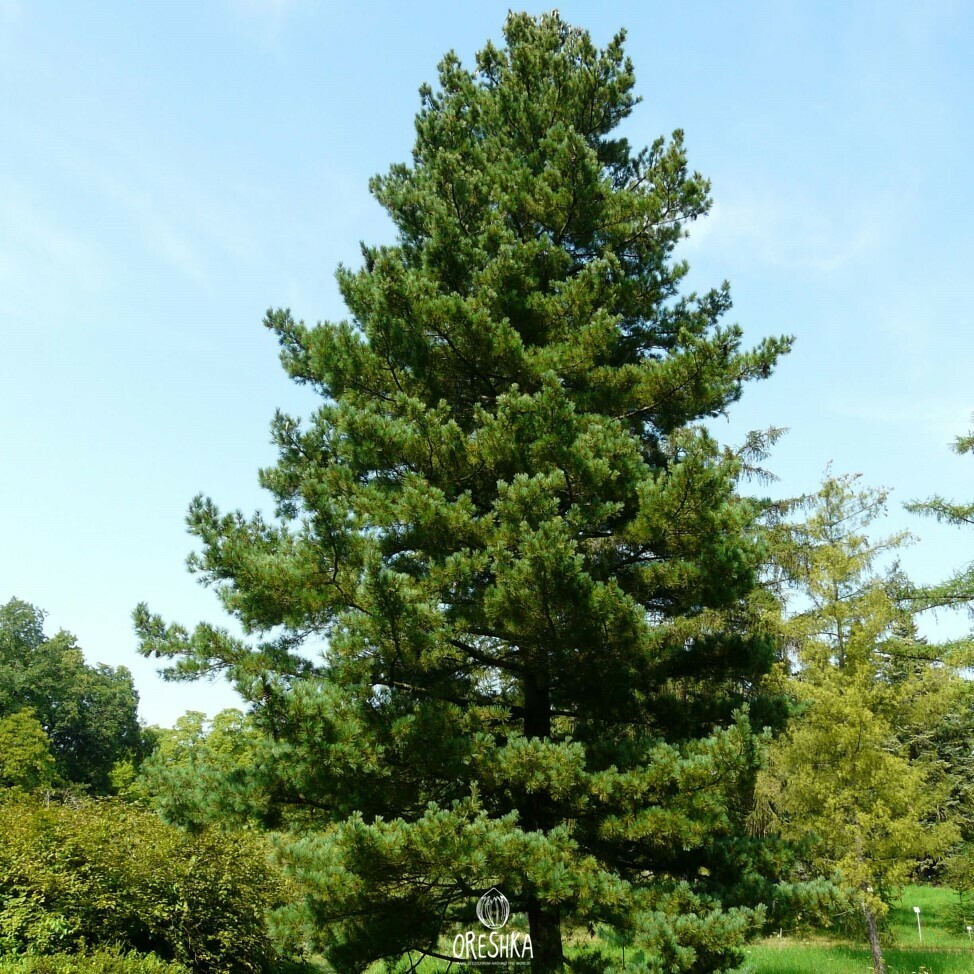
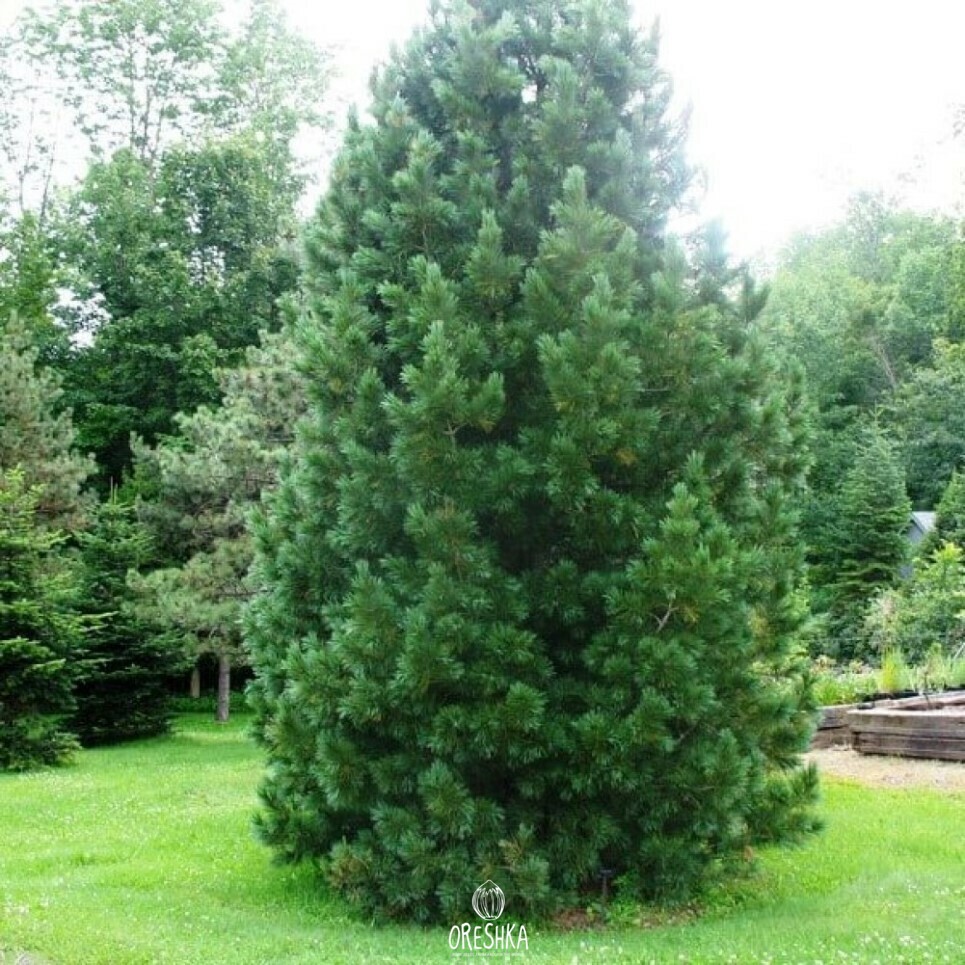
- 05Plant Out — Second or Third YearPlant in permanent position in second or third year, in autumn or early spring. Choose full sun and well-drained soil. Pinus peuce is exceptionally adaptable — it tolerates poor, rocky, sandy, and alkaline soils. Space 4–5 m from other large plants. It grows in a naturally narrow pyramidal column — no pruning needed to maintain shape. Stake in exposed positions for the first year.
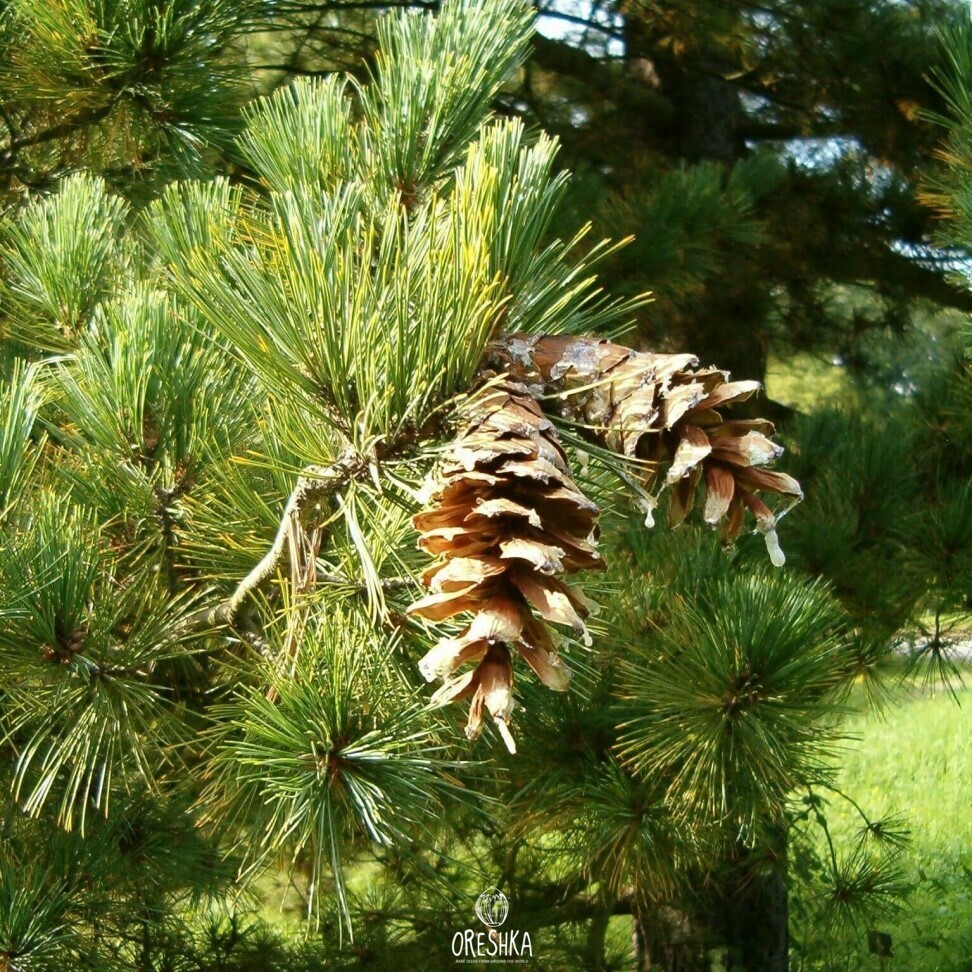
- 06Long-Term Growth and Use as RootstockGrowth rate: 20–40 cm per year once established. Mature height: 10–20 m over decades. The tree is evergreen with persistent needles, attractive grey-brown bark, and cylindrical cones 8–10 cm long. For collectors: Pinus peuce is compatible as a rootstock for grafting other 5-needle species including Pinus strobus, Pinus wallichiana, and Pinus cembra. Grafts on Pinus peuce are significantly more disease-resistant than those on Pinus sylvestris.
If you are growing Pinus peuce alongside other 5-needle pines, it is the ideal insurance hedge against white pine blister rust. Plant Pinus peuce as the primary specimen and use it as the rootstock if you want to trial susceptible species like Pinus strobus 'Fastigiata' or dwarf stone pine cultivars. Grafting on disease-resistant Pinus peuce stock is standard practice in specialist nurseries precisely because it extends the working life of susceptible grafted varieties by decades. From seed, expect your first cone production at 8–12 years — by which time you have a genuinely rare Balkan endemic growing in your garden.
Compare
Balkan Pine vs. Swiss Stone Pine vs. Eastern White Pine
| Feature | Pinus peuce Balkan Pine · H14 | Pinus cembra Swiss Stone Pine | Pinus strobus Eastern White Pine |
|---|---|---|---|
| Needle count | 5 per bundle | 5 per bundle | 5 per bundle |
| USDA Zone | Zone 4 · −34°C | Zone 3 · −40°C | Zone 3 · −40°C |
| Blister rust | Immune — unique trait | Highly susceptible | Highly susceptible |
| Growth rate | 20–40 cm/yr established | 5–15 cm/yr (very slow) | 30–60 cm/yr (fast) |
| Cone / seeds | 8–10 cm cylinders | Edible pine nuts | 10–20 cm cylinders |
| Crown shape | Narrow pyramid — no pruning | Broad, rounded | Broad, irregular |
| Rootstock use | Preferred for grafting | Rarely used | Susceptible — not used |
Avoid these
Common Mistakes When Growing Balkan Pine from Seed
Skipping cold stratification
Pinus peuce seeds will not germinate reliably without 4–6 weeks at 2–5°C. Direct sowing without cold treatment gives poor and erratic results. This is the most common cause of germination failure.
Overwatering seedlings
Balkan Pine is a mountain species adapted to well-drained rocky soils. Waterlogged conditions cause root rot rapidly in seedlings. Always use a freely draining mix and allow the soil to partially dry between waterings.
Planting in shade
Despite being relatively shade-tolerant in the wild (where it grows under forest canopy), garden specimens flower and develop best in full sun. Shade produces leggy growth and reduces the characteristic tight pyramidal form.
Planting too close to other trees
Pinus peuce's narrow pyramidal crown needs space to develop properly. Plant a minimum of 4–5 m from other large trees and 2–3 m from paths and buildings. The crown does not need pruning but will be deformed by overcrowding.
FAQ
Frequently Asked Questions
Is Balkan Pine suitable for cold climates?
What makes Balkan Pine resistant to fungal diseases?
How fast does Balkan Pine grow from seed?
Can Balkan Pine be used as rootstock for grafting?
Why is it called Pine of Rumelia?
What is the difference between Balkan Pine and Swiss Stone Pine?
The Disease-Proof 5-Needle Pine — Rare Balkan Endemic
15+ fresh seeds · Zone 4 · Immune to blister rust · Preferred grafting rootstock · Ships worldwide
Buy Seeds — €6.25 → Sale −40% · SKU H14 · 15+ PCS · Pinus peuce · Oreshka Seeds