How to Grow Apple Tree Red Royalty from Seed
Malus Royalty · Ornamental Crabapple · Three-Season Display · 2–6 m · 15 Seeds
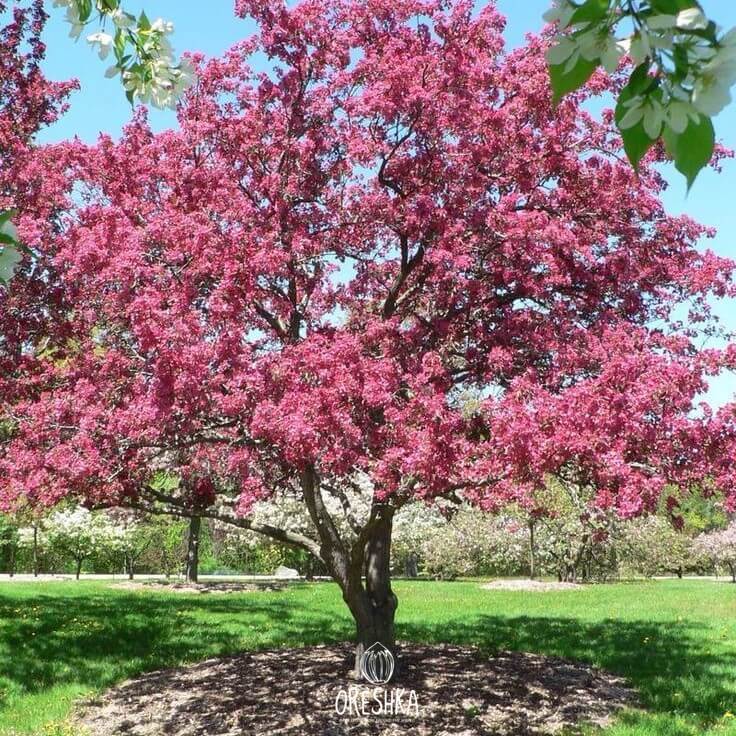
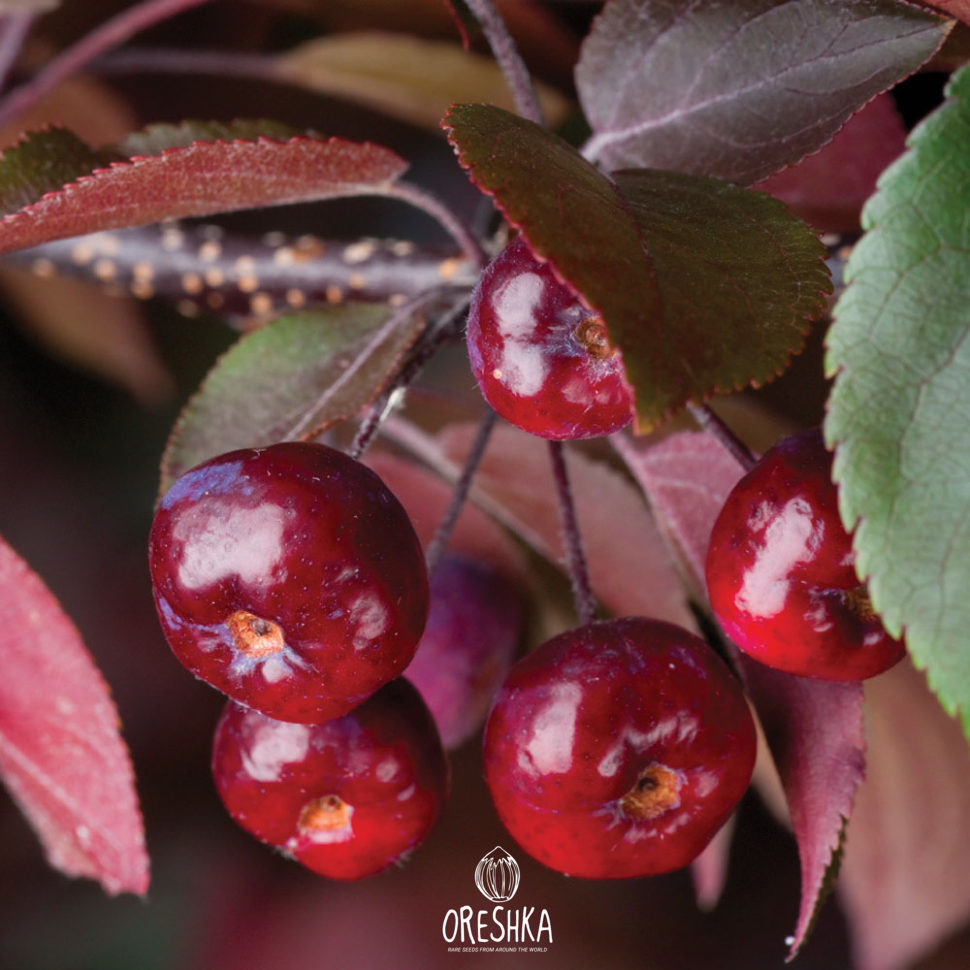
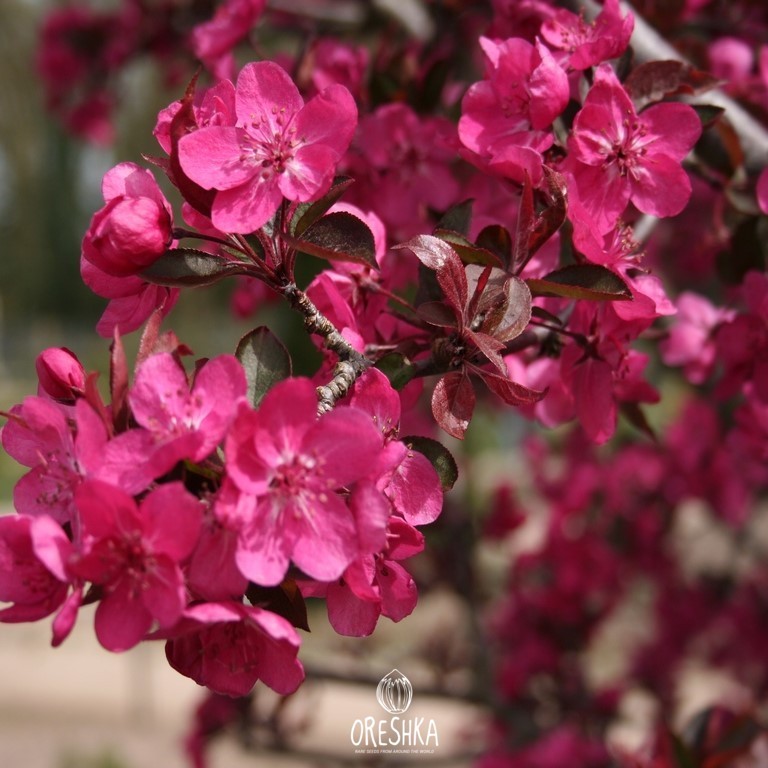
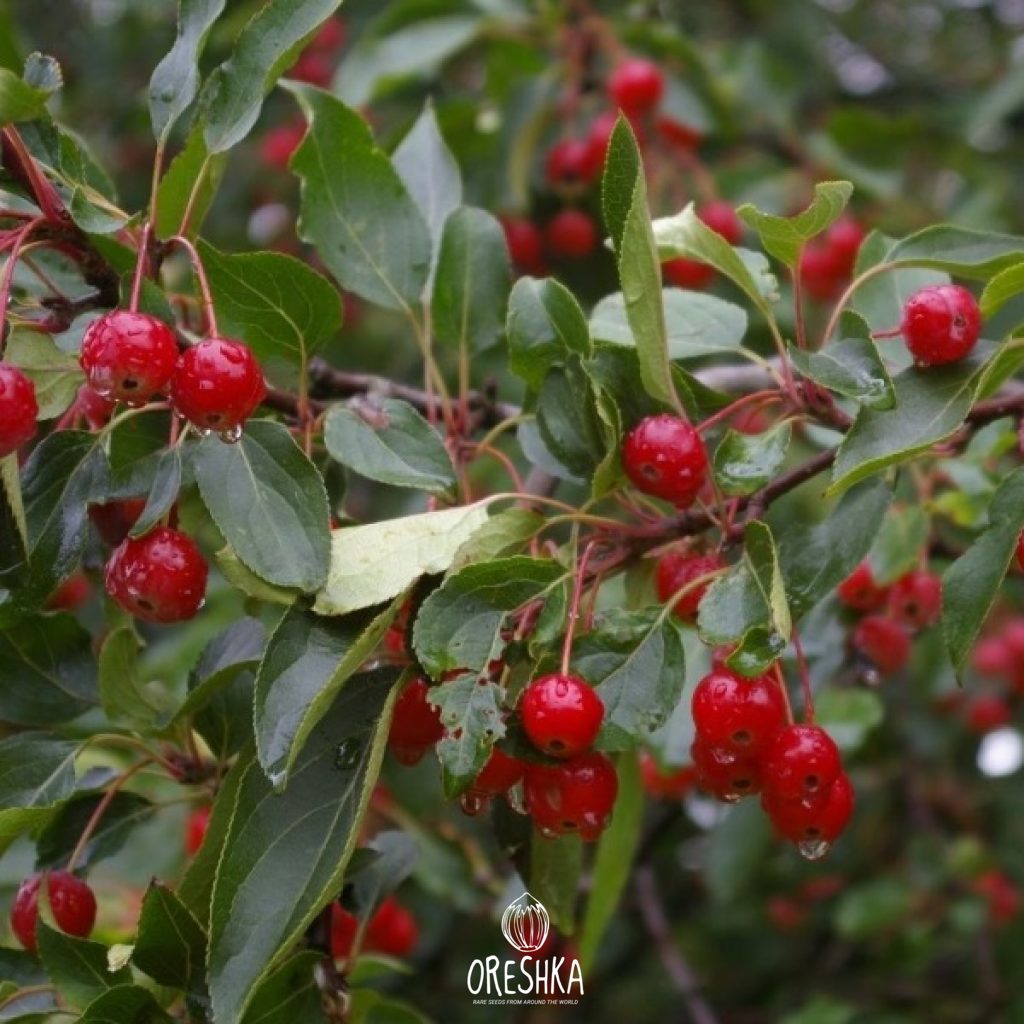
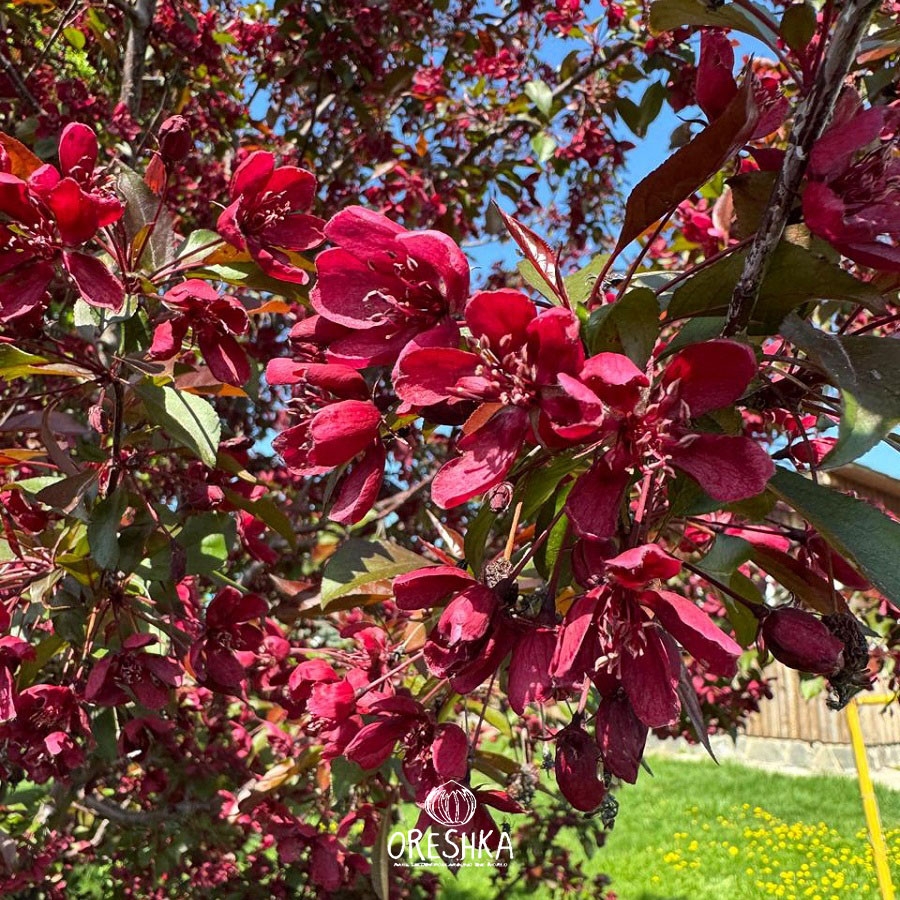
Three distinct seasonal displays from one compact tree: dense raspberry-purple 'pink cloud' flowers in spring, vibrant purple-red glossy leaves throughout the entire summer, and ruby ornamental crabapples in autumn. Purple foliage maintained all season — not just autumn colour — by persistent anthocyanins. Zone 4 hardy, slow-growing, unpretentious.
The tree
What is Malus Royalty — Three-Season Ornamental with All-Summer Purple Foliage
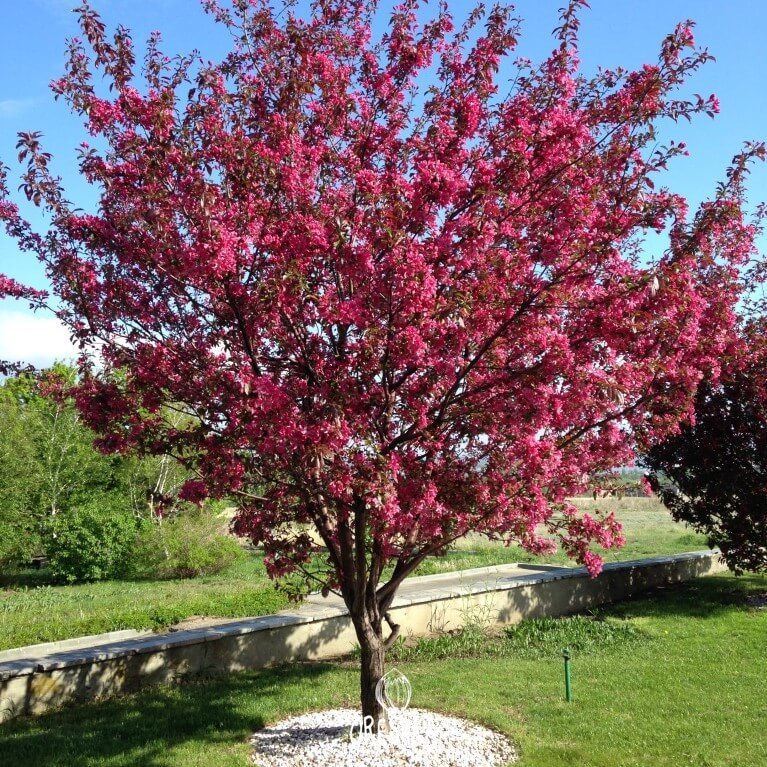
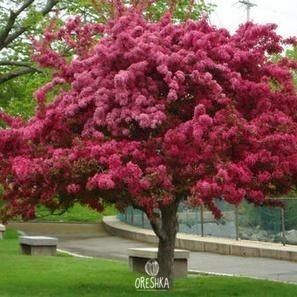
Malus Royalty (Red Royalty) is a slow-growing ornamental crabapple reaching 2–6 m with a compact oval crown in youth that broadens to a wide-spreading spherical form with age. It is one of the most planted ornamental crabapples in European landscape design — valued not for edible fruit but for three distinct ornamental display phases that follow one another through the garden year. The skeletal branches and shoots are red-brown. The buds are rich red-violet.
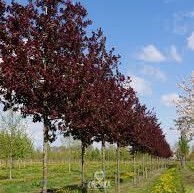
What distinguishes Royalty from most ornamental trees is the persistence of its purple-red foliage throughout the entire growing season. Most trees with coloured leaves show their display only in autumn, when green chlorophyll breaks down to reveal underlying pigments. In Royalty, anthocyanins are actively produced and maintained in the leaves from spring leaf emergence through all of summer — the tree is purple in June, July, and August, not just October. This year-round foliar display, combined with the spring flowering and autumn fruiting, makes it one of the best-value ornamental trees for sustained seasonal interest.
Cold stratification 60–90 days mandatory before sowing. 15 seeds. Zone 4 hardy — tolerates wind, drought, poor soils. Full sun essential for maximum purple pigmentation. About our collection →
Quick facts
Malus Royalty at a Glance
Growing guide
How to Grow Malus Royalty from Seed — Step by Step
- 01Cold Stratification — 60 to 90 Days MandatoryMix seeds with lightly damp vermiculite in a sealed plastic bag. Refrigerate at 2–5°C for 60–90 days. Check monthly — sow when small white root tips appear. Do not freeze. With 15 seeds per pack, stratify all simultaneously for efficient use of one refrigeration cycle. Most Malus seeds show root tips at 60–75 days under proper conditions.
- 02Sow Stratified Seeds — 0.5 cm, 18–22°CSow 0.5 cm deep in individual 9 cm pots of well-draining compost. Germination in 2–4 weeks. Keep compost evenly moist, not waterlogged. A clear propagator cover maintains humidity. Malus seedlings emerge with distinctive oval seed leaves, followed by the first true leaves — which in Royalty will show their characteristic purple colouration from the start.
- 03Full Light — Maximise Purple PigmentationPurple leaf intensity in Malus Royalty is light-dependent — anthocyanin production is stimulated by high-intensity sunlight (UV component triggers the same pathway as sunburn protection). Grow on in maximum available light. Seedlings in shade produce greener, less saturated foliage that may appear almost green in low light. A south-facing sunny position produces the richest purple display both as seedlings and as established trees.
- 04First Winter — Harden and Plant or ProtectMalus Royalty is Zone 4 hardy — seedlings need cold winter dormancy. In mild climates, plant in-ground in autumn of year 1 with a mulch over the root zone. In very cold climates (Zone 3–4), overwinter pots in an unheated shed (protecting from hard freeze but providing cold). Root restriction in pots should be avoided after year 1 — plant into final position as early as practical. The taproot develops better unrestricted in-ground.
- 05Established Tree — Minimal Maintenance RequiredOnce established (year 2–3), Malus Royalty is genuinely low-maintenance. Tolerates frost, wind, drought, and poor soils — described as 'unpretentious'. Annual feeding with a slow-release balanced fertiliser in spring and occasional pruning to maintain shape (best done in late winter before bud break) are the only regular requirements. The compact habit rarely requires significant pruning — primarily remove crossing, dead, or inward-growing branches.
- 06Flowering From Year 5–8 — The 'Pink Cloud' DisplayFrom seed, first flowering typically occurs at year 5–8 depending on growing conditions. When Royalty flowers, it flowers spectacularly — raspberry-purple 4 cm blooms with strong fragrance covering every branch densely before the leaves have fully expanded, creating the 'pink cloud' effect the variety is named for in horticulture. Following flowering, leaves emerge in full purple-red for the summer display, followed by ruby crabapples that persist through autumn and into early winter.
Malus Royalty grown from seed shows natural genetic variation — not all seedlings from a single batch will express identical purple intensity. This is expected with seed-grown ornamental trees. To maximise the chance of richly coloured seedlings: grow all 15 seeds from the pack, select the 2–3 with the deepest purple colouration at the seedling stage (purple is visible from the first true leaves), and plant these in the best positions. The variation between seedlings is also part of their value — seed-grown specimens develop unique character over time that clonal grafted trees do not. The deep root systems that develop from seed-grown Royalty make them significantly more drought-tolerant than nursery-grafted specimens once established after 3–4 years.
Compare
Malus Royalty vs. Malus 'Evereste' vs. Standard Ornamental Cherry
| Feature | Malus Royalty P41 · Oreshka Seeds | Malus 'Evereste' White-flowering crabapple | Prunus 'Kanzan' Japanese ornamental cherry |
|---|---|---|---|
| Foliage colour | Purple-red ALL summer | Green · standard | Green · bronze in spring only |
| Flower colour | Raspberry-purple · fragrant | White · no fragrance | Deep pink double · no fragrance |
| Autumn fruit | Ruby ornamental crabapples | Orange-red crabapples | None · cherries not ornamental |
| Hardiness | Zone 4 · −34°C | Zone 4 | Zone 5 · less cold hardy |
| 3-season display | Yes — flower · foliage · fruit | Partial — flower + fruit | Partial — flower only notable |
| Mature size | 2–6 m · compact · slow | 6–8 m · medium | 6–10 m · larger |
Avoid these
Common Mistakes When Growing Malus Royalty from Seed
Sowing without cold stratification
Unstratified Malus seeds fail to germinate or show extremely erratic, months-long results. Cold stratification (60–90 days at 2–5°C in damp vermiculite) is not optional — it is the essential step that breaks physiological dormancy. Skipping it results in either complete germination failure or waiting 6+ months with 1–2 seeds germinating randomly.
Growing in shade — foliage loses purple
Full sun is essential for Malus Royalty's defining purple pigmentation. In partial shade the leaves remain somewhat coloured but noticeably greener and less saturated. In full shade the tree looks like a standard green-leaved apple. Plant in the sunniest available position — south-facing with no afternoon shade — to achieve the rich purple-red display this variety is grown for.
Expecting edible fruit
The variety description explicitly states the ornamental crabapples are not intended for human consumption as dessert fruit. They are small (2.5–5 cm, 5–6 g), ornamental, and primarily valued for their persistent ruby colour and wildlife value. They are not toxic, but they are tart and small — for a fruiting apple, choose a standard eating or cooking variety.
Pruning at the wrong time
Malus species are susceptible to fungal diseases (including apple canker) when pruned in autumn or in wet conditions. Prune in late winter or early spring, just before bud break, when the tree is still dormant. This timing allows wounds to callus quickly as the growing season begins, minimising disease entry points.
FAQ
Frequently Asked Questions
Is Malus Royalty a fruiting apple or ornamental?
Why does it keep purple leaves all summer?
How long to first flowers from seed?
What USDA zone is Malus Royalty?
How big does it get?
Can seeds be sown without stratification?
Three Seasons of Display — Pink Cloud Flowers, Purple Summer Leaves, Ruby Crabapples
15 fresh seeds · Zone 4 · 2–6 m compact · Purple foliage all summer · Fragrant spring flowering · Ships worldwide
Buy Seeds — €5.00 → Sale −40% · SKU P41 · 15 PCS · Malus Royalty · Oreshka Seeds