

How to Grow Vietnamese Melon from Seed
Cucumis melo — Deep Orange · Yellow-Striped · Early Variety
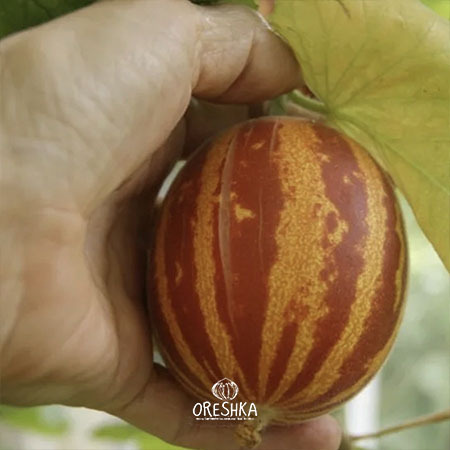
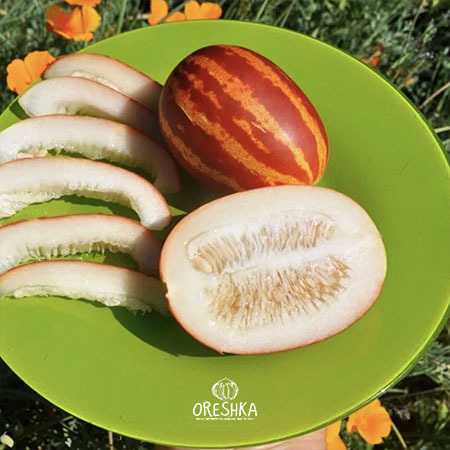
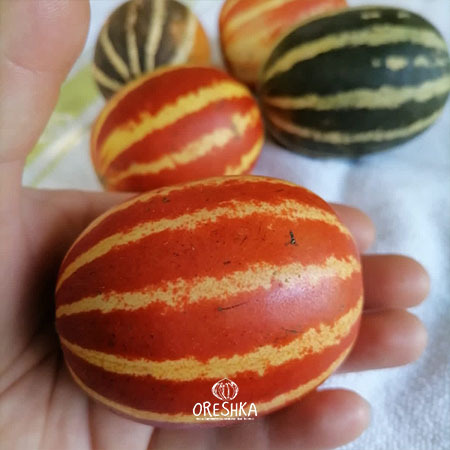
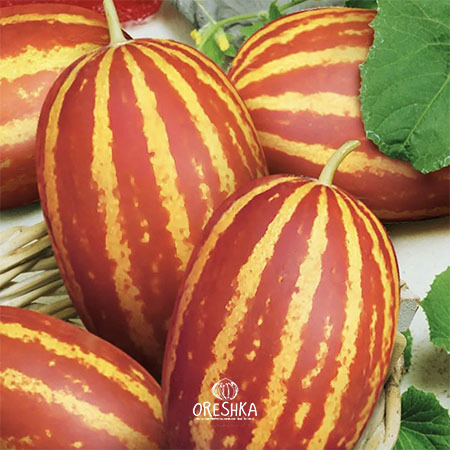
One plant, one season, 20–30 fruits. Vietnamese Melon produces far more per plant than any standard Western variety — small (up to 250 g), intensely sweet, creamy-white, and aromatic. Deep orange skin with yellow stripes. Early ripening — suitable for containers, polytunnels, and warm garden positions.
The plant
What is Vietnamese Melon — 20–30 Fruits from One Vine?
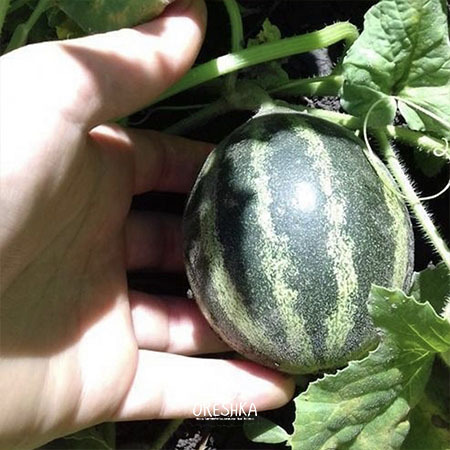
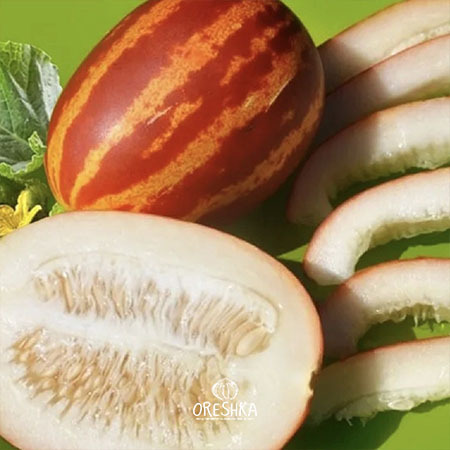
Vietnamese Melon is an early-ripening Cucumis melo variety producing small, oval fruits — deep orange skin with numerous distinctive yellow stripes — on vigorous vines 1.5–2 m long. Each plant produces 20–30 fruits per season: a yield per plant that makes it one of the most productive melon varieties available for home growing. Fruit weight reaches up to 250 g, with creamy-white flesh that is highly aromatic, intensely sweet, and described as having an oily richness unusual in melons.
The combination of small fruit size and high individual fruit count means the vine ripens continuously throughout summer rather than in a single large flush — providing a constant harvest from midsummer to early autumn. Unlike standard cantaloupe, which exhausts itself producing 3–6 large fruits, Vietnamese Melon keeps producing as long as warm temperatures persist. Each ripe fruit announces itself — the fragrance is detectable from 30–50 cm and is one of the most intensely aromatic of any melon variety.
Early-ripening variety — suitable for polytunnel growing in northern climates. Start indoors 3–4 weeks before last frost. 10 seeds per pack. About our collection →
Quick facts
Vietnamese Melon at a Glance
Growing guide
How to Grow Vietnamese Melon from Seed — Step by Step
- 01Start Indoors — 3 to 4 Weeks Before Last FrostSow one seed per 9 cm pot, 1.5–2 cm deep, in warm compost. Keep at 22–28°C — a propagator mat significantly improves germination speed. Start 3–4 weeks before outdoor planting time. Do not start too early: leggy, etiolated seedlings grown for too long in low light are harder to establish than compact plants grown for 3–4 weeks. In warm climates, direct outdoor sowing after last frost is also reliable.
- 02Germination — 5 to 10 Days at 22–28°CSeeds germinate in 5–10 days at 22–28°C. The prominent seed leaves emerge first. Grow on in full light to prevent stretching. After germination, maintain 20–24°C. Water when the surface is dry. Harden off for 7–10 days before outdoor planting — move pots outside for gradually increasing periods in a sheltered position before final transplanting.
- 03Plant Out — After Last Frost, Warm SoilPlant after all frost risk has passed and soil temperature reaches at least 18°C. Space 60–80 cm apart with trellis or support 1.5–2 m tall. In cooler climates, growing through clear plastic mulch warms the soil and measurably increases yield. In northern Europe (UK, Germany, Scandinavia), polytunnel or greenhouse growing is strongly recommended for reliable results. Full sun all day is essential.
- 04Vine Management and PollinationPinch the growing tip after 5–6 leaves to encourage lateral branching and more female flowers. Male flowers appear first and drop without setting fruit — this is normal. Female flowers (with a tiny swelling at the base) appear 1–2 weeks later. Bees normally handle pollination outdoors. Under cover or in low-pollinator environments, hand-pollinate by transferring pollen from a male flower to a female flower with a small brush or directly between flowers.
- 05Feeding and WateringFeed every 10–14 days with a balanced fertiliser until flowers appear, then switch to a high-potassium fertiliser (tomato feed works well). Water consistently — irregular watering causes fruit splitting. Reduce watering in the final 2 weeks before harvest: slightly water-stressed fruits at maturity develop more concentrated sweetness and more intense aroma. Mulch well to maintain soil moisture and reduce weed competition.
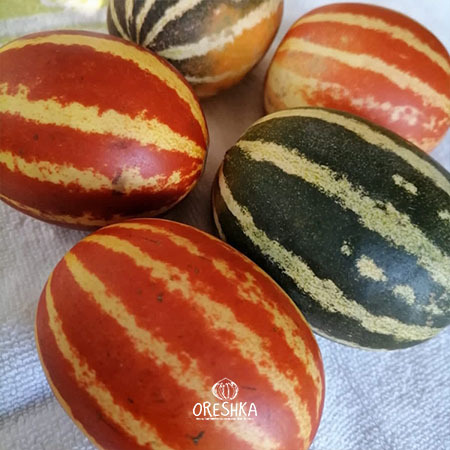
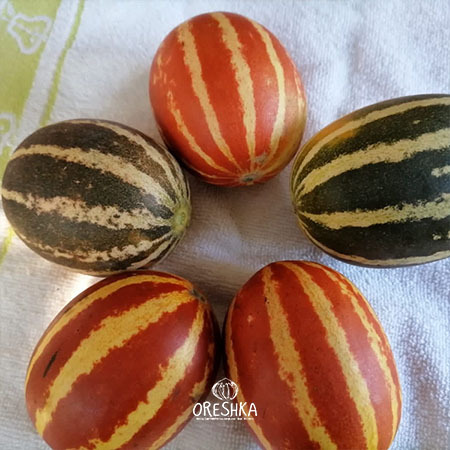
- 06Harvest — 20 to 30 Fruits Per PlantFruits mature 70–85 days from transplant. Ripe indicators: skin turns deep orange with clear yellow stripes; intense sweet fragrance detectable at 30–50 cm; slight softening at the fruit end. Harvest regularly — this encourages continued production. Unlike some melons, Vietnamese Melon does not slip cleanly from the vine; cut with scissors leaving a short stem. Use within 3–5 days at room temperature or up to 10 days refrigerated.
Vietnamese Melon dehydrates extraordinarily well — the high sugar and aromatic content concentrates into a sweet, intensely flavoured dried snack far superior to commercially dried melon. Slice ripe fruits thinly (5–6 mm) and dehydrate at 55–60°C for 10–12 hours in a food dehydrator, or at the lowest oven setting with the door slightly ajar for 6–8 hours. The result is a chewy, intensely sweet snack with concentrated aroma. It stores in an airtight container for 2–3 months at room temperature — effectively preserving the summer harvest well into winter. With 20–30 fruits per plant, a single vine produces enough for both fresh eating and a substantial dried reserve.
Compare
Vietnamese Melon vs. Cantaloupe vs. Honeydew
| Feature | Vietnamese Melon A21 · Oreshka Seeds | Cantaloupe Standard Western variety | Honeydew Winter melon type |
|---|---|---|---|
| Fruits per plant | 20–30 · high continuous yield | 3–6 · single flush | 2–4 · single flush |
| Fruit size | Up to 250 g · small oval | 1–3 kg · large round | 1.5–3 kg · large oval |
| Flesh colour | Creamy-white · aromatic | Orange · fragrant | Pale green · mild |
| Fragrance | Intensely aromatic · floral-sweet | Fragrant | Mild · less aromatic |
| Ripening | Early · 70–85 days from transplant | Medium · 75–90 days | Late · 90–110 days |
| Container growing | Yes — 40+ cm pot, sunny balcony | Difficult — large plant | Difficult — large plant |
Avoid these
Common Mistakes When Growing Vietnamese Melon
Planting out before soil is warm enough
Vietnamese Melon planted in cold soil (below 18°C) will sulk, grow very slowly, and set fruit poorly. Wait until soil temperature is confirmed at 18°C+ before transplanting. In cool climates, clear plastic mulch laid 2 weeks before planting warms soil by 2–4°C and makes a significant difference to plant establishment and early fruit set.
Removing male flowers thinking they are non-productive
Male flowers (no swelling at the base) appear 1–2 weeks before female flowers and drop naturally. This is normal. Do not remove them — they are the pollen source for female flowers. If male flowers are removed and female flowers later appear, there is nothing to pollinate them and no fruit sets.
Watering irregularly during fruit development
Irregular watering — alternating drought and flood — causes fruit to split as rapid water uptake after a dry spell creates pressure the skin cannot absorb. Maintain consistent moisture throughout fruit development. The only exception is the final 2 weeks before harvest when a slight reduction in water encourages sugar concentration.
Waiting for the fruit to slip from the vine
Unlike some melon varieties, Vietnamese Melon does not signal maturity by slipping cleanly from the vine. Rely instead on fragrance (intensely sweet from 30–50 cm), skin colour (deep orange with clear yellow stripes), and slight softening at the fruit end. Harvest with scissors, leaving a short stem attached.
FAQ
Frequently Asked Questions
How many melons does one plant produce?
What does Vietnamese Melon taste like?
Can Vietnamese Melon be grown in northern Europe or the UK?
What is the difference between Vietnamese Melon and cantaloupe?
How do I know when Vietnamese Melon is ripe?
Can Vietnamese Melon be grown in a container?
20–30 Fruits Per Plant — The Most Productive Melon for Home Gardens
10 fresh seeds · Early ripening · Intensely aromatic · Fresh · jam · dried · container-suitable · Ships worldwide
Buy Seeds — €6.25 → Sale −40% · SKU A21 · 10 PCS · Vietnamese Melon · Oreshka Seeds