

How to Grow Crushed Heart Tomato from Seed
Indeterminate · 1.8–2.5 m · 200–400 g · Three-colour fruit · Disease resistant
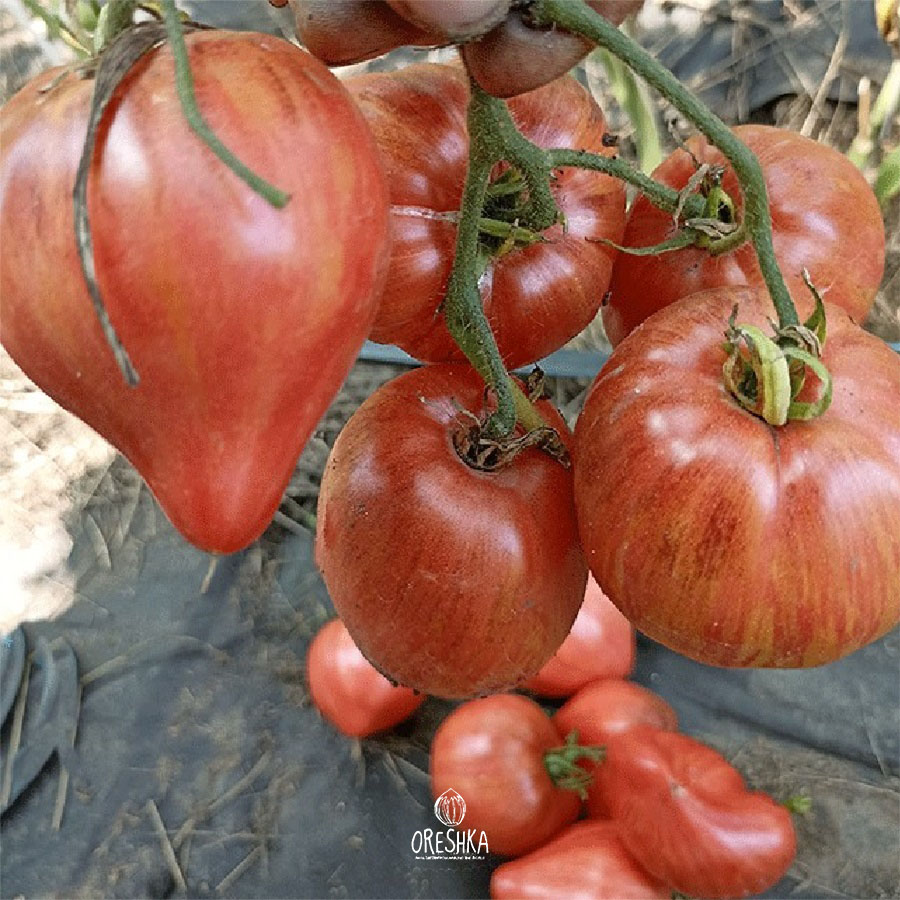
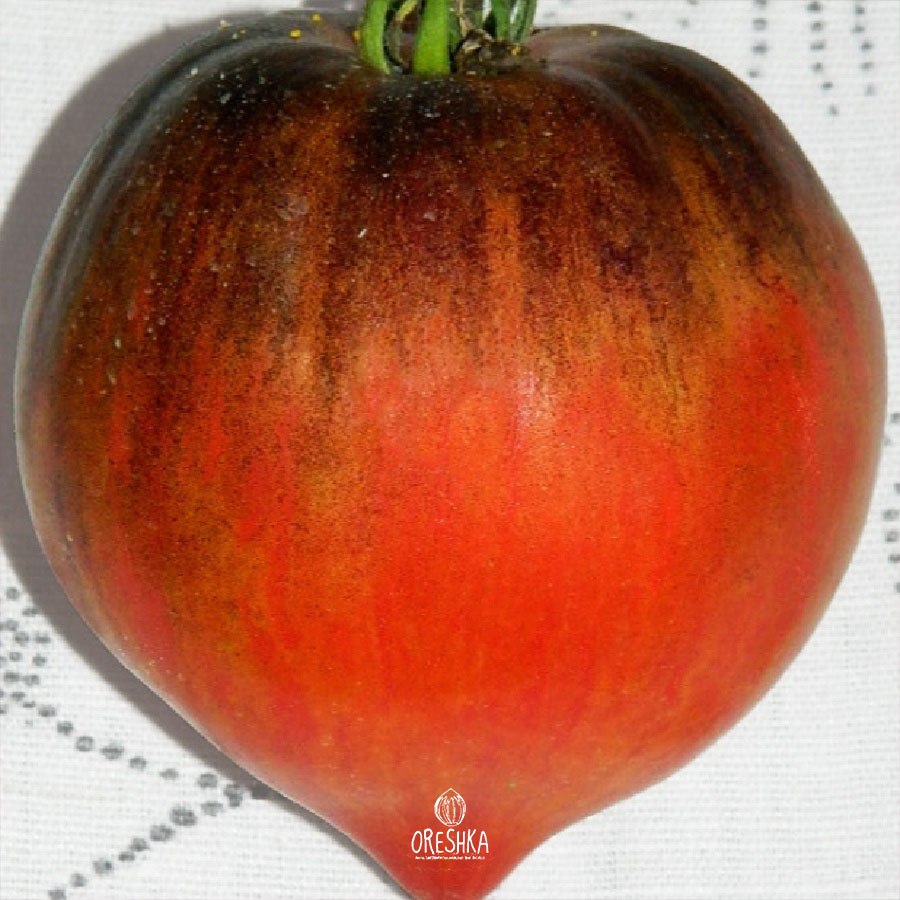
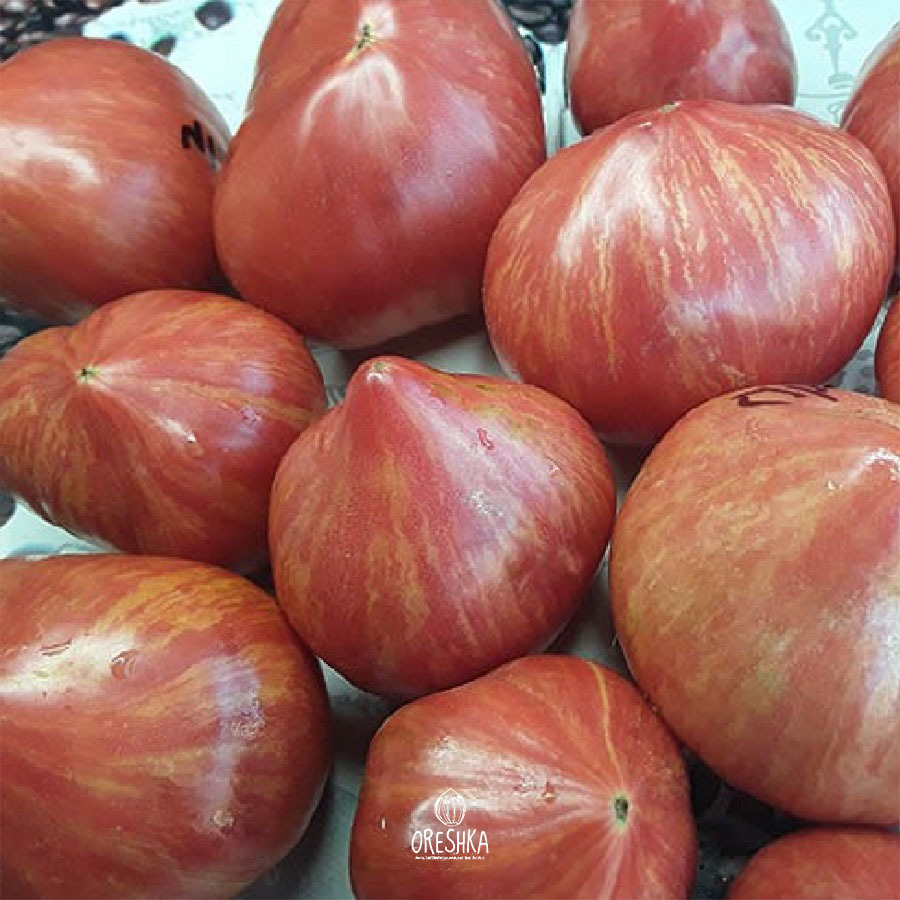
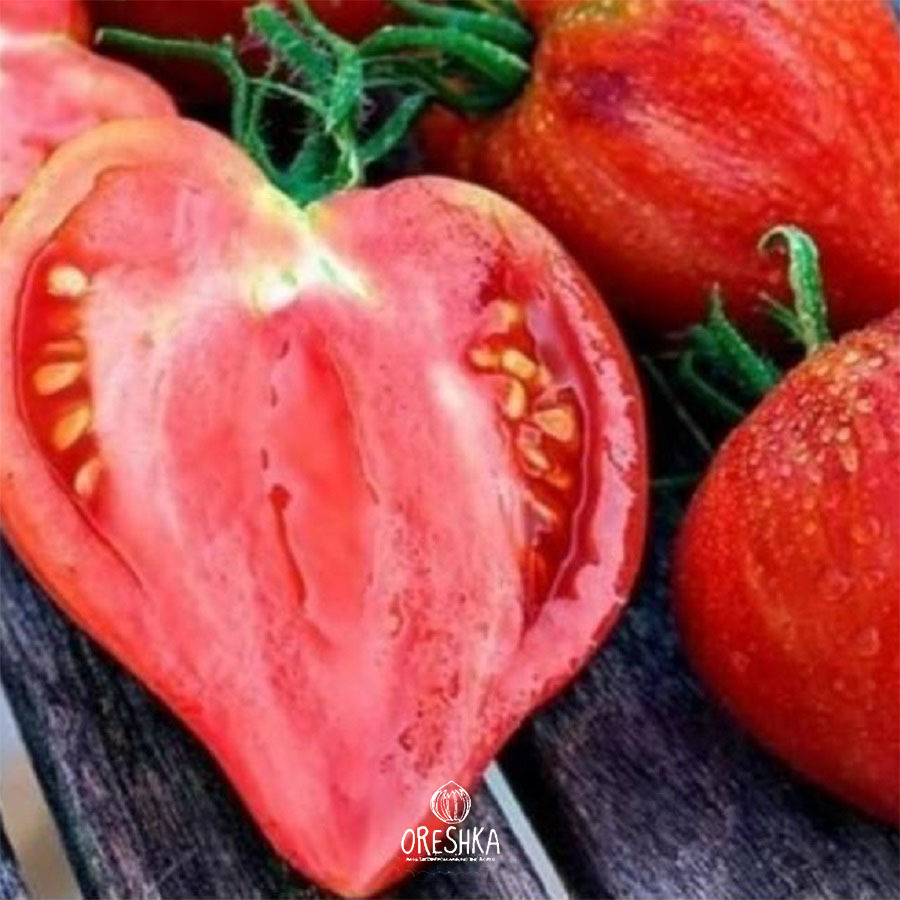
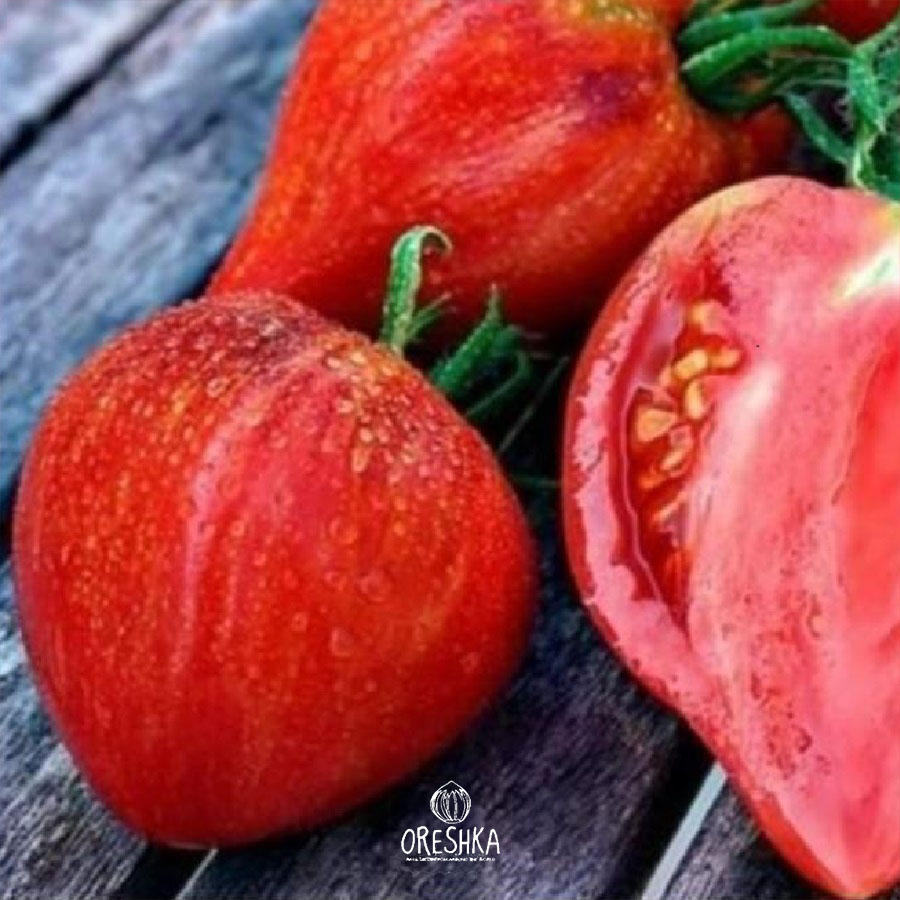
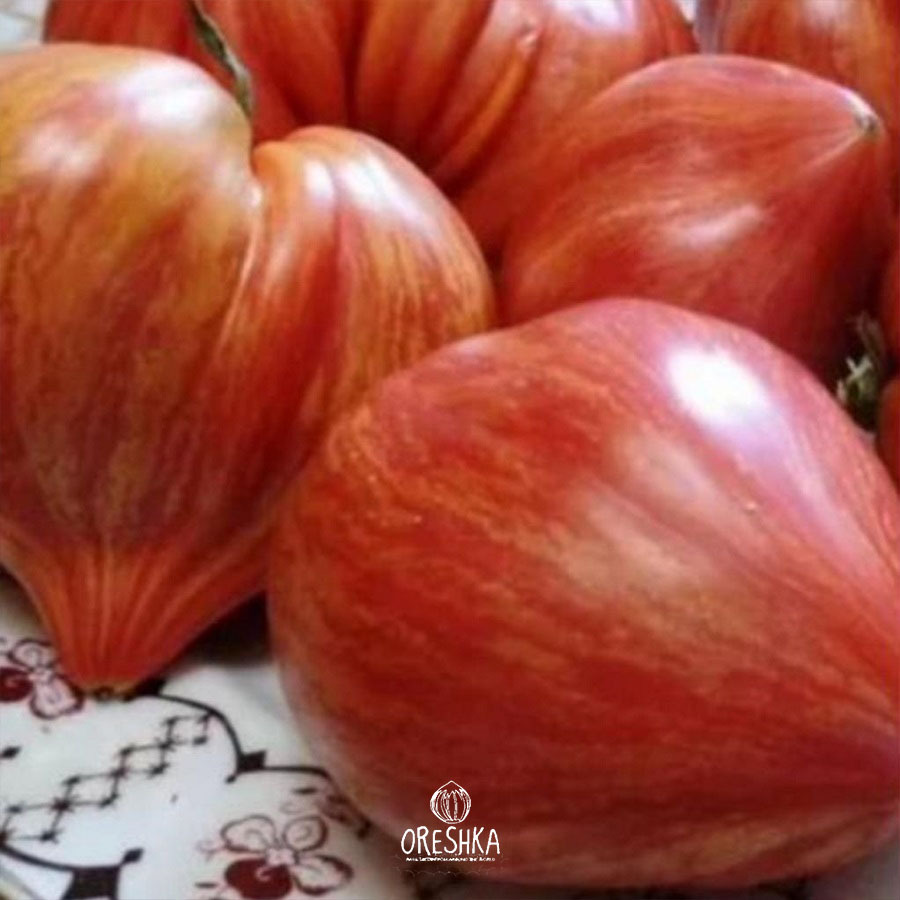
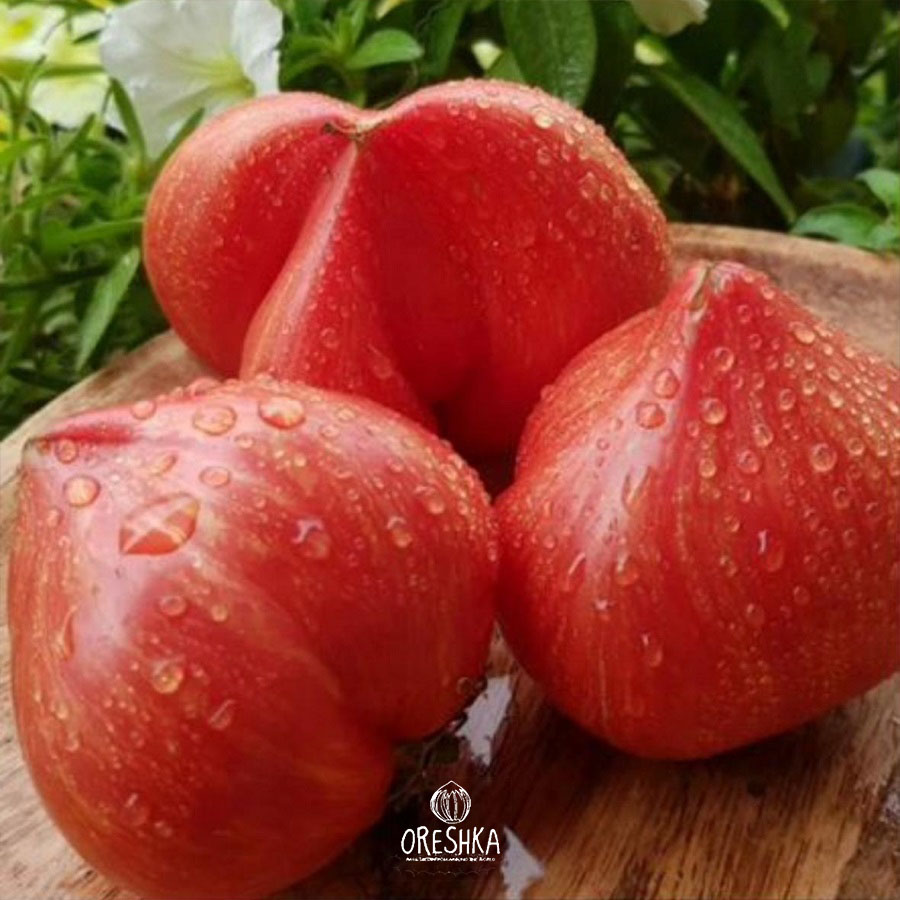
A spectacular three-colour tomato: raspberry-pink base, golden blurred stripes, violet-blue anthocyanin shoulders. No other commonly grown variety combines all three colours on a single heart-shaped fruit. Indeterminate, bearing continuously until frost. Sweet, balanced, fleshy. Outstanding for fresh eating, sauces, juices, and ketchup.
The variety
What is Crushed Heart — The Three-Colour Tomato That Bears Until Frost
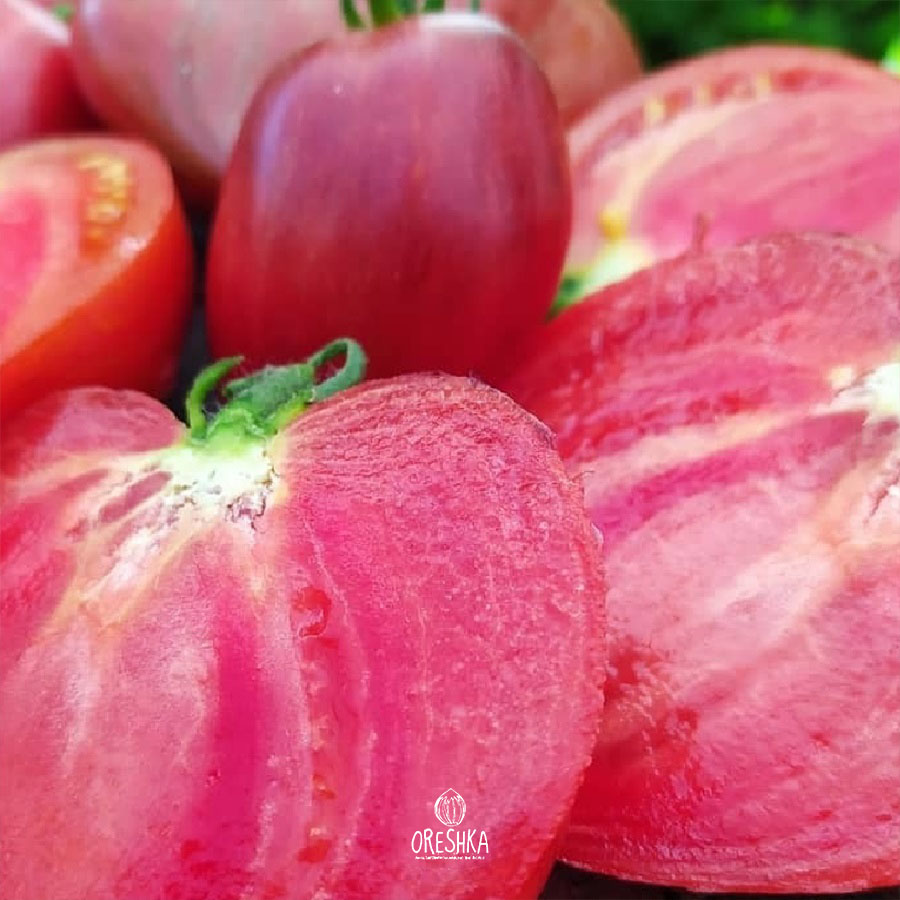
Crushed Heart (To232) is a mid-season indeterminate tomato producing heart-shaped fruits (200–400 g) in a three-colour combination that is genuinely unusual among available varieties. The base colour is raspberry-pink — a warm, saturated pink-red with blue undertones distinct from standard tomato red. This is overlaid with golden blurred stripes running vertically down the fruit. The shoulders carry distinctive anthocyanin (violet-blue) colouring that contrasts dramatically with the pink-gold body. The plant itself reaches 1.8–2.5 m in a greenhouse and bears fruit continuously until frost — an indeterminate that keeps producing through summer and into autumn without the harvest concentration of determinate varieties.
The flavour is sweet and balanced — not purely sugary but a harmonious sweet-acid profile with fleshy, dense texture. Resistant to major diseases. Suitable for fresh consumption, juices, sauces, tomato pastes, and ketchup. Train to 1–2 stems with mandatory side-shooting and garter.
Disinfect seeds before sowing. Pre-germinate 3–5 days. Indeterminate — 1–2 stems, mandatory suckering and garter. Bears until frost. Disease resistant. About our collection →
Quick facts
Crushed Heart Tomato at a Glance
Growing guide
How to Grow Crushed Heart Tomato from Seed — Step by Step
- 01Disinfect Seeds Before SowingMandatory per variety specification. Options: potassium permanganate pale-pink solution (20 min), 3% hydrogen peroxide (10–12 min), or Fitosporin-M as directed. After disinfection, rinse thoroughly in clean water. Disinfection destroys surface pathogens that cause damping-off — particularly important for a long-season indeterminate where each seedling is a significant investment.
- 02Pre-Germinate 3–5 Days — Sow Only Sprouted SeedsAfter disinfection, wrap seeds in a damp cloth at 20–22°C for 3–5 days until root tips appear. Select only sprouted seeds for sowing — discard unsprouted seeds after 5 days (low viability). Sow immediately 1 cm deep in individual 7–9 cm pots at 22–26°C. Handle pre-germinated seeds gently — the emerging root tip is fragile.
- 0312+ Hours Light — Transplant at Second Leaf PairMinimum 12 hours light per day — grow lights needed in northern winters and springs. When the second pair of true leaves appears, transplant into individual larger pots (пикировка) and add complete mineral fertiliser. Continue feeding every 2 weeks. Harden off 7–10 days before planting out — never expose to below 10°C during hardening.
- 04Plant Out — Tall Stakes, 1–2 Stems from Day OnePlant after last frost, soil 15°C+. Space 60–70 cm. Bury stem deeply. Install 180–200 cm stakes or greenhouse wire system at planting. Begin 1–2 stem training immediately — keep the main stem and optionally one first side shoot, remove all others weekly when finger-length. At 1.8–2.5 m eventual height, getting ahead of side-shoot growth is essential. Tie in both stems as they grow.
- 05Feed High Potassium — Water ConsistentlySwitch from balanced to high-potassium tomato feed once first fruits set. Feed every 10–14 days. Water consistently — irregular watering causes cracking and blossom end rot in the large 200–400 g fruits. Mulch generously. Pinch growing tips in August, 2 leaves above the highest truss, to redirect energy into ripening the existing fruit load before frost.
- 06Harvest — Three Colours, Bears Until FrostRipe fruits are unmistakeable: raspberry-pink body with golden blurred stripes and violet-blue anthocyanin shoulders. Harvest when fully coloured for best flavour. The indeterminate habit produces new trusses continuously — harvest regularly to keep production going from midsummer until October frosts outdoors (longer under glass). Outstanding fresh in salads, and exceptional processed into sauce where the fleshy, low-seed flesh gives a rich, naturally pink-hued tomato product.
Crushed Heart's raspberry-pink flesh — different from the orange-red of standard tomatoes — produces a visually distinctive pink tomato sauce that is remarkable on the plate. For pink tomato passata: process fully ripe Crushed Heart fruits without roasting (roasting deepens the colour towards red). Blanch, peel, seed, and blend raw, then simmer for 15–20 minutes to concentrate. The resulting sauce retains the raspberry-pink hue and the naturally higher anthocyanin content — which research suggests may have higher antioxidant activity than standard red lycopene. Serve over white pasta or light-coloured grains where the pink colour reads dramatically. Freeze in portions and the colour holds beautifully through freezing and reheating.
Compare
Crushed Heart vs. Black Krim vs. Tigerella
| Feature | Crushed Heart To232 · Oreshka Seeds | Black Krim Dark anthocyanin variety | Tigerella Red-orange striped variety |
|---|---|---|---|
| Colour | Raspberry + gold stripes + violet shoulders | Deep red-black · anthocyanin overall | Red with orange stripes |
| Fruit size | 200–400 g · large heart | 150–300 g · irregular | 50–80 g · small-medium |
| Flavour | Sweet balanced · fleshy | Rich · complex · slightly smoky | Sweet-acid · fresh |
| Season | Until frost · indeterminate | Indeterminate | Indeterminate · early |
| Disease resistance | Resistant | Standard | Standard |
| Best use | Fresh · pink sauce · juice · ketchup | Fresh · gourmet | Fresh · salads · snacking |
Avoid these
Common Mistakes When Growing Crushed Heart
Skipping seed disinfection
Damping-off (seedling collapse from fungal/bacterial pathogens) is the primary early-season failure with large-fruited indeterminate tomatoes. The 10–20 minute disinfection step is specified in the variety description for good reason — do not skip it. Potassium permanganate solution (pale pink, not dark purple) or 3% hydrogen peroxide are the most accessible options.
Undersizing the stake for a 2.5 m plant
Crushed Heart reaches 1.8–2.5 m in a greenhouse — standard 120 cm tomato cages are insufficient. Use 180–200 cm solid stakes or a greenhouse wire system. A plant this tall loaded with 200–400 g fruits exerts significant weight on any support. Plan the support system at planting, not when the plant is already tall and difficult to stake without root damage.
Allowing more than 2 stems
Without consistent weekly suckering, Crushed Heart rapidly becomes a multi-stemmed bush at 1.8–2.5 m — unmanageable and producing smaller fruits of lower quality. 1–2 stems is specified as the required training system. Check for new side shoots every week; remove at finger-length. At this plant height, each unremoved side shoot becomes significant very quickly.
Not pinching tips in late summer
Without tip-pinching in August (2 leaves above the highest truss), Crushed Heart continues producing new growth that cannot ripen before frost. Pinch both stems — all fruit below will ripen before autumn cold. Unpinched plants often have trusses that fail to ripen, which wastes the late-season potential of this variety's long bearing habit.
FAQ
Frequently Asked Questions
What makes Crushed Heart different — what are the golden stripes?
What does Crushed Heart taste like?
Why is it called Crushed Heart?
Does Crushed Heart bear until frost?
How tall does it grow?
Why must seeds be disinfected?
Three Colours on One Fruit — Raspberry Pink, Golden Stripes, Violet Shoulders
10 fresh seeds · Indeterminate · Bears until frost · 200–400 g · Disease resistant · Ships worldwide
Buy Seeds — €4.25 → Sale −40% · SKU To232 · 10 PCS · Crushed Heart Tomato · Oreshka Seeds